“And so today for the first time, I can confirm the rumors that every release of Mac OS X has been compiled for both PowerPC and Intel,” announced Jobs. “This has been going on for the last five years. Just in case.”
The transition
The “first” Intel Mac was a Developer Transition Kit (DTK) made available to software developers after WWDC 2005. It was essentially a Pentium 4-based PC inside a Power Mac G5 case, and it was available strictly as a loan to developers who could pay $499 per year for a developer account and another $999 for the kit. Few, if any, of these DTK kits survived; Apple required developers to return the systems by the end of 2006 and offered to trade them for a real retail Intel Mac to seal the deal.
The WWDC keynote laid out the timeline, in addition to the tools Apple would use to help developers and users navigate the transition. The next version of Mac OS X, version 10.5 Leopard, would be compatible with both PowerPC and Intel Macs. A compatibility layer called Rosetta would run most PowerPC apps tolerably well while developers worked on Intel-native versions, which could be distributed as universal binaries that supported both CPU architectures. This transition worked well enough that Apple essentially handled the Intel-to-Apple-Silicon switch the exact same way.
Apple would also take advantage of the fact that its computers would use the same hardware as other PCs. Right from the start, Apple officially supported running Windows directly on Intel Macs via Boot Camp; a Mac OS X app would handle partitioning the Mac’s disk and downloading Windows drivers for the Mac you were using, and a Windows-side app supported rebooting back into Mac OS (and eventually provided some other nice-to-haves like read-only access to HFS+ formatted volumes).
By January of 2006, Apple started shipping the first Intel Macs, starting with a new iMac and a renamed MacBook Pro to replace the outgoing PowerBook series. These first systems were externally almost indistinguishable from the PowerPC models they replaced, another strategy Apple recycled for the first Apple Silicon Macs—the implied message was “maybe these machines were different on the inside, but they’re still the Macs you know and love.”
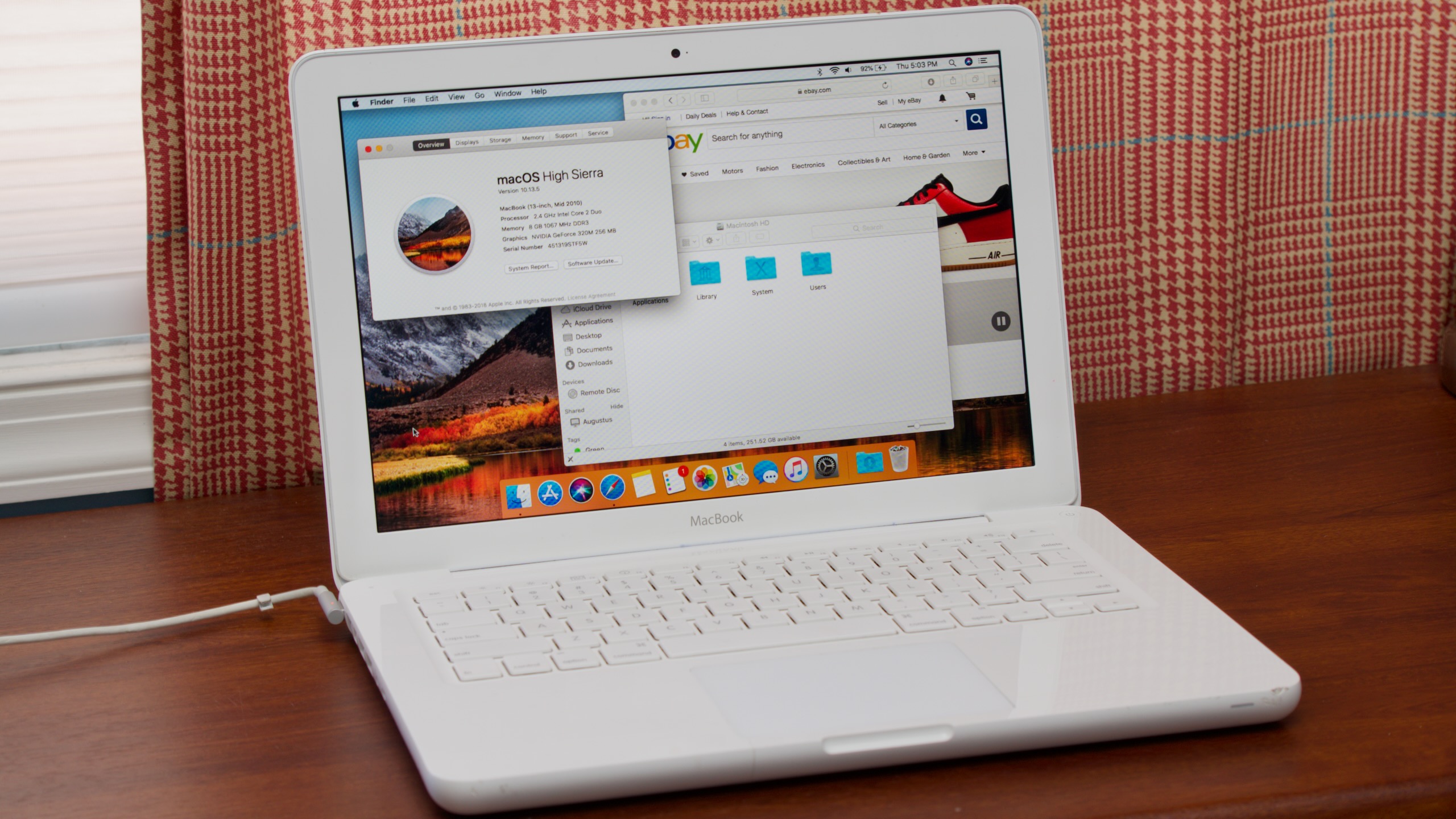
A 2010-era white plastic MacBook. The first-generation version of this design was Apple’s signature consumer laptop during the early Intel era.
Credit: Andrew Cunningham
A 2010-era white plastic MacBook. The first-generation version of this design was Apple’s signature consumer laptop during the early Intel era. Credit: Andrew Cunningham
The first new design of the Intel Mac era came later that year, when Apple launched the MacBook to replace the old iBook. Like the iBook, this laptop was made mostly of white plastic (a black version, inexplicably several hundred dollars more expensive, was also available eventually), and it used slower processors with Intel’s integrated graphics rather than the MacBook Pro’s dedicated graphics chips. But it was a popular machine—I was a college student at the time, and it was definitely the laptop you’d see the most often when you were out and about on campus (or maybe the second-most-often, if you added up every single permutation of “something cheap from Dell”).