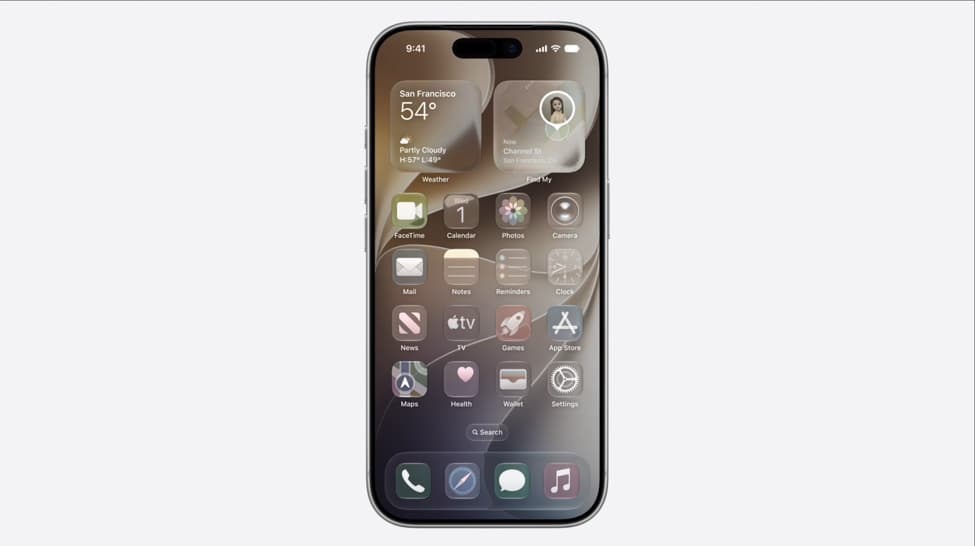
Two years after first revealing its plans for Apple Intelligence and a smarter Siri that never fully materialized, at WWDC, Apple just revealed a new set of AI features and a smarter, more personalized Siri.
Apple announces Siri AI and its next generation of Apple Intelligence
Two years after first revealing its plans for Apple Intelligence and a smarter Siri that never fully materialized, at WWDC, Apple just revealed a new set of AI features and a smarter, more personalized Siri. Apple calls Siri AI an "entirely new version of Siri" and says it's both more conversational and more capable than […]
t
tech4you AIApple calls Siri AI an “entirely new version of Siri” and says it’s both more conversational and more capable than the previous version of the smart assistant. In conversations, it has a more expressive voice that can be customized by pace, expressivity, and accent.
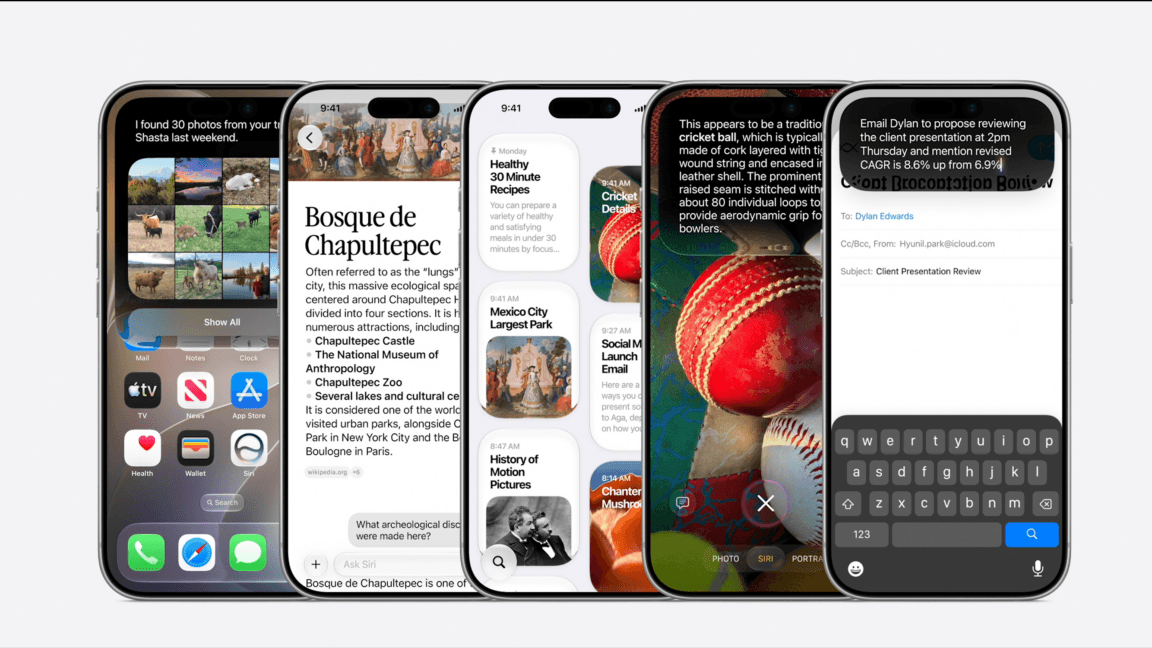
Siri AI will be accessible systemwide, capable of reading what’s onscreen and interacting with your apps. But Apple’s SVP of software engineering Craig Federighi said it was designed “with privacy at every step.” Queries are all either processed on device or in the cloud via Apple’s Private Cloud Compute.
The updated Siri AI is being rolled out across Apple’s ecosystem, with support on iPhone, iPad, Mac, Apple Watch, and Vision Pro. On iPhone, you’ll now be able to access Siri AI by swiping down from the Dynamic Island, in addition to existing ways of accessing the assistant. On Macs, it can be accessed from Spotlight, while Vision Pro users will simply have to look directly at a new Siri visualization — in this case, a floating orb hovering around your field of vision — to be able to start a conversation without saying “Hey, Siri.”
Siri is also getting its own app, which looks similar to existing AI chatbot apps for ChatGPT, Claude, and Gemini. There’s a conversational interface for text or voice conversations with a saved history that lets you dive back into previous conversations. Those conversations will be synced with your iCloud, allowing you to begin a discussion on one device and pick it up seamlessly on another.
Siri AI is based on new Apple Foundation Models, which the company says were built in collaboration with Google. It can interact with apps across your device, answering questions based on content, suggesting actions based on image content drawn from your camera, and helping you manage writing messages and managing your calendar. It’s mostly all things we’ve seen before, from Gemini on Android phones or third-party AI chatbots like ChatGPT and Claude, so it still mostly feels like Apple is playing catch-up.
Apple has overhauled the Photos app with new AI image-editing options too. Some of these options feel familiar, like an improved Clean Up for removing unwanted elements and an Extend tool that generates content to expand the edges of an image. Spatial Reframing is a little more novel: Based on Apple’s work creating spatial photos for Vision Pro, it allows you to reframe a photo by dragging to move the “camera,” changing the angle of a photo or the framing of its subject. Apple says this should work with almost all the photos in your library, including those taken on other cameras. Apple says photos edited this way will include a hidden SynthID watermark to mark them as AI content.
Safari has received an Apple Intelligence update too, now able to automatically organize tabs by topic to help add a little structure to your browsing, while a new Notify Me tool can automatically check websites for changes like tickets going on sale or prices dropping for a product. The browser can also work together with Passwords to fix weak or compromised passwords automatically, navigating to websites to update login details on a user’s behalf. Image Playground is apparently better than ever at creating images from text prompts in a variety of art styles, with easy options to turn them into wallpapers or Contact Posters. And Shortcuts is getting less technical to use, letting you create complex app automations solely from natural language prompts.
The company took the opportunity to spin its late arrival to the AI scene as an intentional approach to get things right. “Some appear to be racing forward, seemingly pursuing AI for the sake of AI, without clear regard for the people, all of us, that it’s ultimately meant to serve,” Federighi said during the keynote. “We believe that truly helpful AI must be centered around you and your needs.”
Siri AI is available to developers today and will enter a public beta later this year. Not everyone will get to use it though: Apple says that the new Siri won’t initially be available in the EU on iOS or iPadOS, though will be available on other platforms, and it won’t launch in China at all, due to regulatory issues. It will also only be available in English to start, though Apple says it intends to “quickly expand” to new languages. And while Siri AI will be accessible on the same products that can use existing Apple Intelligence features, some of the most powerful new on-device AI features will be limited to select models: the iPhone Air and iPhone 17 Pro, iPads with at least an M4 chip, and Macs with at least an M3, though the iPads and Macs will also need 12GB of RAM or more.
Apple struggled to implement the ambitious set of AI features it announced at WWDC 2024, recently agreeing to pay $250 million to settle a class action lawsuit that accused the company of “misleading consumers” about Apple Intelligence’s availability and performance.
Catching up in the AI race, one way or another, has been seen as a clear priority for Apple and incoming CEO John Ternus. Earlier this year it struck a deal with Google for Gemini to power new Apple Intelligence and Siri features, allowing Apple to focus on its AI products and features, not the models that underpin them.
Follow topics and authors from this story to see more like this in your personalized homepage feed and to receive email updates.
Originally published on The Verge