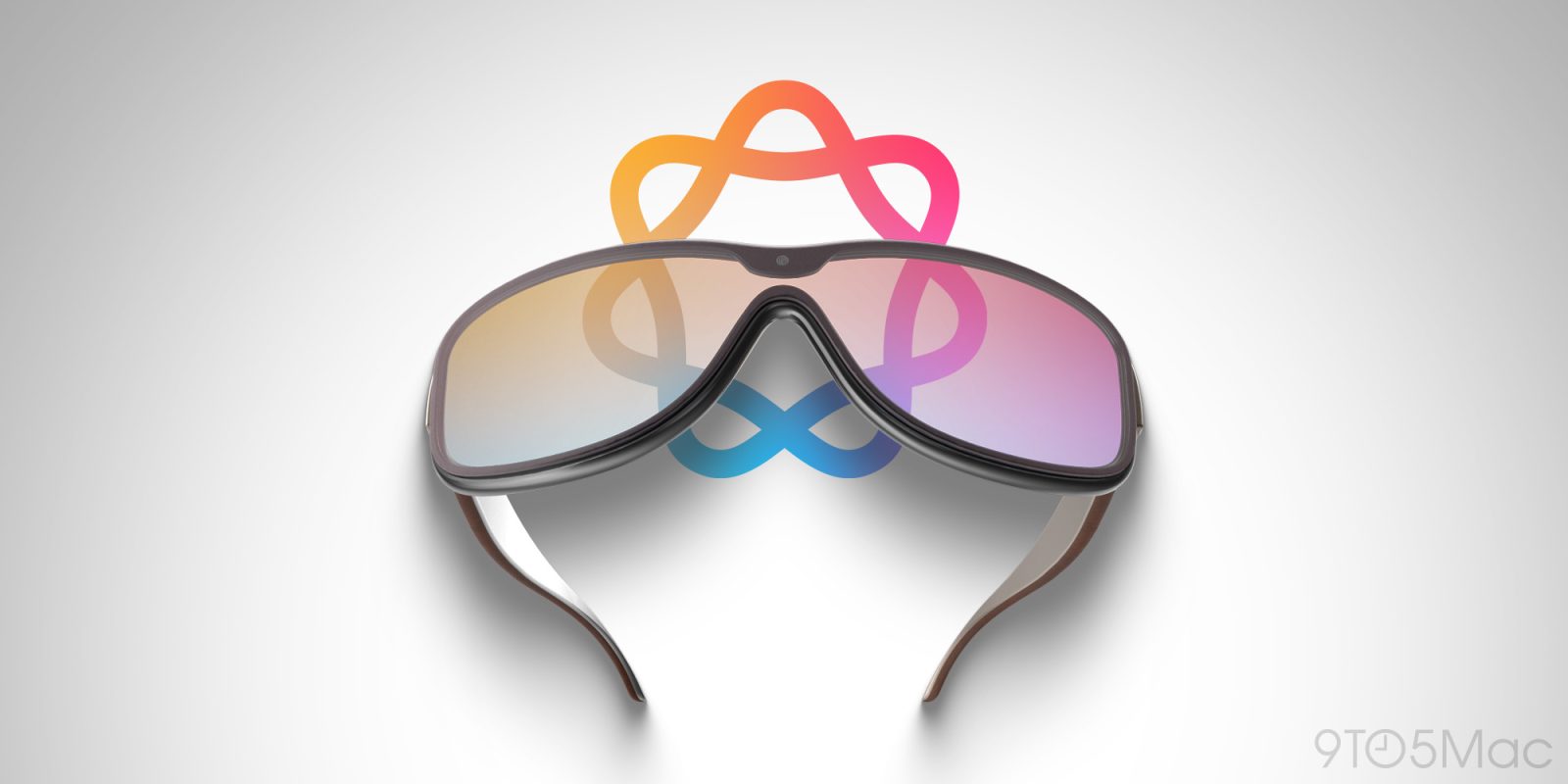
A Bloomberg report suggests that Apple Glasses might be launched without the capability to take photos or record video. Apple is said to be considering this option as a way to address privacy concerns.
However, while I do absolutely understand the thinking that would leave the company to mull this option, my own experience of Ray-Ban Meta glasses is that video recording is absolutely core functionality for this type of product …
Privacy drives a lot of the decisions Apple makes, and it is one of the selling points of the ecosystem.
For example, with AI features, the company aims to carry out processing on device wherever possible. Where cloud processing is needed, Private Cloud Compute is designed to ensure that Apple has no access to user data, and provides security researchers with the ability to verify this for themselves. This is without qualification a good thing.
Smart glass privacy concerns
There’s also no doubt that smart glasses with video recording capabilities do create privacy concerns. This was one of the key reasons why Google Glass failed, with users acquiring the unfortunate nickname Glassholes.
Ray-Ban Meta glasses have also raised privacy concerns, in part because of one particularly despicable way in which they have been used by some YouTubers, as BBC News reported earlier this year.
Women leaving the beach, going into a shop, or simply standing outside are now being approached by men usually wearing Meta’s Ray-Bans, the company’s “smart” or “AI” glasses, often in order to film the women’s responses to casual questions or pick-up lines without their knowledge or consent. The women only find out about the videos of them after they gain traction, and often abuse, online.
The company also came under fire when it was found to be sending sensitive video footage to human data annotators, including accidental recordings.
For all of these reasons, I can absolutely understand why Apple would have concerns about including video recording capabilities in Apple Glasses.
But video recording is a key feature
The problem for Apple is that video recording is a key feature of today’s smart glasses, and my own experience of using them is that I simply wouldn’t bother if they couldn’t do this.
Let’s list out the capabilities of Ray-Ban Meta, and then I’ll talk about my own experience of each:
- Ask Meta AI questions based on what you see
- Play music
- Make and receive hands-free voice calls
- Get voice notifications, including reading out incoming messages
- Take a POV photo, by pressing a button or using a voice command
- Shoot POV video, also by pressing a button or using a voice command
Ask AI questions
Meta sells this as one of the key reasons to buy the glasses, and there’s no doubt that it makes a great first impression. For example, you could look at a famous landmark and ask your glasses to tell you something about it. They can also identify a wide variety of things, from flowers to sculptures. This is like having Apple Intelligence on tap without having to take your iPhone out of your pocket.
I tested these capabilities extensively when I first got mine, and I was excited for some of the future possibilities. I imagined things like looking around at different restaurants and having the glasses tell me the average TripAdvisor rating for each, as well as dishes past visitors have recommended.
As things stand, however, I almost never use this capability and absolutely would not see it as a good enough reason to routinely wear a pair of smart glasses.
Play music
Nope: the audio quality simply isn’t there with tiny speakers mounted in the arms of the glasses. Headphones are always going to be a better option, and in-ear ones are just as convenient.
Hands-free voice calls
It’s very occasionally useful to be able to take a brief phone call when cycling, as I don’t want to wear in-ear headphones that block the sounds around me. For anything more than a few sentences, however, I’m going to pull over, so it’s simply not a good enough reason to routinely wear smart glasses.
Voice notifications
I do like these. If I receive a text message from someone, whether in iMessage or WhatsApp, I can have the glasses play the message to me while I continue walking or cycling. Once again, however, the benefit is not significant enough to justify a purchase.
Photos and video
This is honestly the biggest benefit of today’s smart glasses. Being able to capture point of view footage without having to use your phone is great for special experiences like a roller coaster ride or sailing, but it’s also a really good way to relive things like wandering around a sightseeing destination on holiday or a weekend break. As I said in my initial Ray-Ban Meta glasses review:
For video in particular, it’s far less intrusive to automatically capture point-of-view footage without interrupting what I’m doing than it is to hold up my phone. Additionally – and importantly – I’m not then ending up viewing the scene through a phone screen instead of my own eyes. That’s a very different experience to taking my phone out of my pocket and viewing the scene through that.
I’ve also found it a great way to create video of cycle rides. Given that I’d generally be wearing sunglasses anyway, just pressing a button on them is less hassle than a camera mounted on my bike. Motorcycling friends also use them in the same way.
This is by far my biggest motivation for wearing them, and without this benefit, I honestly wouldn’t bother. In my view, an Apple Glasses product without photo and video recording capabilities is dead on arrival. (The position is different in smart glasses with a display, and I’ll be sharing my experiences of this in a later piece, but that’s not what we’re expecting in a first-gen Apple Glasses product.)
What should Apple do?
Fortunately, I don’t think reconciling the conflicting demands of utility and privacy is impossible.
One of the criticisms made about Ray-Ban Meta glasses is that although they do have a flashing LED to indicate video recording, this isn’t particularly visible, especially in bright sunlight. Apple could ensure its own flashing LED is a high-visibility one.
The company could also have external speakers on the arms and use those for audio pings when starting and stopping recording, to alert anyone nearby. Another possibility is to dispense with a button for photo and video, and instead require users to issue a voice command. Both would make it obvious to those around the user that they are being filmed.
Of course, there’s no perfect solution here. There’s nothing to stop someone starting a recording some distance away and then approaching someone. But I do think a combination of these privacy protection features could be effective in the vast majority of situations.
The standard Apple needs to hit isn’t perfection: it’s making them sufficiently hard to abuse that nobody with bad intentions would choose the device.
What are your thoughts on the dilemma? Please share your thoughts in the comments.
FTC: We use income earning auto affiliate links. More.