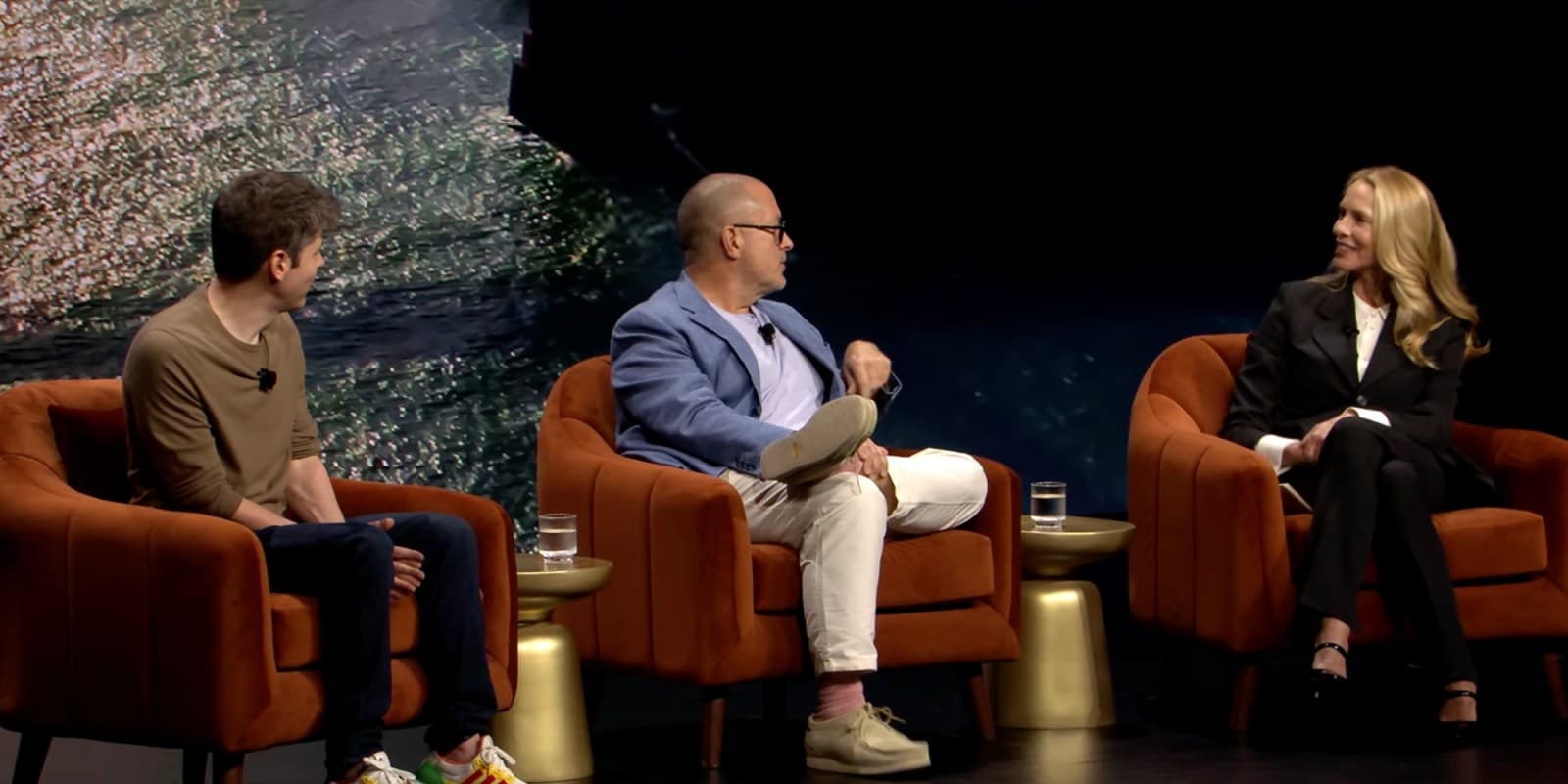
Apple seems to have gone to unusual lengths to keep one man out of its trade-secret lawsuit against OpenAI: Jony Ive.
However, the legal battle could end up with Apple’s former design chief taking the stand. And that could rattle Apple’s cordial relationship with Ive, who’s helping OpenAI build AI-powered gadgets that threaten the iPhone’s dominance.
Jony Ive is everywhere in the story, except for Apple’s lawsuit itself
At its heart, Apple’s lawsuit is about more than just corporate misconduct. It’s about who controls the next device category that might someday replace your iPhone. And Jony Ive helped Apple design nearly every iPhone you’ve ever owned.
Apple’s complaint, filed July 10 in the U.S. District Court for the Northern District of California, accuses OpenAI’s Chief Hardware Officer Tang Tan and former Apple engineer Chang Liu of stealing trade secrets to build OpenAI’s first consumer hardware device.
The filing refers to io Products, the startup founded in 2024 by Ive, Tan and other former Apple leaders. Last November, OpenAI acquired the startup for a reported $6.5 billion.
While Apple’s trade-secrets lawsuit against OpenAI names a bunch of former Apple employees and leaders, Ive’s name never appears in the document.
That’s not an oversight. Apple specifically built its case around specific, provable conduct — retained laptops, coached security evasion, candidates who were told to bring Apple components to job interviews — rather than who knew what inside io.
Ive wasn’t necessary to make that case, and naming him could have invited the sort of messy fight Apple likely hopes to avoid.
Discovery doesn’t ask Apple’s permission
The problem with lawsuits is that once they reach the discovery phase, where both sides reveal the evidence and witnesses they will rely upon, the plaintiff does not get to pick who testifies. If OpenAI’s lawyers decide Ive’s account of how io’s hardware came together helps its defense, they could push to place him on the stand.
Since leaving Apple in 2019, Ive has carefully managed his public presence, staying visibly warm toward his former employer through projects like the Steve Jobs Archive. Hearing him testify against Apple — or seeing Apple challenge his credibility — could make things uncomfortable in Cupertino.
The bigger pattern Apple can’t easily stop
Business Insider’s Alistair Barr framed the lawsuit as something bigger than just another legal dispute. For a long time, Silicon Valley has relied on an unwritten rule, where breakout engineers who launch their own startups usually get pulled back into Big Tech’s orbit — through acquisitions or otherwise.
OpenAI breaks that rule, poaching employees at a rapid clip. The company already pulled in more than 400 former Apple employees, according to the lawsuit, including senior executives like Ive and Tan. And it also raised too much money to be acquired the way smaller companies might be.
Barr compared this to Facebook’s early hiring spree, during which the social media company snapped up Google employees — something even Google couldn’t stop. That context matters: It suggests Apple’s lawsuit isn’t just about protecting trade secrets. It’s a company trying to slow down a competitor it can no longer out-hire or outspend.
Apple wants the fight to stay focused on OpenAI’s conduct, not on the legendary designer who shaped the iPhone, iMac and MacBook. Whether it gets to keep it that way depends entirely on what happens once the depositions start, and that’s a call Apple doesn’t get to make alone.