On June 30, 2015, Apple launched Apple Music that has brought music pleasure to millions, a social media feature you probably don't remember and cost Apple billions in fines.
If you joined Apple Music when it first launched and have stayed with it since, you have easily paid out more than a thousand dollars. The price has gone up over the years, too, plus there are more expensive tiers with a family plan, cheaper ones with the student offering, and Apple Music is also part of the Apple One bundle, but you've been paying something for over a decade.
What won't have happened during that time, though, is that you've ever had the service for free — at least not other than some limited-time trial periods. Unlike its rivals, specifically Spotify, Apple Music does not offer a free ad-supported version.
"As a company, we look at music as art, and we would never want to give away art for free," Apple Music executive Oliver Schusser said at a music industry event, as spotted by the Hollywood Reporter. "It makes no sense to me. We don't have a free service, we will not have one, we have no plans for one."
That was in June 2025 and around a year later, there were signs that Apple is reconsidering">https://appleinsider.com/articles/26/05/30/android-apple-music-beta-hints-at-alternate-tiers-skip-limits">Apple is reconsidering. While at time of writing there remain no free options, there has been clues in, of all places, the Android version of Apple Music.
"Can't skip any more tracks" at least implies that Apple Music could emulate Spotify. That service has a free tier that, as well as playing adverts all the time, also limits what features a listener can use.
But then Spotify, Apple Music's greatest rival and the stand-out near-monopoly in streaming music — although don't try telling the EU that — gives away music and can't catch a break on getting anyone to pay for it.
Curiously, Apple is one of only a couple of music streaming companies that could theoretically afford to give away music for free.
Even without courting free users, Apple also charges less than Spotify for its individual tier — although the same as Amazon Music — and offers higher-quality lossless audio as standard. And while Spotify can argue it pays artists more because it streams more, Apple Music rewards musicians more per stream.
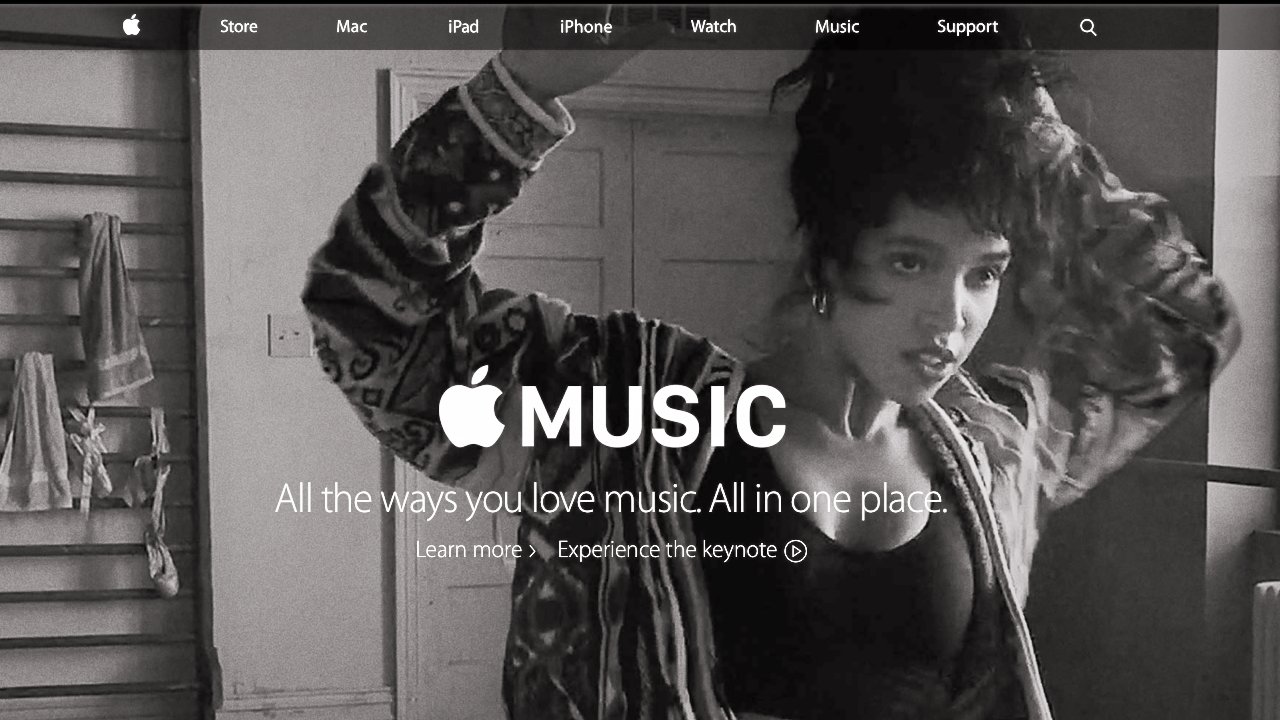
How Apple first promoted Apple Music online in 2015 — image credit: Apple
If streaming still seems new, it is really, but it didn't come from nowhere. Apple's own various music ventures go back a couple of decades, and the idea of streaming music goes back over a century.
The origins of streaming
It was 1881 when streaming began. Seriously, 1881.
The then-new Theatrophone service let subscribers phone in to hear opera. It was initially in France, although no records survive regarding whether the European Union told the company to open up its technology to everyone.
Not a great deal more happened in streaming music for about 106 years, but then MP3.com came on the scene. Even then it was only providing uploaded or indie tracks — it wasn't what you'd call mainstreaming.
However, in 2001, Napster came on the scene. Or rather, the Napster-operated Rhapsody service. And then in 2008, Spotify was launched — although it didn't reach the US until 2011.
Throughout all this time, Apple was changing the world with iTunes and literally changing how the music industry worked. Apple drove us and record labels to sales of individual tracks instead of albums, and that surely helped ease the path for us to adopt streamers.
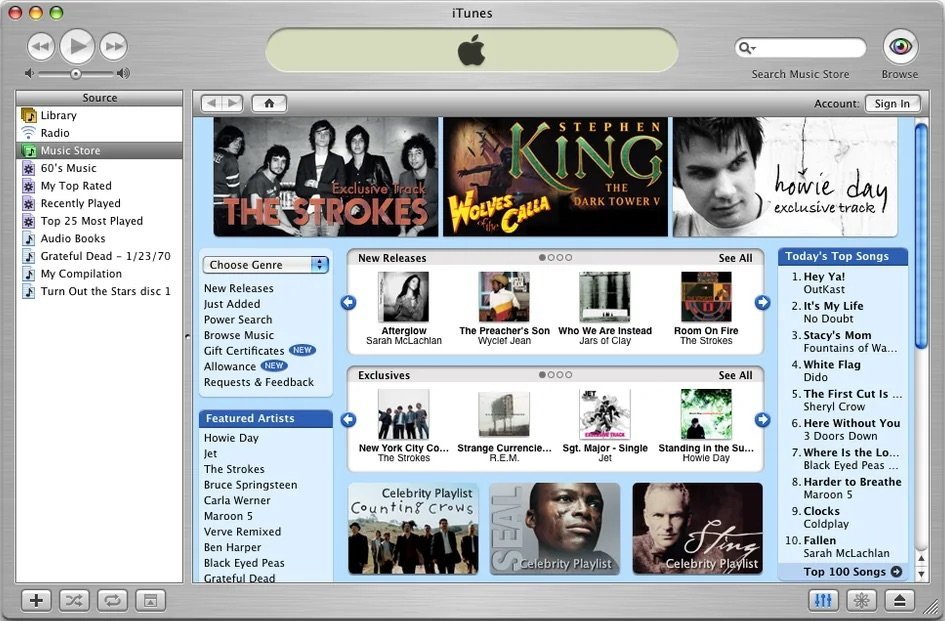
It was great, it was revolutionary — but it wasn't streaming
But by 2014, Apple was ready — and had decided it needed to be ready — to go into streaming music itself. It was not a casual thought, either, as Apple paid out the greatest single fee it ever has to acquire a streaming service to kickstart its own.
In 2014, Apple bought Beats, spending around $3 billion to do so. Later it was disclosed that Beats owner Dr Dre having leaked the news early meant Apple then screwed him out of $200 million, bringing the price fractionally below those billions.
One more thing
At WWDC in June 2015, Tim Cook announced Apple Music, and did so as a "one more thing" after iOS 9 and Mac OS X El Capitan. He then introduced Jimmy Iovine, who had joined Apple as part of the Beats acquisition — and had a lot to say about why Apple Music was needed.
"So now, 2015, music industry is a fragmented mess," he said. "If you want to stream music, you can go over here. If you want to stream some video, you can check some of these places out... If you want to follow some artists, there's more confusion for that."
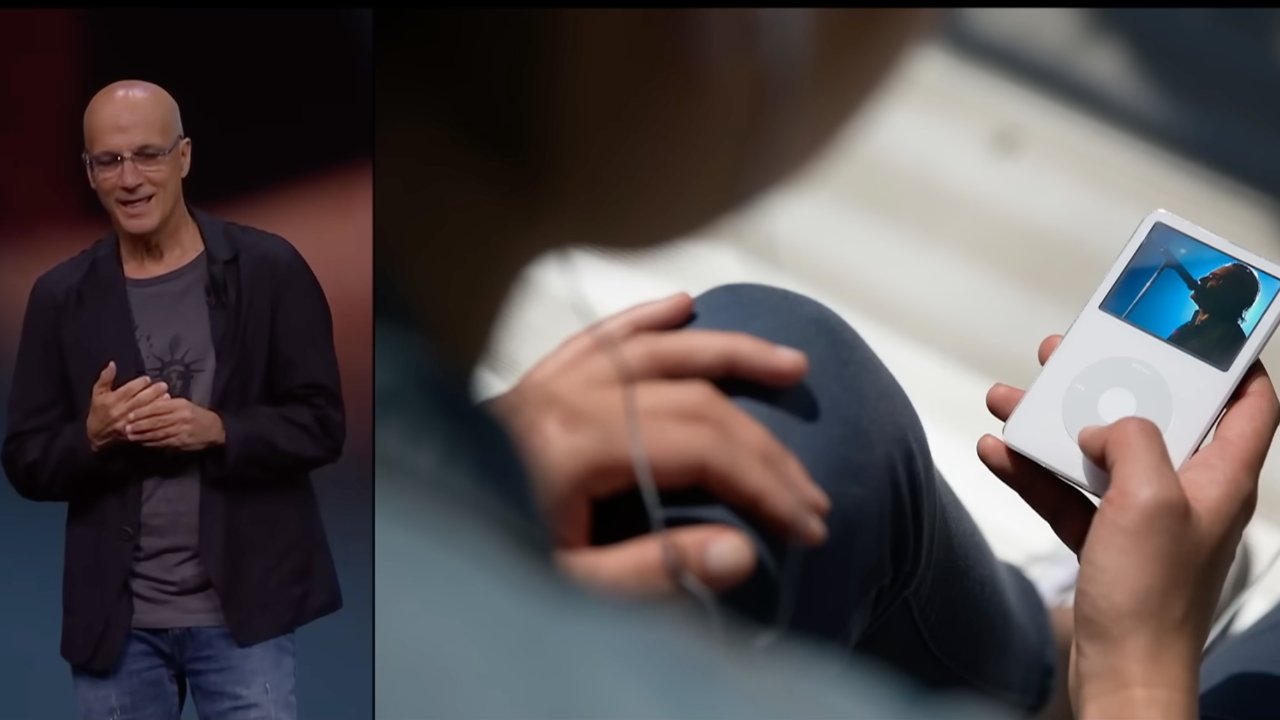
Jimmy Iovine talking about how Apple has always been involved in music — image credit: Apple
"So I reached out to Tim Cook and Eddy Cue, and I said, 'Guys, can we build a bigger and better ecosystem with the elegance and simplicity that only Apple can do?'" he continued. "One complete thought around music?"
"And from that, I'm standing here today so proud of everyone that's worked so hard," he said. "And I'm going to introduce you to Apple Music."
The start of Apple Music
Right from the start, Apple Music aimed to differentiate itself in terms of quality. The music library couldn't be dramatically larger or better than any other service — nobody had The Beatles then — but Apple could do more with it.
Specifically, it could include human-curated playlists, such as the Essentials lists which remain to this day. Much more than a greatest hits collection, the Essentials playlists give a fan's view of an artist or band — and a fan who keeps updating the list.
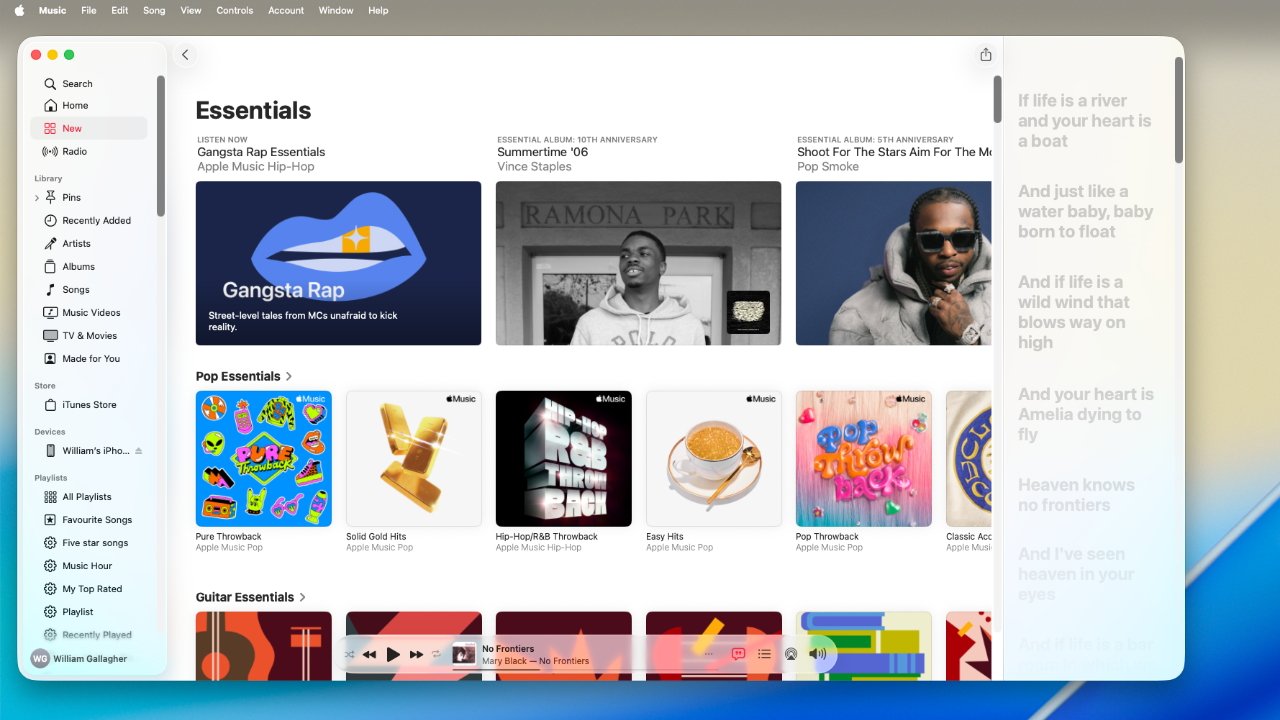
Human-curated playlists like the artist and genre Essentials series are a key benefit of Apple Music
Apple Music also launched with Beats 1, a 24-hour radio station, which by its tenth anniversary in 2025 had broadcast non-stop for 87,672 hours. Or at least, the station had, even if its name was changed to Apple Music 1 in 2020 — when Apple also launched the further stations Apple Music Hits and Apple Music Country.
Expanding Apple Music
You can well argue that the Apple Music of today is the same as it was in 2015. The service got so much right at launch that there has been no fundamental alteration in its main offering since.
Except that Apple Music did aim to also be a social media platform, specifically one that linked fans to artists. Apple Music Connect was the service's only failure, and it was abandoned in 2019.
Really it was abandoned right from the start, but Apple did vaguely plug away at it for the first four years of Apple Music.
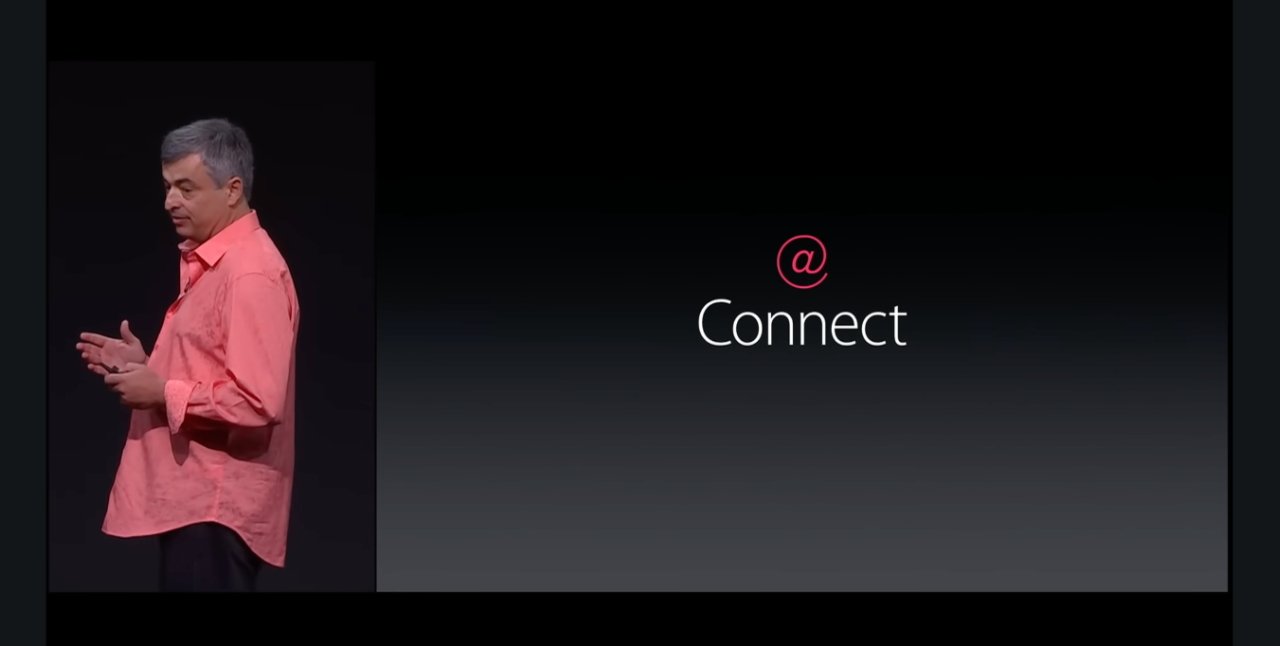
Eddy Cue tries to sell us Connect, the music social media platform that didn't take off — image credit: Apple
Two years later, Apple turned its attention to growing the audience for Apple Music by acquiring Primephonic, the classical music streaming service. In a rare move, Apple actually announced at the time that this was in order to create a new Apple Music Classical service.
Apple Music already had classical tracks, but they are much harder to catalog than your typical pop song. There are multiple versions of just about everything, for a start, and even the same conductor can have done two editions with the same orchestra over the years.
So Apple Music Classical promised to have searching that was much better attuned to what classical fans needed. It also promised to launch quite soon — and then didn't appear until two years later in 2021.
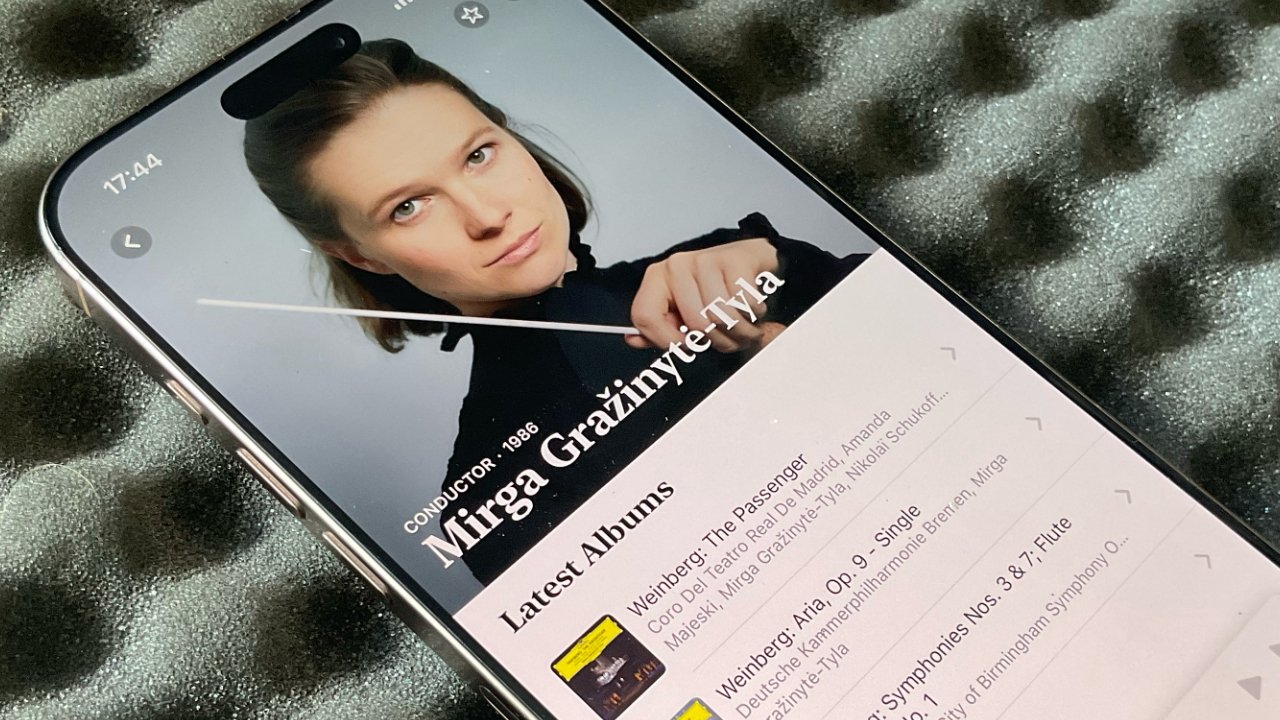
Apple Music Classical is still a little clunky, and still not on the Mac, but it's here.
Even then, it only launched on the iPhone and that Apple Music Classical iOS app until 2021">was clunky. Anyone could download the app, but it only worked with a regular Apple Music subscription, and then features like creating playlists required you to skip between the two music apps.
It has subsequently rolled out further, including to the web. As yet, it still isn't on the Mac, though.
Introducing Spatial Audio
Spatial Audio doesn't now appear to have paid off brilliantly, as it's possible that most Apple Music subscribers aren't even aware of it. But in 2023, it was a big deal for Apple — and it does make a difference to the music.
It also made a difference to artists. In 2024, it was revealed that Apple was incentivizing musicians and producers to rework their music for Spatial Audio, by paying them extra per stream.
The effect on some albums is not noticeable, on others it's more gimmicky, but on some it feels like it expands the audio around you.
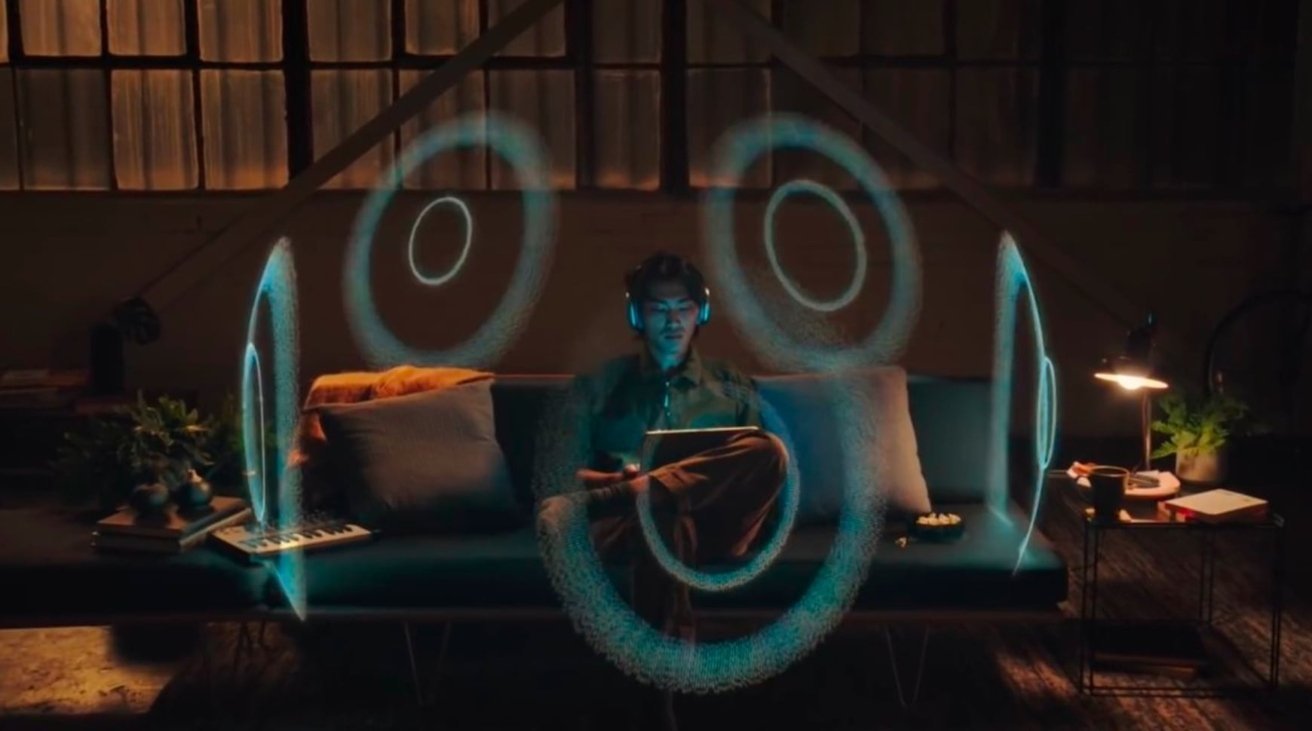
How Apple illustrated Spatial Audio when it first came to Apple Music — image credit: Apple
And it was also a case of Apple trying to press music technology forward — without automatically raising the price. Not even when it added the whole extra Apple Music Classical side to its offering.
There have been price rises — Apple Music was originally $9.99 per month for the individual plan and in 2022 it rose to $10.99 per month.
But then, someone has to pay Apple for all the money it's given to the European Union in fines.
The EU arguably leads the world in regulating Big Tech firms and so many other countries and territories are trying to emulate it. But one thing it falls down on is believing the larger and more popular Spotify when it claims that Apple has a monopoly in streaming music and is abusing it.
That perspective is why the EU decided to fine Apple $2 billion in 2024, and why Apple made a then-unusual public statement disagreeing with the European Commission.
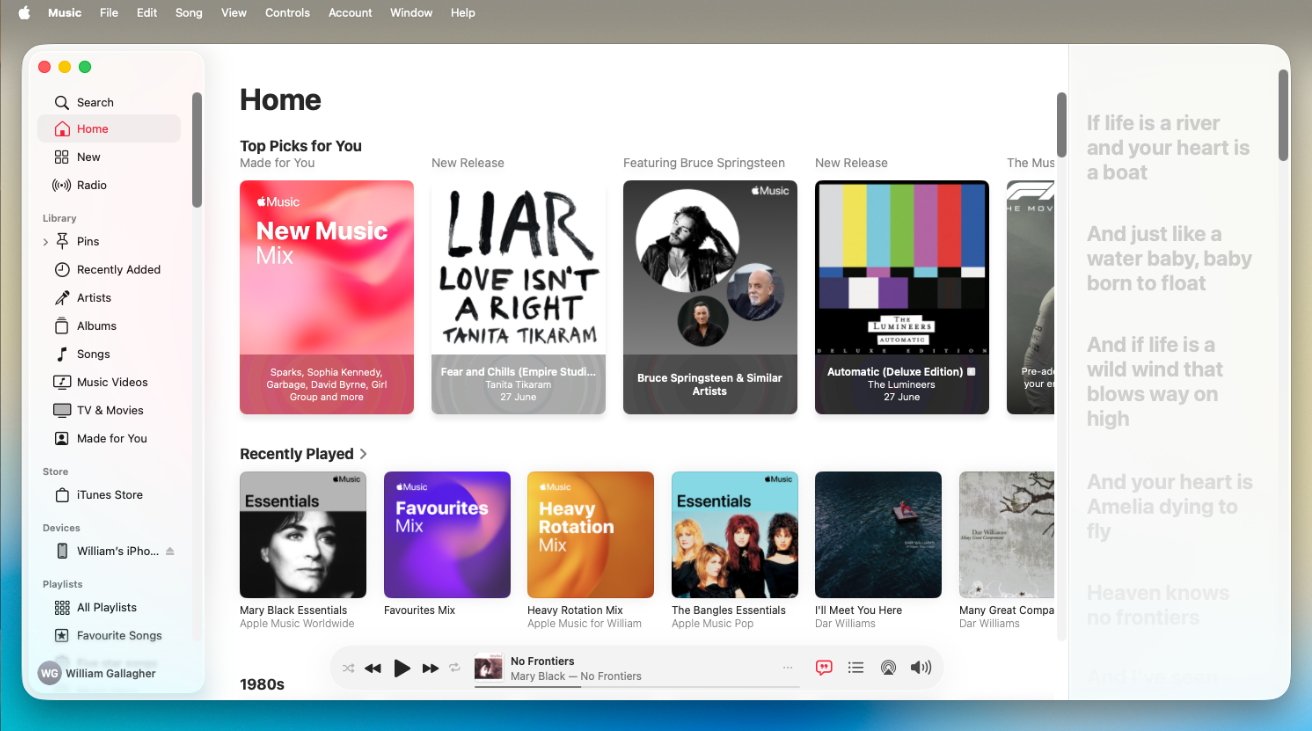
Apple Music today — playlists, Essentials, recommendations and the weekly lists such as Favorites and Heavy Rotation
"The primary advocate for this decision — and the biggest beneficiary — is Spotify, a company based in Stockholm, Sweden," said an Apple spokesperson at the time . "Today, Spotify has a 56 percent share of Europe's music streaming market — more than double their closest competitor's — and pays Apple nothing for the services that have helped make them one of the most recognizable brands in the world."
The future of Apple Music
Apple immediately appealed that fine and like every other legal case, it is certain to roll on for years. If there's one other certainty about the future, it is that Apple Music will continue.
But if there was another certainty, at least in recent years, it would be that Apple would find a way to incorporate Apple Intelligence into the service. In March 2026, it did exactly that.
Or at least, it did some of it, and it did it for some users. If you are in the US, then you can use Playlist Playground. It's an AI tool where you describe what kind of music playlist you want, and it's automatically created for you.
However, alongside the human-curated ones that make the service distinctive, there have always been playlists made by algorithms. Every Tuesday for ten years now, for instance, there's been a new Your Essentials playlist (previously called Favorites) for every user.
Then every week, Apple Music now also creates a playlist called Heavy Rotation. It's sometimes hard to distinguish between this, the songs you play the most, and your favorites or essentials, though.
And since 2019, it's offered an annual Replay list of your most-played music. If you are bored of familiar tracks, though, there is also the weekly New Music playlist, and the Discovery Station that mixes new and familiar songs.
Given all of this, it's hard to imagine what more can come. But for more than a decade now, Apple has never stood still with Apple Music.