 At the Platforms State of the Union, Apple covered the nitty gritty on the new Siri AI and Apple Intelligence features, improved Liquid Glass design, Device Hub and more tools announced today.
Much nerdier than the morning keynote, this event covers the technical details of how developers are supposed to use and adopt the new features inside their apps with the latest developer tools.
You can watch the Platforms State of the Union on YouTube, in the Apple Developer app or on the web. Read on to see our live coverage of the event.
WWDC26 Platforms State of the Union
The biggest event at WWDC, Apple’s annual worldwide developer conference, is the Monday morning keynote where new OS updates are announced. But WWDC is actually a week-long conference, where Apple will outline in detail how developers can adopt new features in their apps before the updates are released in September.
In recent years, the Platforms State of the Union has become like a second keynote for developers. Apple goes into more depth about new developer tools, explains changes coming to the Swift programming language and goes into more technical depth.
Apple’s next-generation Apple Intelligence Foundation models and Siri AI
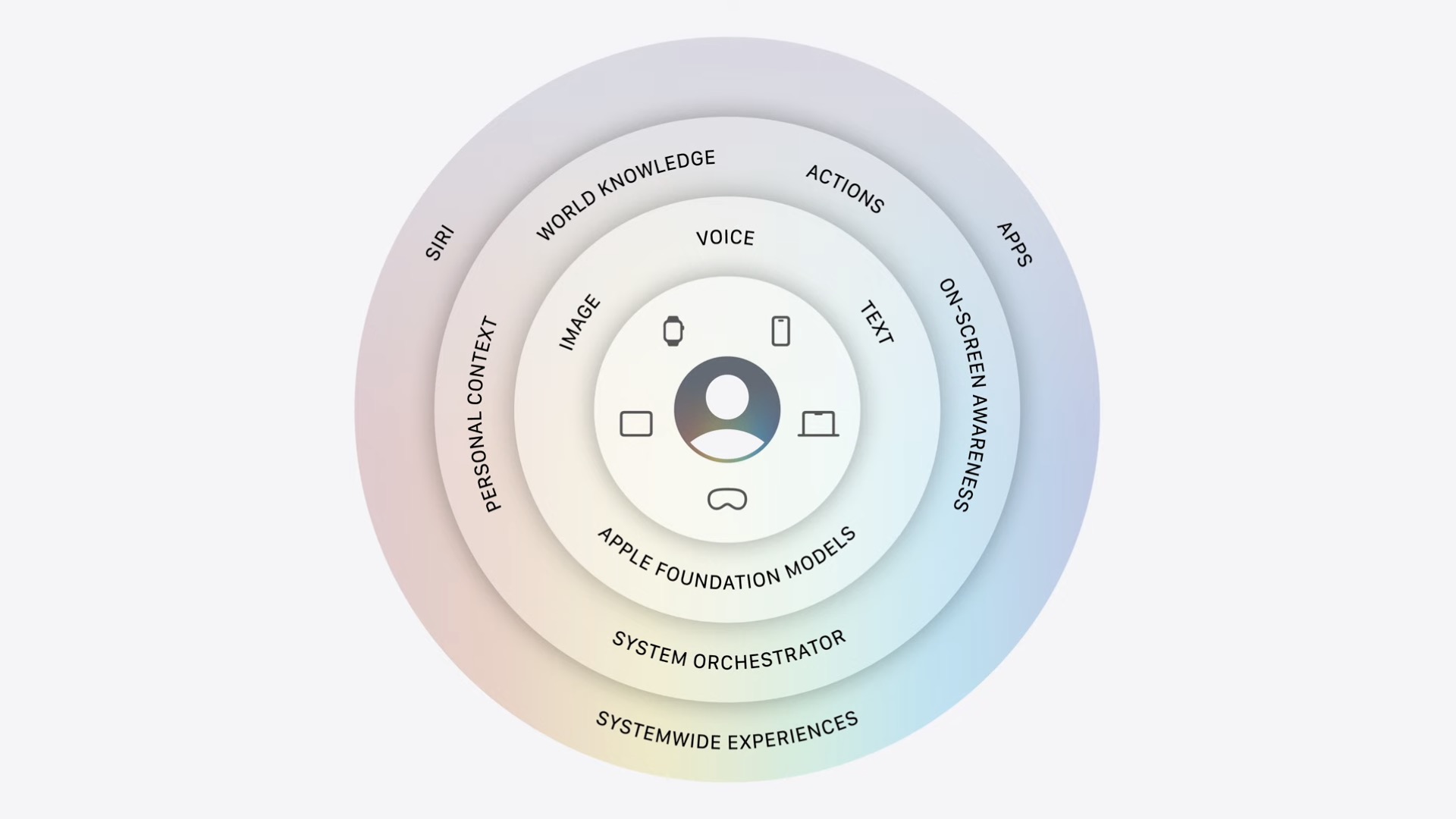
Image: Apple
The next-generation Apple Foundation models were developed in conjunction with Google, but are still just as private as before, with Private Cloud Compute. Developers will be able to use Private Cloud Compute for free if they have fewer than 2,000,000 users. iCloud+ users will have additional access.
The Foundation models framework, which lets developers use on-device models, is even more powerful. Multimodal prompts allow developers to prompt the model with images as input — not just text. On-device models can quickly pull text and even QR codes out of images, too. Dynamic Profiles are an easy way to “let you swap models, tools, and instructions on the fly, so your app’s behavior can adapt within a continuous session.” The Foundation models framework will be open-sourced later this year.
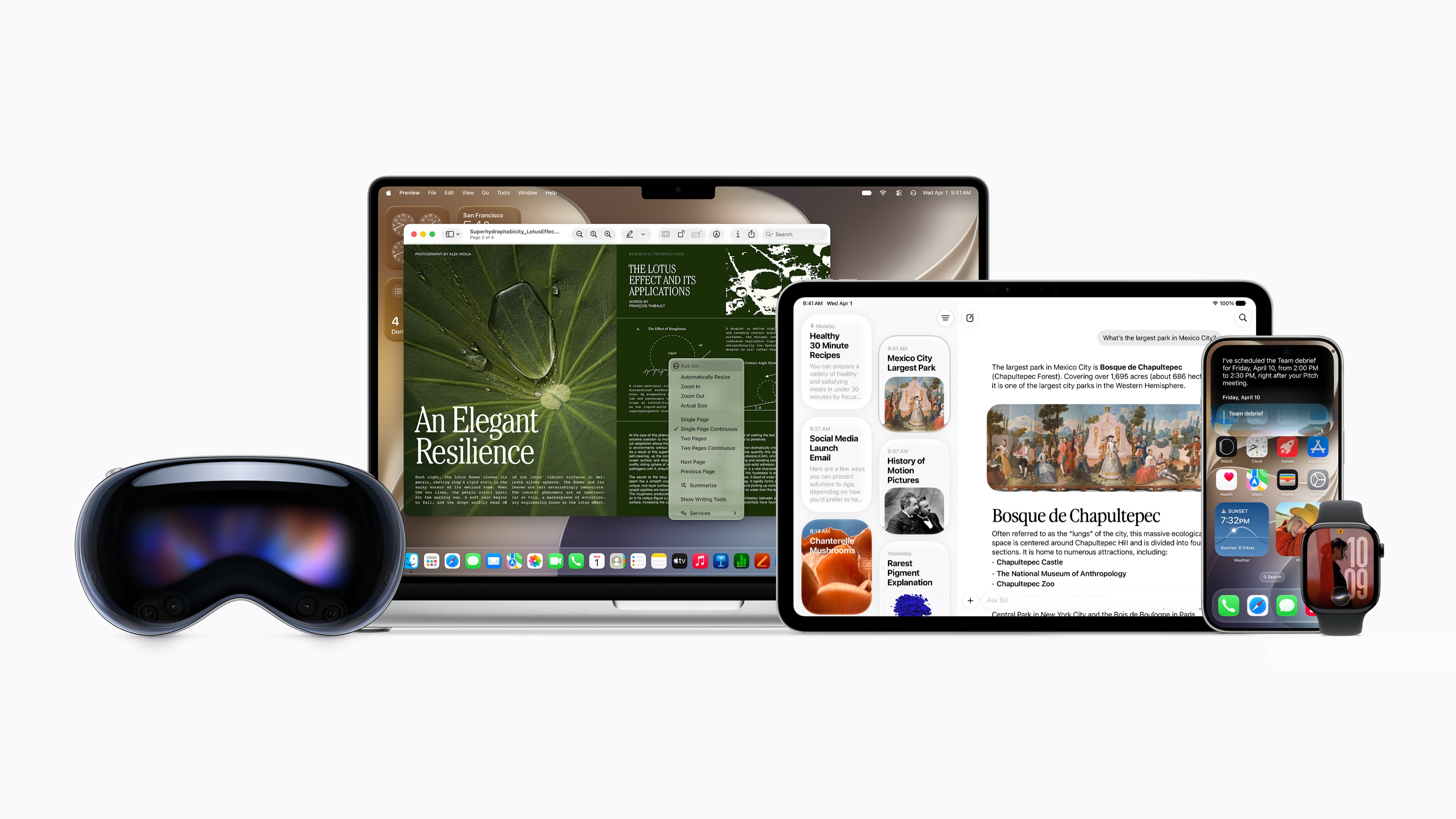
Photo: Apple
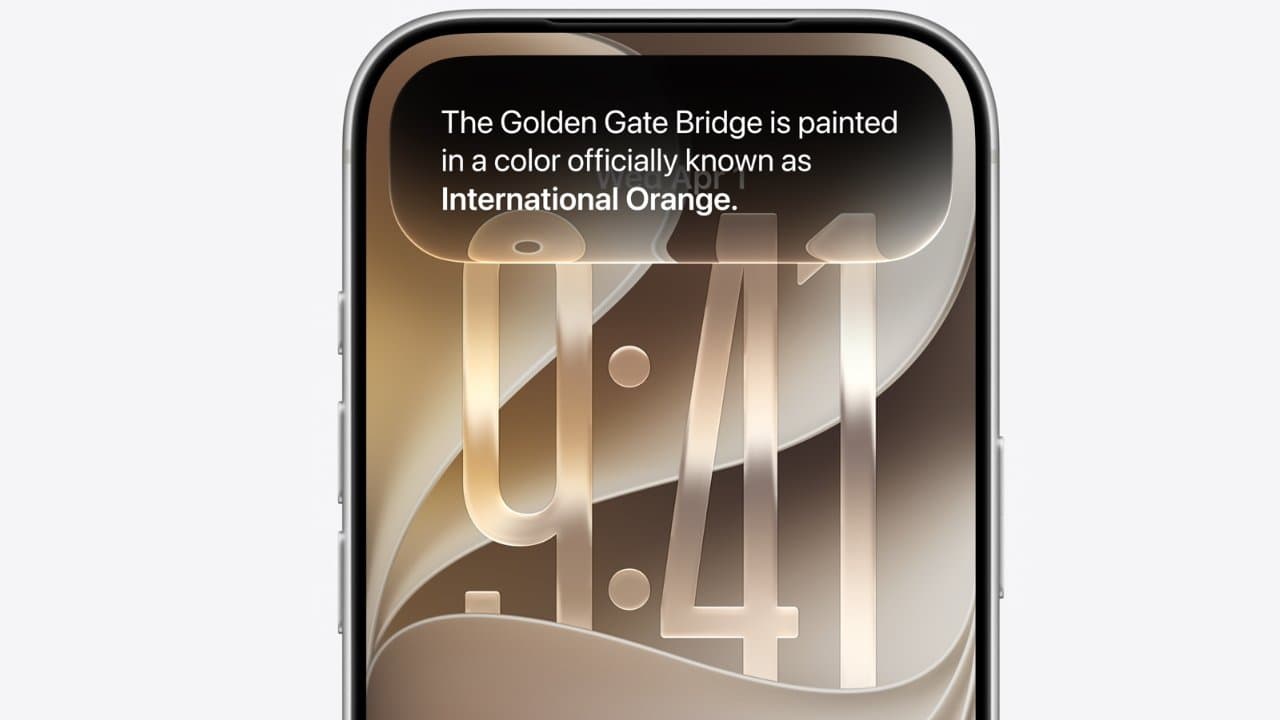
App Intents power the agentic Siri AI which can perform actions on your behalf. Apps should adopt entity schemas, intent schemas and view annotations to power Siri’s ability to discover and interact with features inside third-party apps.
Tweaks to Liquid Glass design
Screenshot: Apple
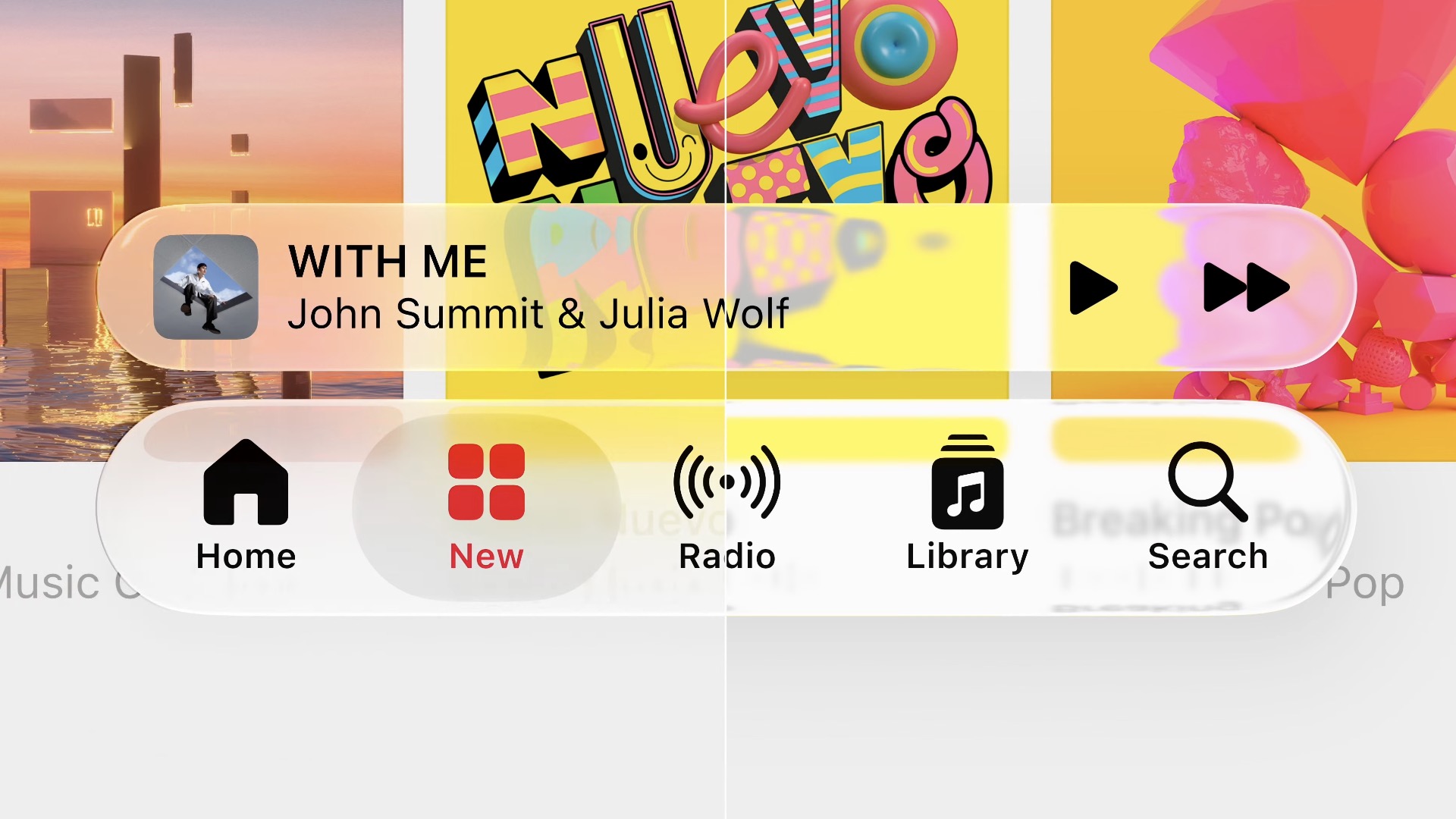
Apple focused on tons of small improvements to Liquid Glass with the 27 releases. By default, Liquid Glass has improved legibility by default, with complex backgrounds beneath a Liquid Glass toolbar appearing more diffused. There’s a user-configurable slider, to adjust the opacity of Liquid Glass elements.
On the Mac, the sidebar is now entirely separated, no longer inset — and with colorful icons. Toolbars have backgrounds again, just like in macOS 14 and earlier.
App icons appear crisper and more glassy. Developers can add in a refraction effect to app icons. The Icon Composer app has been updated with these features, and can preview what icons will look like on the 26 releases, too.
Apple is now forcing iPhone and iPad apps to be freely resizable. Apple says this feature is intended for iPhone mirroring on the Mac — but with a little reading between the lines, this appears to be a feature that will be important for the upcoming folding iPhone as well.
Developers are no longer able to opt out of using Liquid Glass design with all its 27 releases.
Improvements to SwiftUI
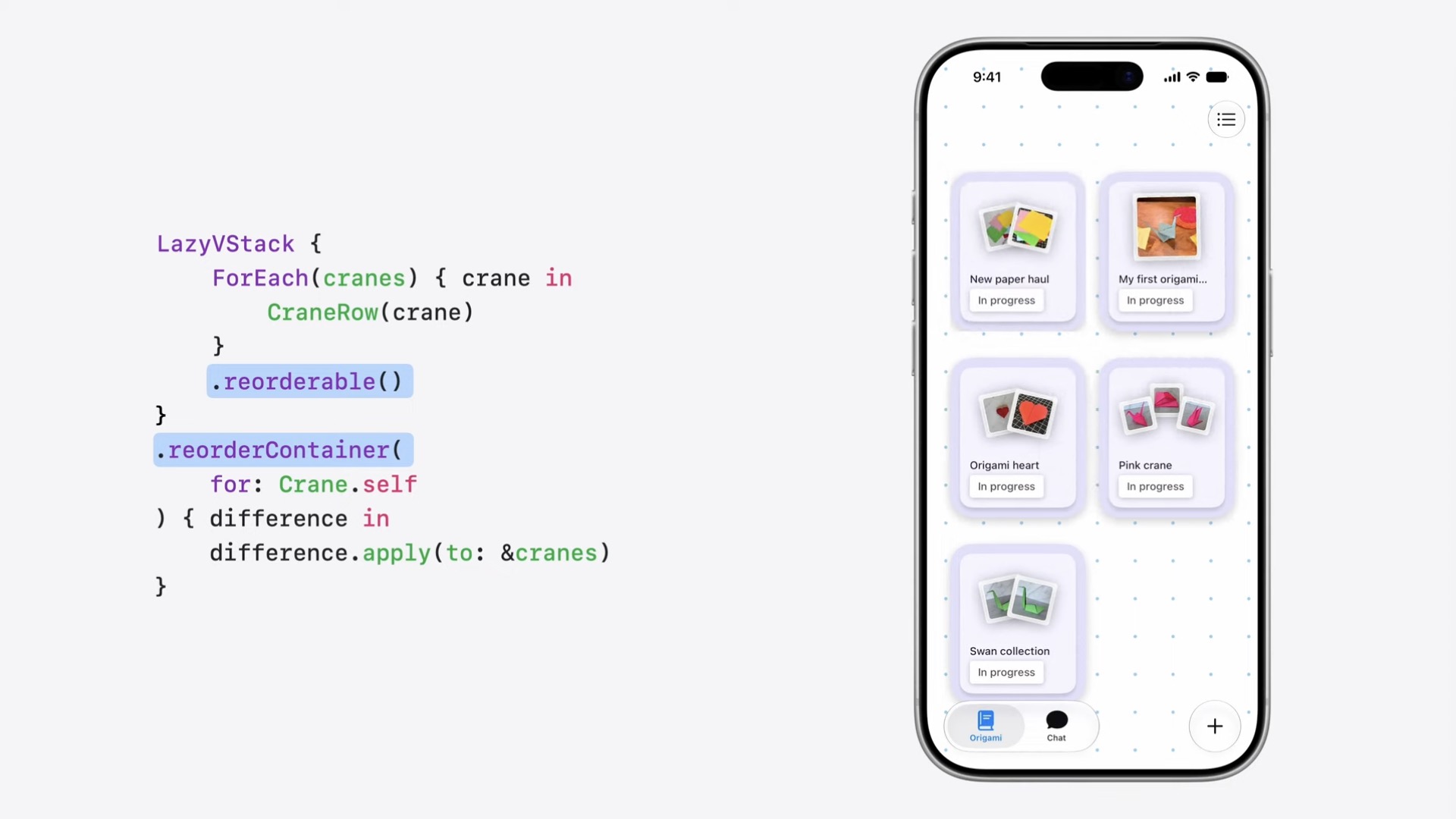
Image: Apple
SwiftUI is Apple’s cross platform framework for quickly developing native apps across all Apple platforms.
A new API lets SwiftUI list elements be freely reordered, as well as support swipe actions. Text selection has been improved significantly, especially with edge-case features like vertical text.
SwiftUI performance is another great focus. Long lists on the Mac, resizing on-screen elements, loading images and many other common tasks will perform far better. SwiftUI code can choose to read and write only new changes to a document, for greater performance.
SwiftUI has new APIs to handle toolbars on resizing windows. For big, busy toolbars, you can set which icons are higher priority and which go into an overflow menu.
New Swift 6.4 features
Swift is the best language to develop code for Apple platforms. Apple is adding major quality of life improvements to the latest version:
- You can hide warnings in specific areas of your code if you don’t want to deal with them right now.
- Alternatively, you can promote warnings to errors in specific areas that are critical to your app functionality.
- You can set feature availability across platforms using
anyAppleOS 27.0in place of listing out iOS, iPadOS, macOS, watchOS, etc. awaitnow works inside adeferblock.- The compiler is now able to type-check expressions in a more reasonable time (for the most common instances). Type checking error messages are more descriptive.
Apple is moving much of its own code to Swift — from its WebKit framework down to the lowest-level parts of the kernel.
New developer features in Xcode
Screenshot: Apple
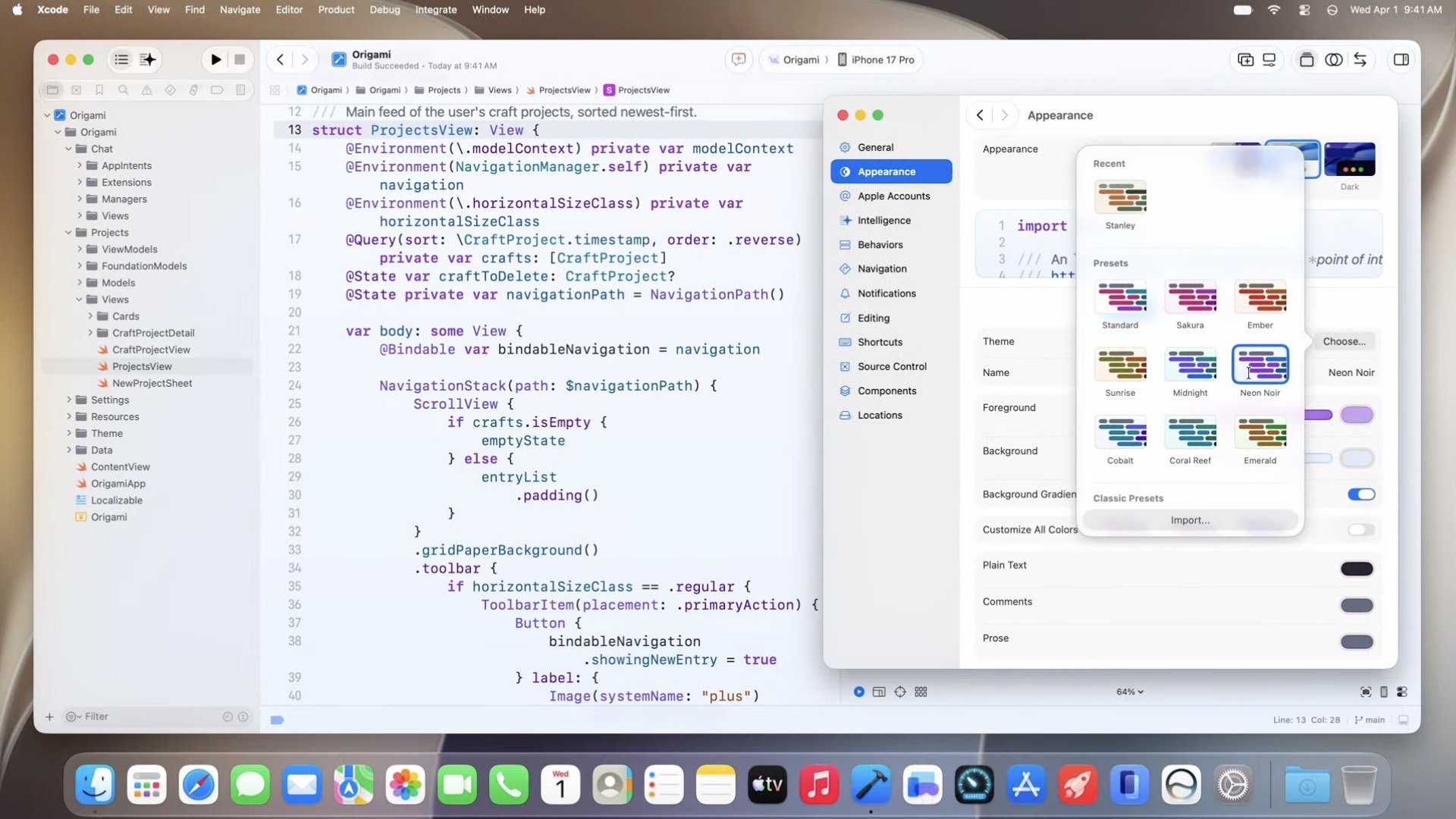
Xcode 27 is 30% smaller, with tons of little tweaks, features and optimizations. You can import Xcode settings from iCloud, so all your preferences sync without all the setup. Creating an app is faster, with fewer screens and buttons to click through. The toolbar is customizable as well, so you can put your most-used buttons right up top. Best of all, it features themes.
The new Device Hub app replaces the Xcode Simulator of yore. It now adds a sidebar that lets you instantly change light and dark mode, change the text size, use multitouch gestures and more. You can resize the screen, to see how an app will work on the upcoming foldable iPhone.
Xcode 27 adds support for Google Gemini and the Agent-Client Protocol (ACP) for agentic code generation. Xcode’s new plugins integrate agents directly with Figma and GitHub. Extensive support for agents in Xcode can help with all stages of app development — creating and iterating on a plan, refining its implementation as it builds the app, and validating the code with tests and previews. Agents can now swipe, tap and type in the app in the simulator itself. Xcode can attempt to localize text, using the context of the interface to aid in picking accurate language for buttons and interface elements.
More WWDC26 news
Some of the big announcements at WWDC26:
Developers can dive into even more detail on exactly how to adopt the new platform features in the WWDC26 session videos.