Assuming a new rumor that the iPhone Air 2 will be even thinner than the current model is true, Apple is focusing on the wrong thing and might push buyers even further away from its ultra-thin and light smartphone.
At 5.6mm thick, the iPhone Air is the thinnest iPhone Apple has ever made. Even a year post-launch, it still feels like it could be snapped in half just by picking it up wrong.
It could be argued that the iPhone Duo will take the thinness crown, albeit only when opened, after its October 23 launch. It'll come in at just 5.2mm thick when unfurled, but with a chunkier 11.3mm measurement when closed.
It's easy to see how Apple could go thin with the iPhone Duo. After all, it'll have a much larger footprint to fill with chips and battery than a normal iPhone.
But now it's been claimed that the iPhone Air 2 will also slim down to the Duo's 5.2mm thickness. It'll essentially be an iPhone Duo snapped straight down the middle.
But while the same rumor claims the iPhone Air 2 will come equipped with iPhone 18 Pro battery tech for increased capacity, I find myself concerned.
If the iPhone Air feels impossibly thin already, the need for it to get even thinner seems dubious at best.
At worst, it could be enough to stop iPhone Air 2 buyers in their tracks.
Repeating its mistakes
It's surely fair to say that, as fond as I am of the iPhone Air, I'm in the minority. It's equally fair to say that it hasn't been a big seller for Apple, but it also hasn't been the sales catastrophe mostly unnamed sources from China said it was.
I've heard various reasons why people have chosen to ignore the iPhone Air to date. But there are two that keep cropping up: battery life and the camera situation.
I wasn't convinced that either was a real issue when the iPhone Air launched in 2025. I even took it on vacation to find out for myself and, spoiler, it was fine.
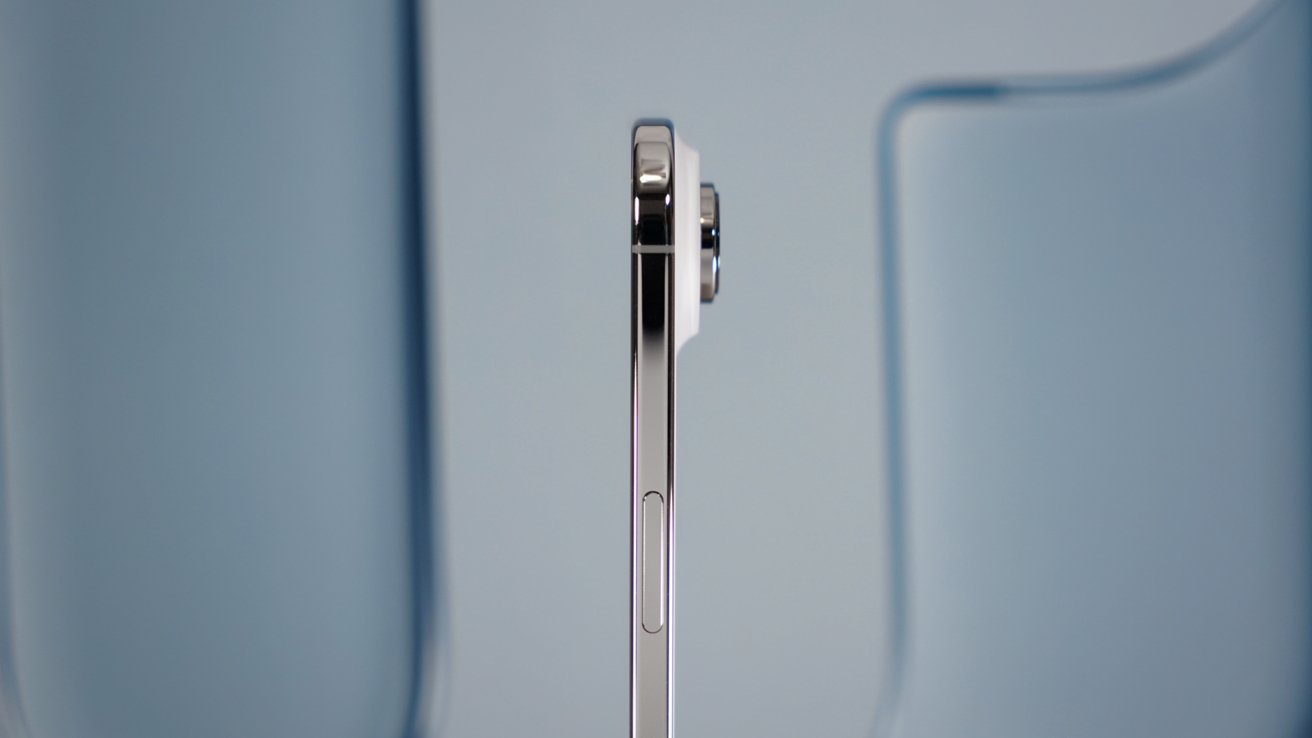
The thinnest iPhone yet, for now
But there's no denying that, alongside an iPhone 17 Pro, the iPhone Air had its limitations. The battery life was worse, and it had two fewer cameras. Stats are stats.
It didn't help that the iPhone Air was priced like an iPhone 17 Pro, either. I would imagine it was a very difficult sell for Apple Store employees the world over.
For me, the trade-offs were worth it. I loved how thin and light the iPhone Air was, and I still do. More so after writing our iPhone 18 Pro Max review.
But for most people, the choice was easy. "I'll have the phone that lasts longer and takes better photos, please."
The question was always going to be whether the iPhone Air 2 would address those issues.
The rumors
We've been hearing for some time now that the iPhone Air 2 will feature a battery with a larger capacity than its predecessor. That should equate to an ability to go longer between charges.
If the rumors are true, Apple will achieve that by using denser battery technology than that previously used. Boiled down to one sentence, the new tech allows more power to be stored in a battery of the same size.
But there's a catch. Again, if the report is accurate, the iPhone Air 2 will be even thinner than before, reducing the amount of space inside it.
That would, presumably, mean the iPhone Air 2's battery will be physically smaller than the one used in the iPhone Air. And that should be fine, because the capacity will still be higher than before.
Except, it's all a missed opportunity.

The iPhone Air has been great, but some still have concerns
The theory makes sense, at least. Apple seems to have chosen to make the iPhone Air 2 even thinner because it can use the higher-density battery technology to balance things out.
But, given that potential buyers complained about battery life the first time around, I'm not sure this is the right approach. Instead, it would have made sense to keep the thickness the same, use the new battery tech, and post even better battery life figures.
This approach would wipe out the battery life complaint for good. It just wouldn't be an issue.
Apple is well aware of what pushed people away from the iPhone Air. Rumors claim the Air 2 will gain another camera, after all.
There's just no reason not to truly fix the battery issue once and for all. Especially for the sake of 0.4mm.
Thin and thinner
I'm using an iPhone 18 Pro Max that I reviewed right as my main driver now, so I fished my iPhone Air out of a drawer when I saw the new rumor that its successor would be even thinner. I'm not sure what benefit there is to a phone being even thinner than this.
After doing some research, it seems that there have been thinner phones. Although many of them are foldables, and the figure only applies when they're open, just like the iPhone Duo.
For standard phones, the thinness crown seems to go to the Vivo X5 Max. Launched in 2014, it measured just 4.75mm and somehow still found room for a headphone jack.
The Oppo R5 also launched in 2014, measuring 4.85mm. Oppo couldn't make the headphone jack fit, though.
Next, there's the Micromax Canvas Sliver 5. It had no camera bump whatsoever, yet still measured just 5.1 mm. It launched in 2015.
2016 saw Motorola try its hand at the thin phone thing. The result was the Moto Z, measuring an iPhone Air 2-like 5.19mm.
After that, it's basically foldable phones (when open) and then the iPhone Air in 2025. We aren't talking about tablets, but if we were, the 13-inch iPad Pro sits at 5.1mm.
The fact that all of the world's thinnest glass slab phones are from a decade ago is telling. Companies tried it, but ultimately went back to thicker devices afterwards.
Even Samsung's thinnest-ever phone, the Galaxy S25 Edge, is thicker than an iPhone Air. At 5.8mm, it's nowhere near the thinnest phones ever made.
Maybe this should tell us something. Maybe going even thinner is a fool's errand; once you reach around the 5.6mm mark, it's thin enough.
I'd suggest that is very much the case. And I bet anyone wishing for significant battery and camera gains for the iPhone Air 2 would agree.


