ChatGPT's new voice mode will slow down if you tell it to
OpenAI's new voice mode for ChatGPT will acknowledge you as you speak, and slow down if you ask it to.
OpenAI is releasing two new voice models today called GPT-Live-1 and GPT-Live-1 mini the company says bring major enhancements to ChatGPT's voice functionality. You may recall the company launched Advanced Voice Mode in the summer of 2024. On release, the feature was impressive and felt like a major upgrade over legacy voice assistants like Siri and Alexa, but over time its limitations began to feel more pronounced. Specifically, Advanced Voice Mode employed what OpenAI describes as a "turn-based" voice model, which functions exactly like it sounds. The model has to wait for the user to stop speaking before it can respond. As you might imagine, this often resulted in a stilted back-and-forth. What's more, because the model used silence as its cue to start talking, it would often mistakenly interpret a brief pause as the end of a prompt or question, leading to awkward interruptions.
By contrast, the GPT-Live-1 family of models are built on top of a duplex architecture. They can simultaneously process inputs while generating an output at the same time. "This allows the model to engage in a more natural back-and-forth, maintain a better sense of time, and even perform live translations," explains OpenAI. At the same time, the company has designed GPT-Live to delegate tasks. If the new voice models determine your question or prompt would benefit from reasoning, a web search or other, more agentic capabilities, they can turn to OpenAI's other models, including GPT-5.5, for assistance. These systems will work in the background, allowing you to continue your conversation with GPT-Live.
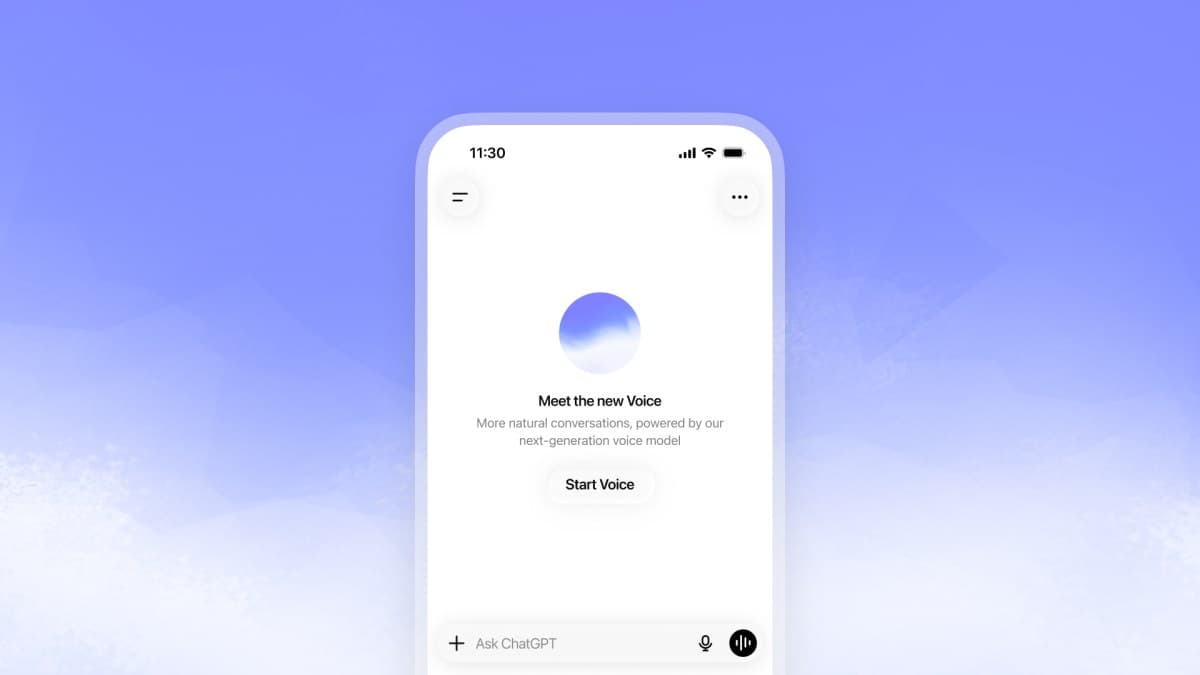
Together, these changes result in a voice experience OpenAI believes people will find more useful. You can interrupt the new voice models at anytime, and even ask them to slow down if you find they're talking too fast. As you're speaking, they will also confirm they're listening with verbal acknowledgements like "mhmm" and "got it," and OpenAI says it has made the new models better at focusing when there are distracting noises in the background. ChatGPT Voice can now also generate visuals, in the form of widget-like cards, for topics like the weather, sports, stocks and more. As before, support for image and file uploads is built into the feature, and you can also use it to search the web.
At the same time, OpenAI says it has built new safeguards into ChatGPT Voice. "When the system detects potentially unsafe output, it can steer the model toward a safer response, surface additional safety messaging or end the voice conversation in higher-risk cases," the company says. Parents and guardians can use OpenAI's recently introduced parental controls to disable ChatGPT Voice for their teens. If they've given their child access to ChatGPT Voice and the system detects they're trying to push the conversation toward self-harm, the system will notify the parent.
OpenAI is starting to roll out GPT-Live to ChatGPT on Android, iOS and the web, beginning today. GPT-Live 1 will be the go-to model for those paying for Go, Plus and Pro subscriptions, while Free accounts will default to the smaller Live-1 mini model.
Originally published on Engadget