Foldable phones still need to fix this problem
Samsung's Z Fold series has improved the foldable phone form factor over time, but there remains an issue that the rumored iPhone Ultra may not remedy.
Foldable phones still need to fix this problem
Any day now would be great.
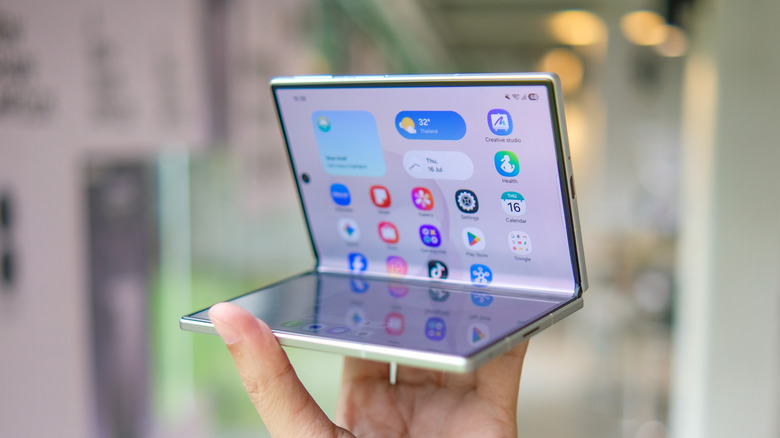
Foldable phones aren't big news anymore. It's been seven years since Samsung launched the first Galaxy Fold – and ran into a bunch of challenges back then. But foldables have gotten much better since. They've gained more advanced screens, slimmer designs and all the things you'd expect from a modern phone. Still, compared to regular smartphones, you might not see them in the wild that often. And the reason is likely because phone manufacturers still have some major problems to solve before foldables catch on with everyday consumers.
You might think that some of the main complaints about foldable phones are about their fragility or the crease in the middle of the display, which you can definitely still see. Yes, people do complain about that. But there's another pretty annoying problem when it comes to foldables, and that's how wobbly they can be when laid flat. The main reason here is the camera. Finding any kind of phone that doesn't have a massive camera bump on the back has become pretty much impossible. It's no wonder Apple even gave the iPhone's camera bump a name, although most people probably don't say "Camera Plateau" out loud.
Foldables can be quite wobbly
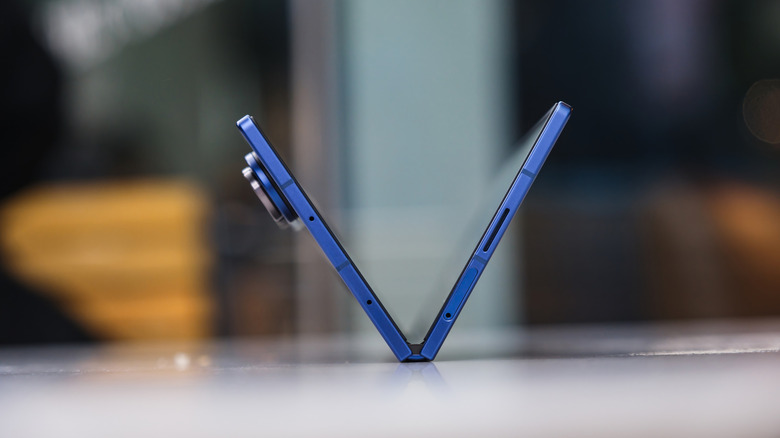
The problem becomes even more noticeable with foldable phones. Companies have been trying to make them much thinner so that they look like regular smartphones when folded. The thing is, key components like camera sensors still require a lot of internal space. That's where design workarounds come in to make everything fit. The camera bump is actually a pretty clever idea. It creates extra space for the lenses to extend beyond the phone's body. But in real life, that massive bump makes your phone wobble a lot when it's sitting on a table.
When it comes to the new Galaxy Z Fold 8, the camera module not only protrudes quite a bit, but it's also placed vertically on the back. The result is more wobble when the phone is on a flat surface. It's not hard to find posts on Reddit from users complaining about how wobbly the Z Fold 8 is. It can get really annoying over time. Some people have even gone so far as to tear their phones apart to completely remove the rear cameras – definitely not something you should do. Still, this shows just how upset users are with this design choice.
"So what's the solution?" you might ask. With phones getting thinner and thinner and their cameras getting better, this problem is likely to stick around. Cameras still need large sensors to perform better. A possible solution would be to make phones thicker so that they have a flat back – just like in the good old days. But let's be real, that probably isn't going to happen. So maybe your best option is to get a thick case for your foldable phone.
The trade-offs of using a foldable phone
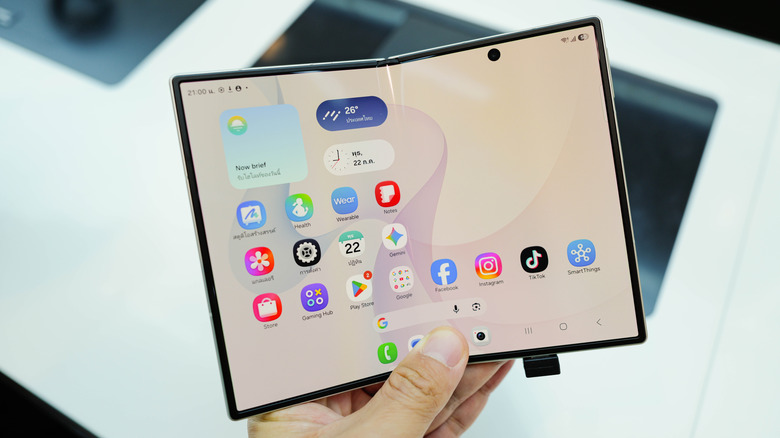
Using foldable phones can be a lot of fun, really. You pretty much have a device the size of a small tablet that can be folded up and slipped into your pocket. And although they aren't exactly mainstream yet, Samsung's latest devices have been getting a lot of attention. Plus, with Apple rumored to be introducing its first foldable iPhone next month, the world will certainly have more eyes on foldable smartphones. But using foldable phones still comes with a lot of trade-offs, even aside from the huge camera bump.
The crease in the middle of the screen is still there. Yes, companies have been doing a great job of making it less noticeable, but the screen still has that crumpled-plastic look. Especially after opening and closing it for a few months, it becomes quite noticeable. Software is still a problem too, especially on Android. There aren't many apps that really take advantage of tablet-sized screens. And some apps like TikTok still look pretty weird on the Z Fold 8's wider and shorter screen. That's one area where Apple may have the edge, as iOS apps tend to adapt to new features and devices more quickly.
It's also hard to ignore the fact that these phones are much more expensive than conventional smartphones. Yet, they don't always have the best hardware. Take the Galaxy Z Fold 8 as an example again. Even the $2,100 Z Fold 8 Ultra lacks features like 5x optical zoom and 60W fast charging compared to the S26 Ultra. The rumored foldable iPhone is also expected to lack a telephoto lens and Face ID – features that have become standard on iPhone Pro models. Maybe someday you won't have to choose between a foldable screen and the features everyone has come to expect. For now, though, you'll still have to decide which type of smartphone works best for you.
Originally published on Engadget