At the base of the main instrument display is a strip of information that’s permanently displayed regardless of the view mode you choose—this includes things like your fuel level, the drive mode, and any warning lights that may appear.
Yes, it has CarPlay
The central infotainment screen still runs on Android Automotive OS, but now the home screen is a more useful split view showing the music and navigation apps, with a full map view rather than the limited map that GM previously showed in its split-screen view. “If you wanted to search something or provide feedback on road conditions or something like that, when you tapped on the screen, it took you out of the home screen and took you to the full-screen maps. Here, you can do everything that full-screen maps can do right inside this window,” said Colin McCormick, group product manager at GM.
A dedicated row at the bottom of the screen is for the climate controls, although, as you’ll note from the photos, there are physical dials to change the temperature, as well as physical buttons for fan speed and demisting.
GM has also integrated more Android-like notifications into the infotainment system and included the ability to create quick actions. It has also changed the behavior of some of its apps—now, if you accept a phone call, it won’t switch you out of whatever app was active to dump you into the dialer app anymore.
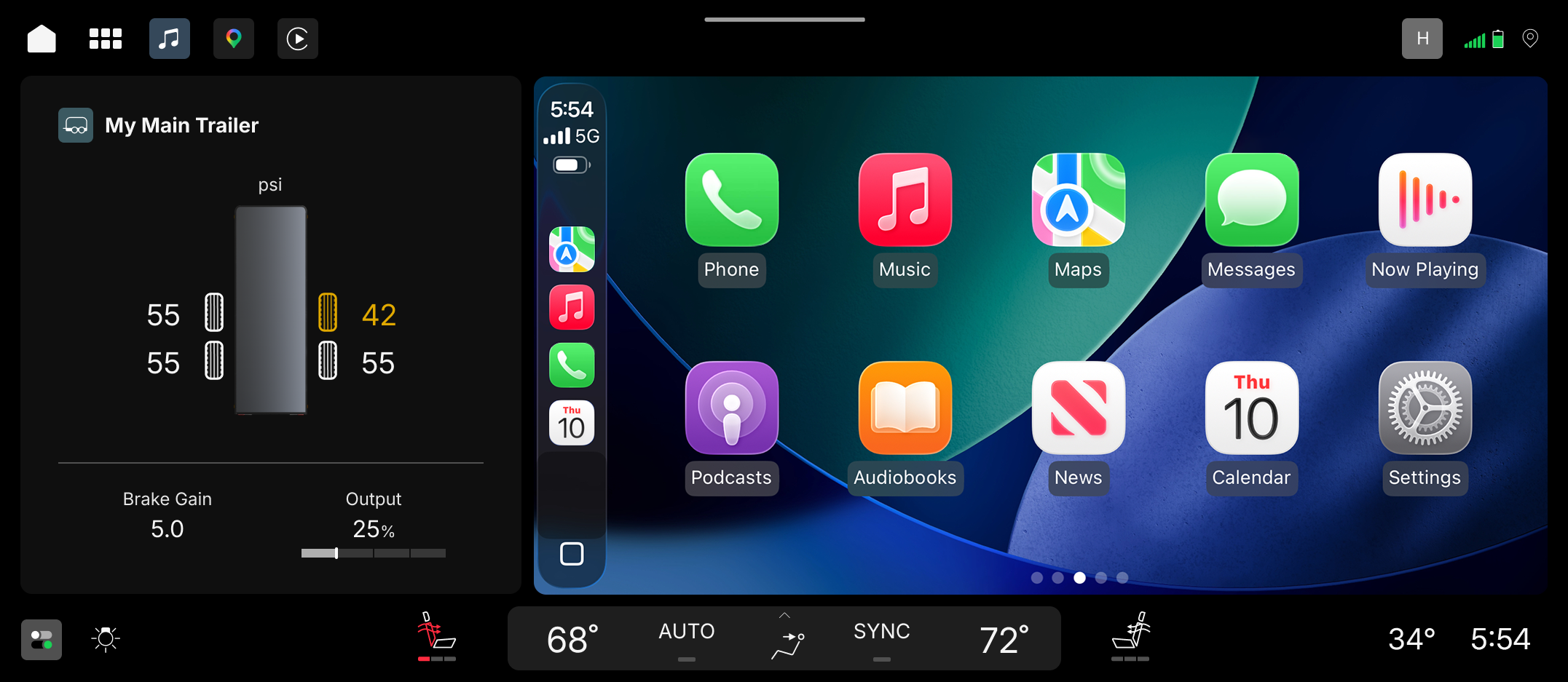
Here’s what Apple CarPlay looks like. The card on the left shows towing information.
GM
Here’s what Apple CarPlay looks like. The card on the left shows towing information. GM
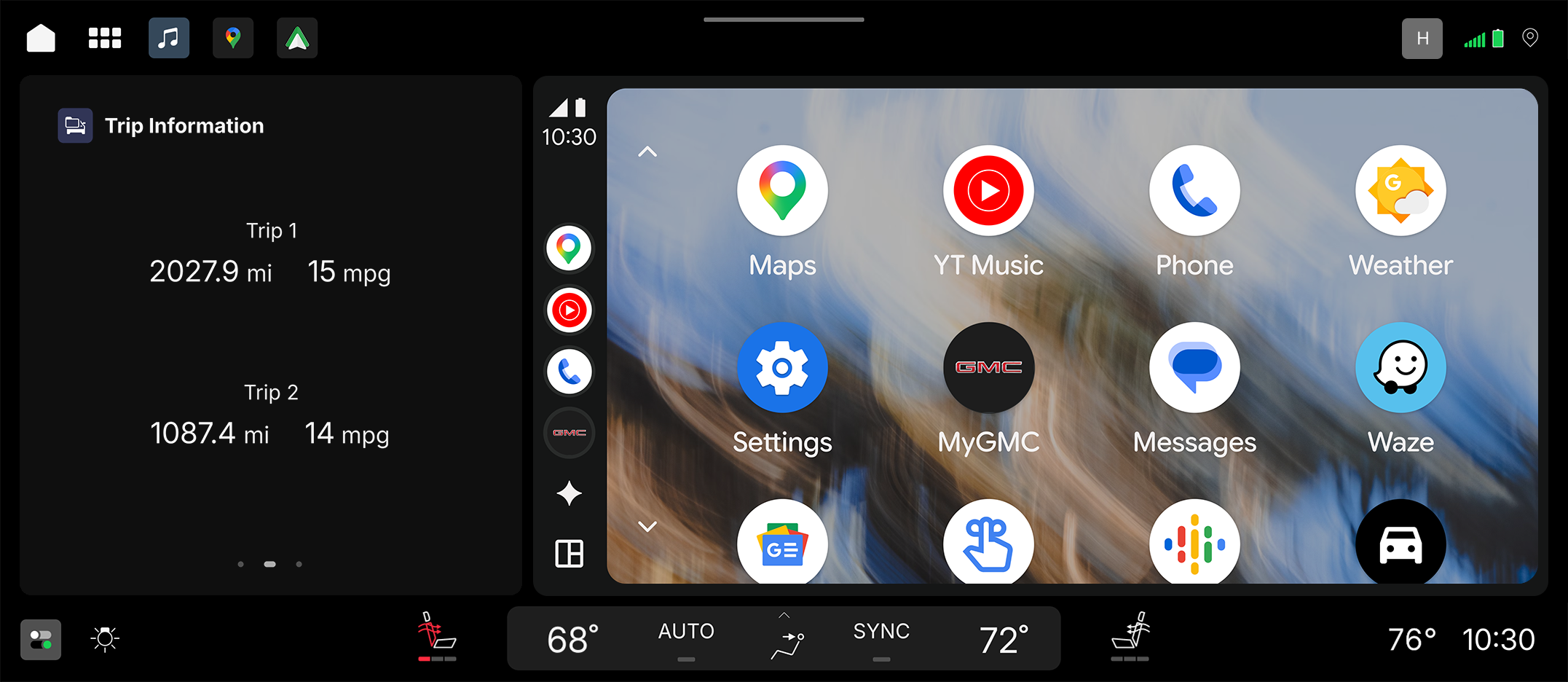
Here’s what Android Auto looks like. Here, the card shows trip info.
GM
Here’s what Android Auto looks like. Here, the card shows trip info. GM
Here’s what Apple CarPlay looks like. The card on the left shows towing information. GM
Here’s what Android Auto looks like. Here, the card shows trip info. GM
GM made the decision to drop Apple CarPlay and Android Auto phone casting from its newer EVs, and it’s one we’ve been pretty critical of. Although the automaker told us it made that decision in order to offer a better, more unified experience to its customers, that may well have changed: here, customers still have the choice to just cast their phone to the center screen.