Setting up a Googlebook is a snap for Android users. Just like configuring a new phone, you can scan a QR code with your current phone to copy your accounts, data, and apps over automatically. You can be up and running in minutes, and your phone will integrate deeply with the OS. Well, provided it runs Android 17. That’s going to be a sticking point, since most phones don’t have that update yet.
With Google’s “Better Together” services, a Googlebook can access files on your Android 17 phone, sync notifications, remember where you left off in apps, and even mirror apps from your phone. This all sounds great, and when it works, the experience can be good. However, there are various limitations and bugs that get in the way.
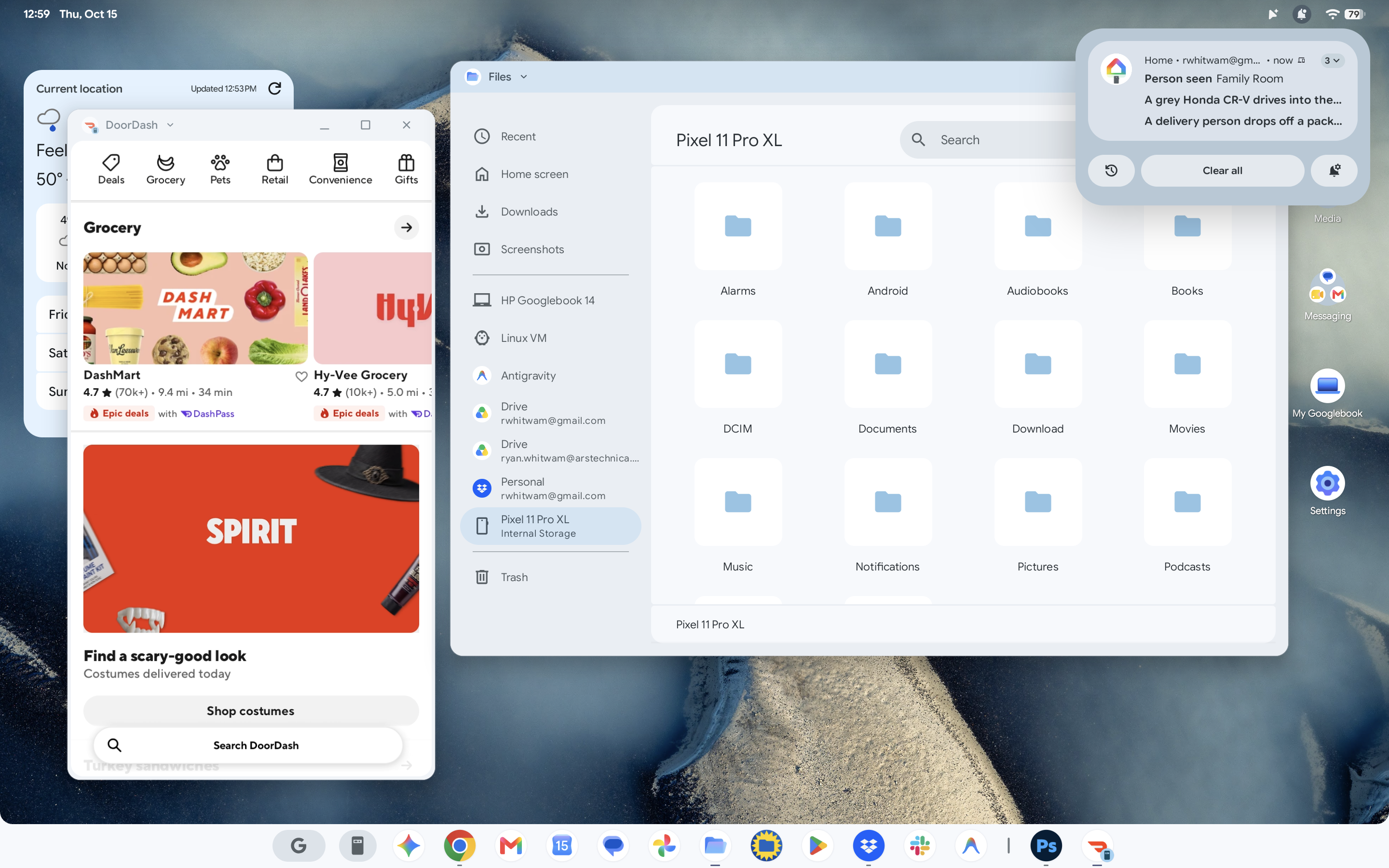
Googlebooks can stream apps, mirror notifications, and access storage from your Android phone.
Credit: Ryan Whitwam
Googlebooks can stream apps, mirror notifications, and access storage from your Android phone. Credit: Ryan Whitwam
To remain in contact, the phone and Googlebook need to be on the same Wi-Fi network, and switching to other networks can break the connection in annoying ways. Even when the devices appear to have a solid connection, I have rarely seen any hint of Google’s Continue On feature, which is supposed to let you pick up where you left off in a phone app. Mirroring phone apps on your laptop can also be handy, but the performance is varying degrees of bad, and apps with system-level security features won’t work at all. You are also limited to one app at a time, and they won’t stay open in the background.
Accessing the files on your phone from the laptop is a good idea, but the transfer speed is often sluggish. More annoyingly, the connection only goes one way—the Files app on the Googlebook can see your phone, but the Google Files app on a phone can’t see the Googlebook. Speaking of the Files app, this is emblematic of how far behind Google is with desktop software. The app lacks basic things like tabs and support for network shares. It’s nice that it can access my phone, but it feels very restrictive if you’re used to Finder or Windows Explorer.
