A YouTuber turned an iconic “sunflower” iMac G4 into a DIY HomeView — and posted the necessary files on GitHub for anyone to use for free.
When creator Jesse Richards bought the iMac G4 for just $20, the computer wouldn’t even boot up. But after vibecoding a fix, Richards is now able to query his homemade HomeView about the weather, his calendar, recipes and more. It even controls some of his smart home, just like Apple’s official HomeView, hasn’t yet hit store shelves.
“It’s the most-used screen in my house,” said Richards.
Sunflower iMac G4 HomeView: How a YouTuber turned an old iMac into a DIY HomeView
Apple hasn’t yet released the HomeView smart speaker/screen, but already tinkerers are creating their own versions. Some have used popular dashboard apps to turn iPads into a DIY HomeViews, but Richards’ iMac G4 conversion is perhaps the most ambitious and aesthetically pleasing yet.
The iMac G4, first released in 2004, is one of Apple’s most distinctive computers ever. It’s still a much-loved machine, and lots of Apple watchers have noted HomeView’s similarity to its iconic design.
Apple HomeView is a $299 smart home display/speaker powered by Siri AI. It’s designed to help with common tasks like playing music and podcasts, answering queries, and controlling a smart home. HomeView starts shipping and will hit retail stores on November 13.
iMac hoarding pays off
Screenshot: Jesse Richards
YouTuber Jesse Richards, a Los Angeles-based VFX artist best known for viral special effects/trick shot videos, bought his iMac G4 used. When the old machine wouldn’t start up, he stashed it in a cupboard until Apple announced the HomeView in last month.
After seeing Apple’s new home hub, Richards hooked up the old iMac to his MacBook via an Ethernet cable and asked Anthropic’s Claude to diagnose the problem. After some back-and-forth, Claude figured a bad stick of RAM was “corrupting everything.”
Instead of trying to fix the ancient iMac, which is too old to even run a modern browser, Richards instead set up his MacBook to process all queries and send replies over the Ethernet cable.
How the DIY HomeView works
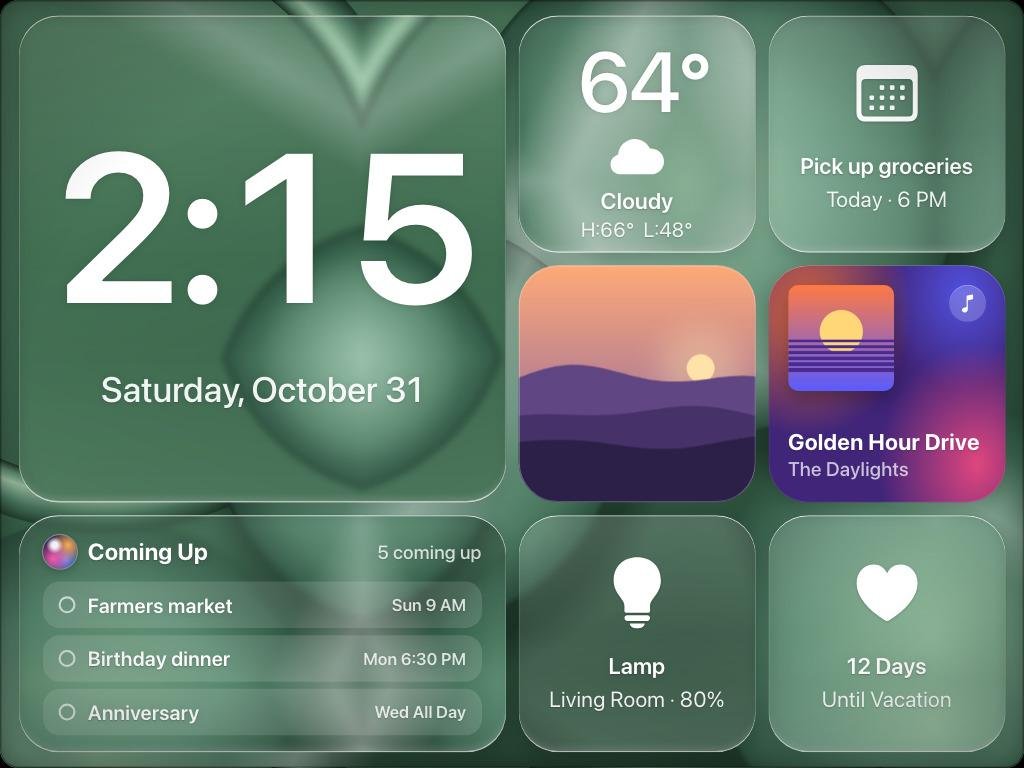
The iMac G4 runs a lightweight Java app that streams the microphone and displays screen renderings sent from the MacBook.
“Instead of making the iMac do the work, I let my MacBook do it,” he said. “The MacBook builds every screen at full quality, then sends it to the iMac over a single Ethernet cable. It shows each screen and draws the moving parts itself. The clock hands, the glow, the cards sliding in. That’s why it feels smooth, not like a slideshow. And that one cable carries everything.”
Richards said simple tasks like setting timers, turning lights on and off, and playing music happen almost instantly. More complex queries get routed to OpenAI, which can search the web and then display results on the iMac’s screen.
Richard’s DIY HomeView responds to “Hey Apple,” and is even able to control some smart home devices like a video doorbell, which shows a live view on the iMac when someone rings it.
Make your own DIY HomeView
To help others make their own homemade HomeView, Richards posted the files on GitHub. You’ll need an iMac G4 running Mac OS X 10.4 Tiger, any modern Mac, and an Ethernet cable.
“So yeah, a $20 iMac, one Ethernet cable, and somehow it’s the most used screen in my house,” he said.
Watch Richard’s homemade HomeView video