While at Apple Park this week for WWDC, I had the opportunity to sit down with two Swift Student Challenge Distinguished Winners to talk about their apps and what it’s like giving a surprise demo to Tim Cook and John Ternus.
Asuo by Karen-Happuch P. Henneh
First, I chatted with Karen-Happuch P. Henneh, the developer behind an app called Asuo. Asuo is an offline flood navigation app that uses flood data and weather forecasts to guide people in making safer travel decisions.
Karen explained to me:
My app is called Asuo, which means flowing water in my language. I’m from Ghana in West Africa. Anytime it rains, the streets get flooded. I even have videos from just Monday showing what the streets look like.
A lady driving might just drive into a flooded area because the normal GPS is only going to tell you, “Turn right, turn left.”
And with the weather, it’s just going to tell you it’s going to rain from this time to that time. But people don’t know which specific places that rain has affected or which roads are flooded.
Throughout history, it’s the same places that keep getting flooded. So if the rain is intense, those places are almost certainly going to flood. We can predict that.
That’s what the app does. Up to 12 hours ahead of time, it uses weather data and historical geography to tell you that because of this rain and how intense it is, these places are going to be flooded, so people know what to avoid.
And if you need to move, the app guides you on which specific places are safe.
There are some communities that are low-lying and very close to rivers and lakes. The population there is vulnerable, and if it rains, those places flood all the time.
So there’s a platform where users can see the entire city. They’re able to see which places are highlighted red, yellow, and green. Red means it’s completely flooded and it’s a danger zone. Yellow means it’s flooded, but people should be cautious. Green means it’s a safe area.
So even before it rains, before the flooding happens, people who are in danger zones know that they need to evacuate or move so that lives are saved.
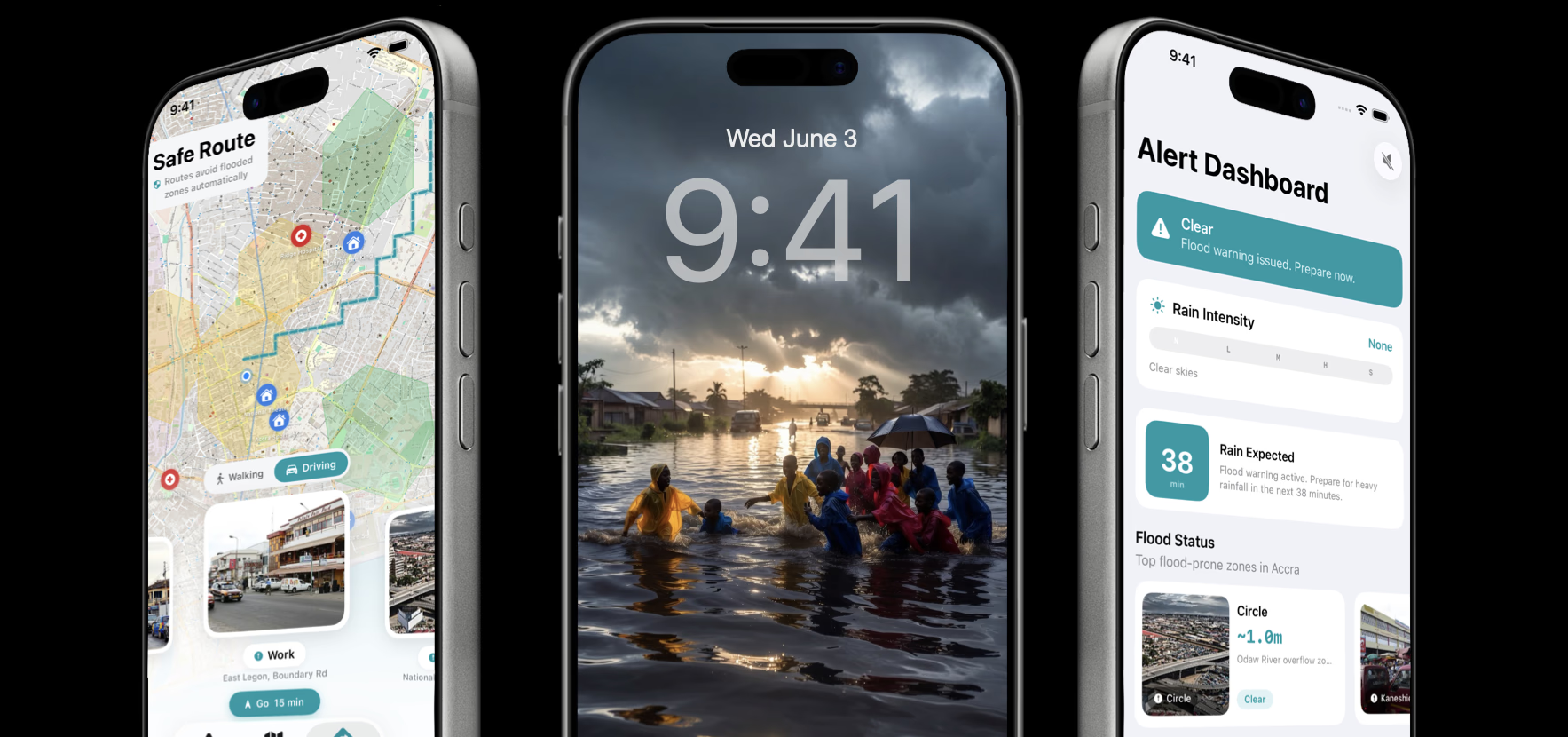
For Karen, there was clear personal inspiration behind creating Asuo: more than 150 people lost their lives in 2015 during tragic flooding in Accra, the largest city in Ghana.
“I strongly believe that the devastating outcomes of flooding are not just a weather issue. It’s a lack-of-information issue,” Karen explained to me. “If people know that these areas are going to be affected, they’re able to make informed decisions ahead of time and save their lives.”
NodeLab by Aayush Mehrotra
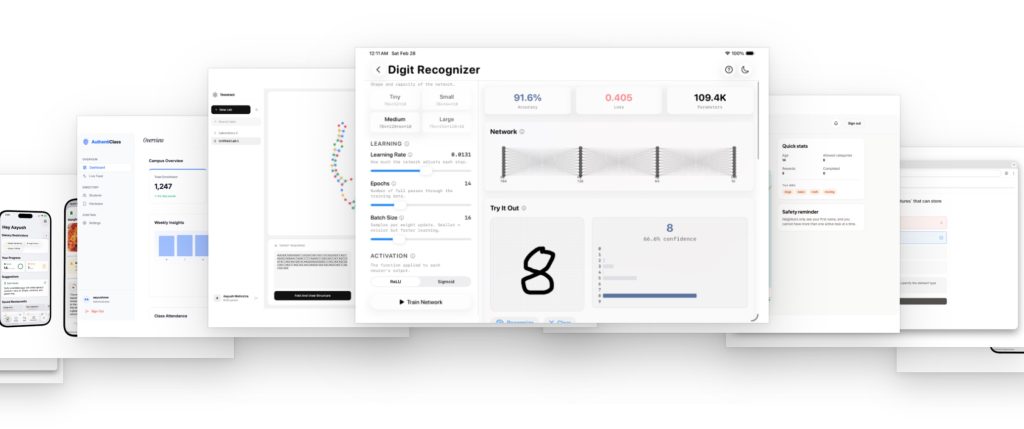
Aayush Mehrotra, a 14-year-old developer, created an app called NodeLab and was also named a Swift Student Challenge Distinguished Winner. NodeLab aims to give students a clean, visual, and interactive way to learn more about machine learning.
For the Swift Student Challenge, I built an iPad app called NodeLab, which aims to explain the complex math that powers neural networks in a clean, visual, and interactive way to students from all sorts of backgrounds.
Whether you have a pretty decent understanding of computer science or you have no clue at all, the goal is to make machine learning education more accessible.
For Aayush, part of the motivation behind NodeLab was his work as head of publicity for his school’s machine learning club. When he tried to get his friends to join, he realized how intimidated people are by machine learning.
At my school, we have a machine learning club, and one of my roles as head of publicity is bringing new people into the club and helping publicize it around the school. I try to get some of my friends interested in STEM and machine learning specifically.
One of the things I noticed is that when people hear “machine learning,” they’re kind of scared or hesitant because of how complicated it sounds.
And that’s mainly because of the huge background in computer science and math that people think they need to know.
I wanted to make it so the process didn’t have such a steep learning curve and was much easier for people to get into. I wanted to build the app that I wish I had when I was learning about machine learning and use it to introduce people to those same topics.
Two surprise guests
One of the coolest aspects of being invited to Apple Park for Swift Student Challenge Distinguished Winners is the opportunity to present their apps to executives. In the lead up to the event, the winners are told they’ll be presenting to Susan Prescott, Apple’s vice president of worldwide developer relations.
In recent years, however, Tim Cook has popped up at the presentations as a surprise guest.
This year, there was another twist: it wasn’t just Cook and Prescott. Apple’s incoming CEO, John Ternus, also surprised the winners.
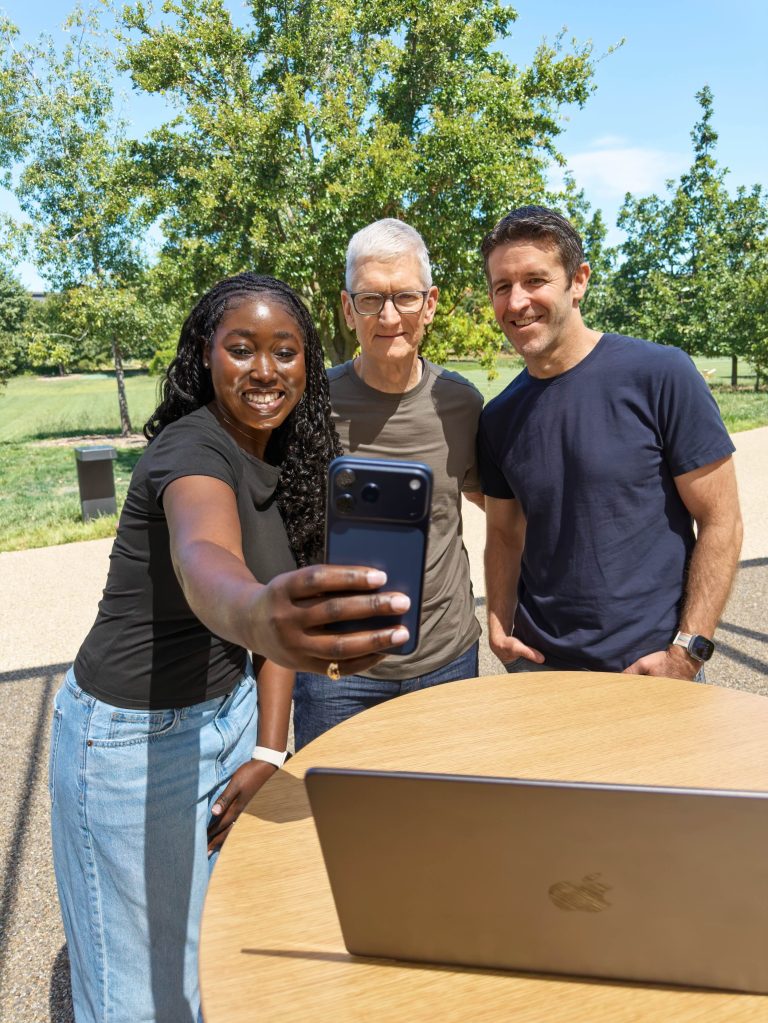
Karen described this as an “out of the world experience” that shows how Apple supports student developers:
I kind of suspected I might be able to present it to Tim because I saw the pictures from last year and what happened then. All this time, they just told us we were going to present to Susan. We’ve met her several times, so we were a lot more confident because we had prepared and spoken with her. The confidence was already there.
Then we got there and suddenly saw Tim and John coming in.
It was an out of the world experience. It was such a surreal moment. I’m excited that we got to present our apps to them. They were asking questions and seemed really interested in what we were building.
For me, that stood out because it shows how Apple is supporting student developers and how passionate they are about doing that.
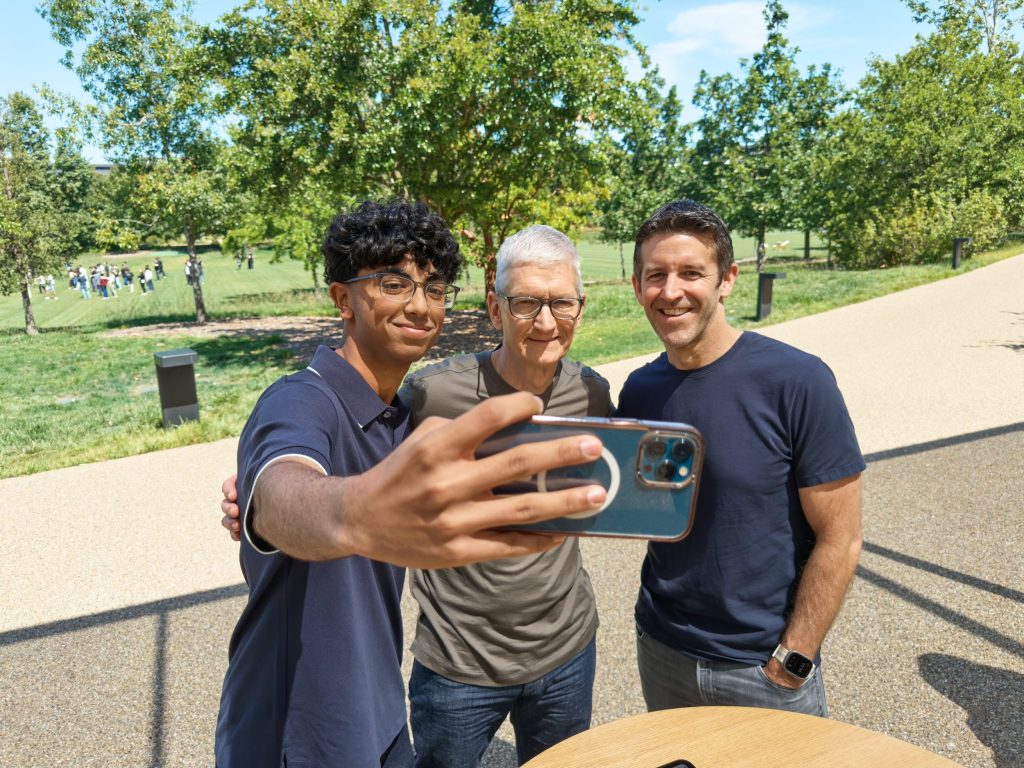
Aayush, meanwhile, also described presenting NodeLab to Cook, Ternus, and Prescott as a surreal, nerve-wracking, and rewarding experience.
I only expected to meet Susan. That’s what they had been telling us for the entire month. Even though I had seen that previous winners met Tim, I was basing everything on what we had been told, which was that we were presenting to Susan.
Earlier on, after developing the app, I had a media interview and had seen Susan online. So seeing her face-to-face actually felt a bit more comfortable because I knew who she was. Even then, it was still a little scary presenting.
Then everything changed when I found out that Tim Cook and John Ternus were both coming. Presenting to them was absolutely surreal. I had so many nerves.
Having your friends listen to your ideas is cool and all, but having the CEO of Apple listening and being interested in what you’ve built is just so rewarding.
What’s next?
For Karen, being named a Swift Student Challenge Distinguished Winner provides a level of reassurance about her work on Asuo, but she also never second-guessed it herself. “I think it has solidified my conviction about my app,” she said. “Not that I ever second-guessed it, but now my conviction is at a higher level. I know that this matters.”
Another benefit is that Karen has had the opportunity to show Asuo to more people and gather more feedback since winning.
I was selected as a Distinguished Winner, I’ve shown the app in several places and received very valuable feedback. So now the app is going to be even better.
Anytime I show it to somebody, I get real feedback and I get to improve the app. That’s one thing I’m learning: the more eyes you get on your work, the more it helps.
For Aayush, being a Swift Student Challenge Distinguished Winner does two things:
One is that it reassures me and validates both my app idea and my goals with machine learning. It shows that I have something to show for all the learning I’ve done and all the effort I’ve put in.
But it’s also opened so many more doors for me.
I’ve been able to meet new people, meet other Distinguished Winners from around the world, come to Apple Park, meet Apple’s leadership team, and talk to people like you.
I think it’s opened up so many opportunities for me.
Finally, given that we were sitting at Apple Park just hours after the WWDC, I couldn’t resist asking Karen and Aayush what they thought of the announcements.
“I am super excited about the new agentic coding tools,” Karen told me. “I’m also super excited about the new Apple Intelligence features. Now we can do so much more in our apps.”
“I’m definitely interested in the opportunities Siri creates for developers,” Aayush said. “The idea that you can talk to Siri and have it interact directly with your app seems super cool.”
Tim Cook
Tim Cook on Karen and her app Asuo:
The way Karen turned her personal experience into something that can protect and save lives is truly inspiring. Growing up in Ghana, she witnessed firsthand how inadequate flood infrastructure puts families and communities at risk, and she channeled that perspective into something that can make a real difference. Karen embodies the spirit of young developers all over America who are using their abilities to help people in the moments that matter most. It was wonderful to meet her, and I can’t wait to see what she does next.
Tim Cook on Aayush and his app NodeLab:
At just 14 years old, Aayush is already building tools that make some of the world’s most complex technology feel accessible to more people. NodeLab goes beyond explaining neural networks by putting them directly into users’ hands and letting them learn by doing. Aayush represents the incredible potential of young developers whose passion and creativity give me so much optimism about the future.
Wrap up
Meeting with developers like Karen and Aayush is one of the most rewarding and inspiring parts of WWDC for me every year — especially getting a glimpse at what inspired these developers. It’s a great reminder of how Apple supports student developers, recognizes their work, and provides them with a platform to show off their apps and gather feedback.
Chance’s favorites:
Follow Chance: Threads, Bluesky, Instagram, and Mastodon.
FTC: We use income earning auto affiliate links. More.