A new rumor claims that some iPhone 18 Pro models will use slower QLC NAND storage, mimicking a similar 2024 iPhone 16 Pro report. It makes more sense now than it did then, but doesn't matter much in practical usage.
This latest report suggests that Apple will use the faster TLC storage for the iPhones that people are most likely to buy. But those choosing the larger 1TB and 2TB capacities may be left with a slower QLC alternative from SK Hynix.
Companies like Apple continue to struggle to source the storage components required for new products. With that in mind, it may not be surprising to see Apple go this route. Sourcing 1TB and 2TB TLC components may be difficult, if not impossible.
And, certainly, it will be spendy given the current economic environment surrounding flash media.
However, we've heard this story before. And it doesn't seem to have been accurate that time around. And as we discussed back then, it's unclear whether the use of QLC storage would be a real issue for iPhone owners.
QLC or TLC for iPhone 18 Pro
This latest report centers around the iPhone 18 Pro and iPhone 18 Pro Max. WCCFTech shared details of a post by the leaker "Reptalica" which claims Apple will use different storage types for different models.
According to the X post, Apple will use TLC NAND provided by SK Hynix, Kioxia, and SanDisk when building 256GB and 512GB iPhone Pro/Pro Max models. The 1TB model will use a mixture of SK Hynix QLC storage and Samsung TLC chips.
It's then argued that Apple will solely use SK Hynix's QLC storage for the 2TB model.
A rumor, repeated
If this all sounds familiar, it's because we saw very similar claims in January 2024, prior to the iPhone 16 Pro's unveiling in September of that year. We were told then that Apple would use QLC storage for iPhones with 1TB of storage or more.
Getting concrete information on whether that actually happened isn't easy. That being said, we've only seen reports of high-capacity iPhone 16 Pro models with the fast TLC storage. That doesn't mean there aren't some QLC NAND chips floating around.
If there are, we've yet to see one.
The differences between QLC and TLC
Triple-Level Cell (TLC) NAND flash and Quad-Level Cell (QLC) NAND flash are both types of storage. But they aren't the same.
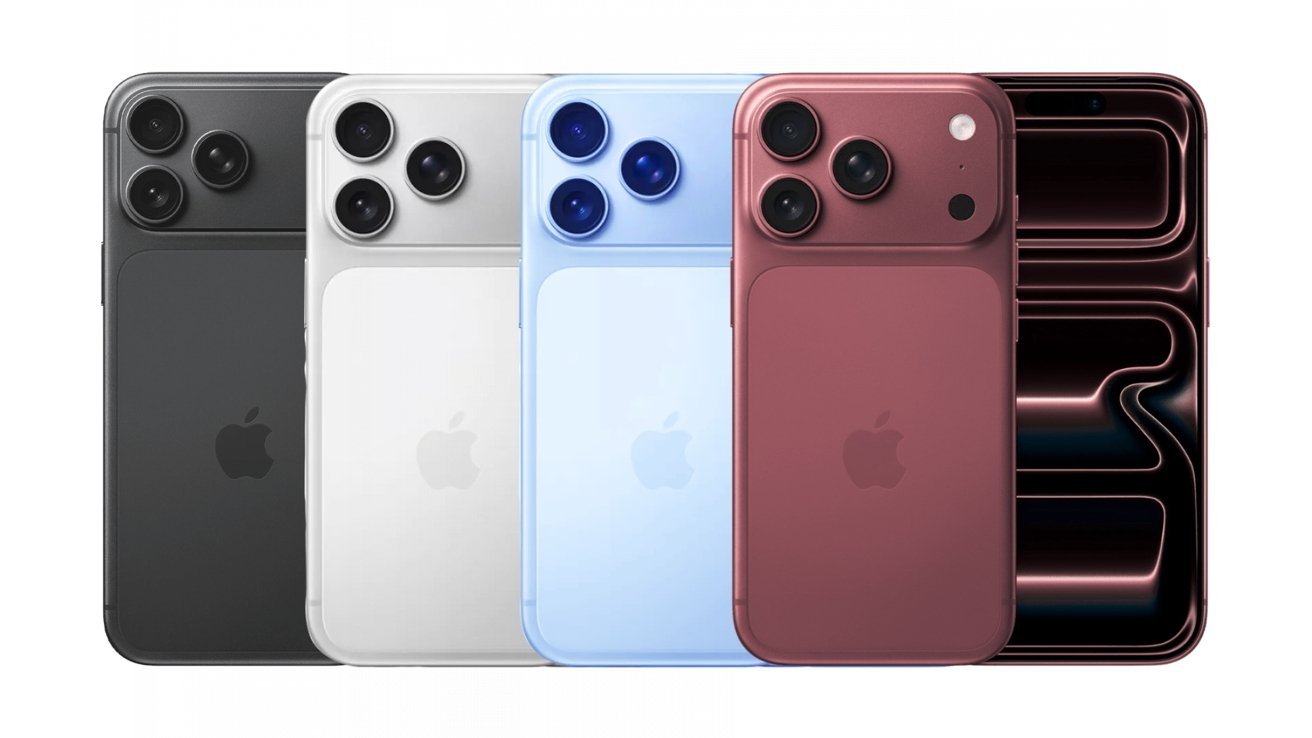
The iPhone 18 Pro storage may be a hot topic this hear.
One difference is the way QLC can store four bits of data per cell of memory, rather than the three of TLC. This then allows QLC NAND to store more data, which is why it's sometimes used in larger-capacity storage. It's also cheaper to produce.
Unfortunately, QLC is also thought to be less reliable than TLC and, importantly, it's also slower as it is rewriting all four bits instead of the three.
How much slower in the real world, on mobile, is a matter for debate. The report notes that QLC storage is particularly slow when reading random data. But it's unclear how that would impact the way people use iPhones.
Smartphone loads on flash storage are generally in bursts, instead of sustained transfers. As such, the difference in performance is likely to be imperceptible to users who don't resort to benchmarking tools.
It's also important to remember that this rumor did the rounds two years ago and, as far as we can see, turned out to be incorrect. Only time will tell if this latest report is more accurate.