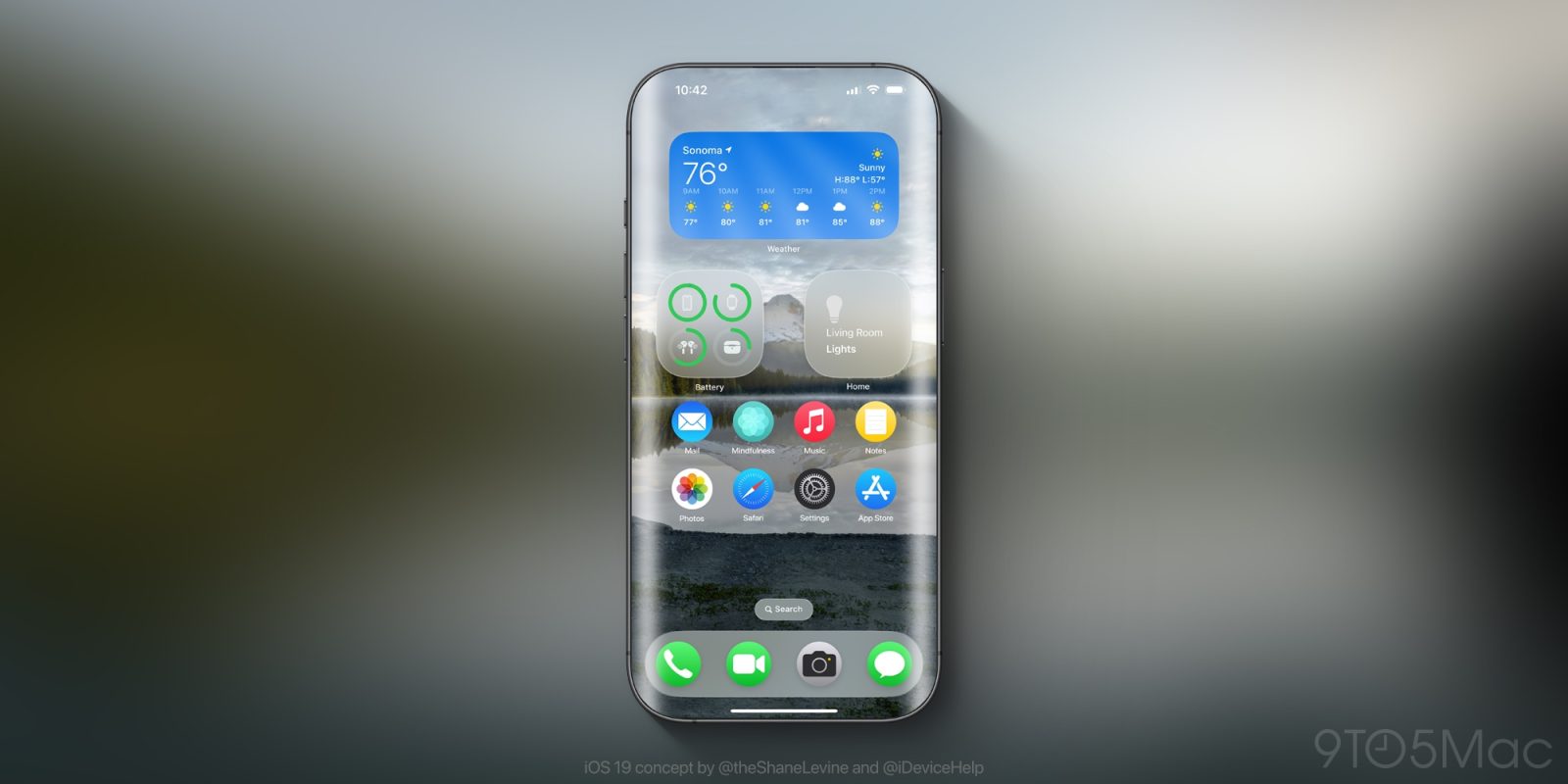
This week has seen conflicting reports on whether or not Apple has given up on its plan to launch a radical new iPhone design next year, which I’ll refer to as the iPhone 20 Pro for now.
An Apple analyst claimed that the company had found the task too challenging, while Bloomberg quickly said this isn’t true and that the design is on track to launch in 2027. Today sees new support for the latter view …
Conflicting reports
Former Apple design chief Jony Ive frequently referred to his long-term vision of the iPhone effectively becoming a single slab of glass, and the company is believed to be all-in on this idea well after his departure.
We’d already seen conflicting reports on the likely name of the new device. Some suggested that it would get a standalone name like the iPhone X and upcoming iPhone Ultra (maybe). Others said that it will simply be next year’s Pro model, and therefore called the iPhone 19 Pro. Yet others said that Apple would give a nod to the 20th anniversary of the device by skipping a generation in order to call it the iPhone 20 Pro.
Things took a further turn this week when a Jefferies analyst claimed Apple had cancelled the project for now, while Bloomberg’s Mark Gurman said this isn’t true. I’ve already given my own take on the likely reality.
iPhone 20 Pro spotted in the supply chain
Chinese leaker Digital Chat Station (DCS) has now weighed in, saying that the display for the device has been spotted in Apple’s supply chain and that it is consistent with what we’re expecting from the device.
We’re expecting Apple to employ a more sophisticated version of the optical illusion created by the Apple Watch display in order to give the impression of a screen that wraps around the edges of the device. Fellow leaker Ice Universe described the display like this:
What truly creates the visual impact may be a sophisticated combination of optical refraction, light guiding structures, and carefully engineered visual illusion. The end result could be a display where the bezel nearly disappears from sight, while edge viewing remains natural and undisturbed.
DCS uses very similar language to describe what they have seen in the supply chain.
Apple’s four-curved surface […] uses the optical refraction and form design of the glass to create a visual boundless effect.
This very much reinforces my own view that while next year’s design won’t be the end of the journey towards that single slab of glass vision, it will be a very significant step in this direction.
FTC: We use income earning auto affiliate links. More.