A year ago, people were hand-wringing over the iPhone Air's failings, but 12 months later, it's clear its detractors dropped the ball on an iconic iPhone.
The word "iconic" is thrown around all too easily these days. But it's still one that fits the iPhone Air.
In a sea of all-too-familiar iPhones, the Air easily stands out from the crowd. It's every bit as distinctive as the iPhone 4 or iPhone 6, devices that ushered in new design languages for Apple.
It's also a damned good iPhone, regardless of what you might have heard or read in September 2025. I've carried an iPhone Air for the last year, and if September 2026 brought an iPhone Air 2, I'd jump on it.
But that's not to be, and it'll soon be time to move on. I'll miss this iPhone Air, and it isn't very often I say that about a smartphone.
The iPhone Air naysayers will claim I'm lying. That "Big Apple" got to me. That I'm being paid to say it.
But in reality, all I did was use it. And if more people actually had, I think they'd have fallen for the iPhone Air every bit as much as I did.
To focus on its flaws is to miss what makes it such a wonderful iPhone to use.
iPhone Air: Design and size
Normally, the design and size portion of an iPhone review is pretty standard fare. They're all much the same, give or take a fraction of an inch here and a sliver of an ounce there. But the iPhone Air does things differently.

iPhone Air one-year review: iPhone Air is the coolest iPhone in years
At 6.15 inches tall and 2.94 inches wide, it sits firmly between the iPhone 17 Pro and iPhone 17 Pro Max in terms of dimensions. But things get more interesting when we look at thickness.
The iPhone Air comes in at 0.22 inches thick, compared to the iPhone 17 Pro and Pro Max's 0.34 inches. The difference is even more stark in the hand.
The theme continues when the scales come out. The iPhone 17 Pro sits at 7.20 ounces, and the iPhone 17 Pro Max measures 8.15 ounces. The iPhone Air weighs just 5.82 ounces. Again, you really need to hold this thing to understand what those figures are trying to convey. The iPhone Air is worthy of its name.
Whereas Apple's Pro models are made from aluminum, Apple went a different route with the Air. Titanium is the order of the day here, with four colors on offer: Space Black, Cloud White (the one I've been using,) Light Gold, and Sky Blue.
In reality, there's a black one and three shades of white. Still, I prefer the pure, driven snow-like Cloud White to the other two.
Up front, there's another key spec where the iPhone Air sits between Pro and Pro Max. Its 6.5-inch Super Retina XDR display is larger than the iPhone 17 Pro's 6.3-inch display and smaller than the iPhone 17 Pro Max's 6.9-inch offering.
I came to the iPhone Air as a fan of the Pro Max models. I liked the bigger displays, but I'll admit, the iPhone Air doesn't feel cramped. I'm not sure I'd want to go back to anything smaller still, though.
The iPhone Air maintains all of the features we've come to expect from Apple's top-of-the-line models. Face ID, an always-on display with an adaptive 120Hz refresh rate, HDR and True Tone, they're all present and correct. It even boasts the same 3,000-nit peak brightness when needed, too.
It goes without saying that the display is a stunner. All iPhone displays are, at this point. But its OLED panels just keep on finding new ways to look even better. The Air is no exception.
Other notable design features include the presence of the Action Button and Camera Control. I almost never use either, and I suspect I'm far from alone in that regard.
One design oddity that does bear calling out is the speaker situation. That is, there's no speaker at the bottom of the iPhone Air. In turn, that means there's no stereo output, which is a shame. But as I said in my three-month review, that's what AirPods are for.
iPhone Air review: Cameras
One of the main knocks that people have against the iPhone Air is its single rear camera. There's no triple-camera array here.
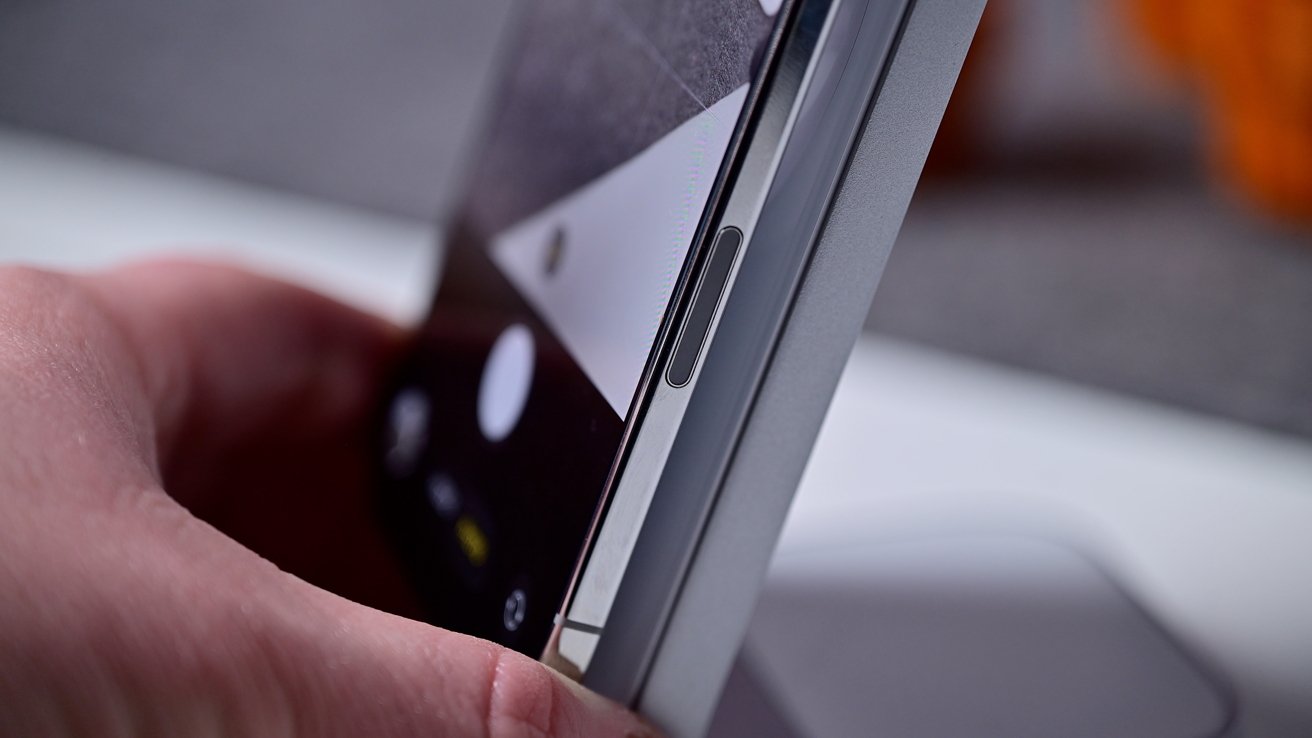
iPhone Air one-year review: The Camera Control is on the lower-right edge
Instead, you have one 48-megapixel Fusion camera with a digital zoom of up to 10x. It supports Deep Fusion, Smart HDR 5, Night mode, and all the other features Apple's iPhone cameras can muster. It's just that there's only one of them.
The lack of a telephoto or ultrawide camera has put a lot of people off the iPhone Air over the last year, and I get it. I was worried about losing two cameras from my iPhone 15 Pro Max.
I took an iPhone Air on vacation shortly after its release to see how well that single camera would hold up. As it turns out, I didn't use the telephoto or ultrawide anywhere near as often as I thought I did. That's still the case all these months later.
Ultimately, I've found the iPhone Air's camera to be excellent, whether taking high-resolution photos or 4K, 60fps videos. I'd be lying if I said there hadn't been an occasion or two where one of the other cameras would have been handy. But it was so rare that I was never tempted to ditch the Air for something more camera-laden.
Apple's Camera Control is a touch-sensitive button that can launch and then fire the camera. You can also use it to adjust camera settings inside the Camera app, too.
In truth, the only time I used Camera Control after the first few weeks was when I accidentally pressed it. In testing, it works as described, and I can imagine it being a popular option for photographers. It's just not for me.
iPhone Air review: Performance
Despite its svelte dimensions, the iPhone Air still has Apple's range-topping A19 Pro beating at its heart. But there's a caveat: this isn't the same A19 Pro as the one found in the iPhone 17 Pro.
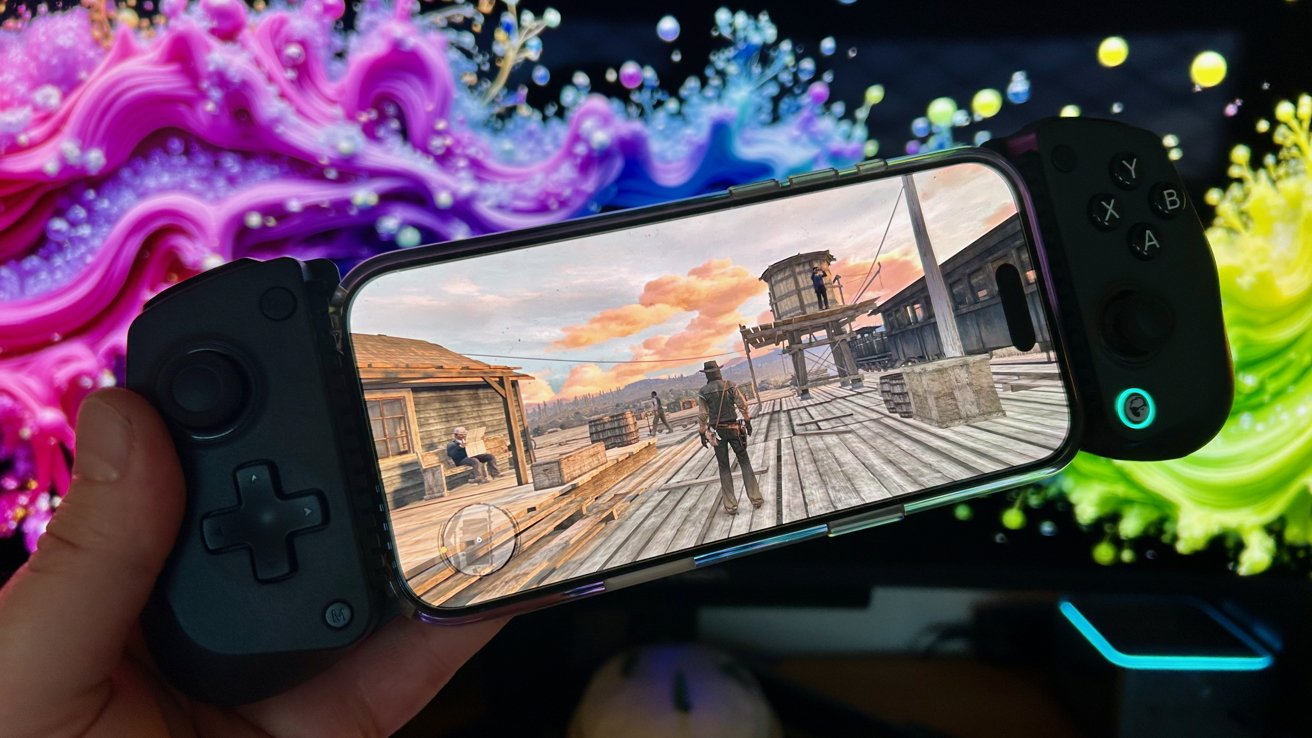
iPhone Air one-year review: The A19 Pro doesn't break a sweat playing Red Dead Redemption
While the iPhone 17 Pro has a six-core GPU, the iPhone Air has to make do with one less. Each of its five GPU cores still has its own Neural accelerator, and the Air has the same six CPU cores as the iPhone 17 Pro.
In use, none of that matters one jot. Sure, if you run the iPhone Air and iPhone 17 Pro through your benchmarking tool of choice, it'll spit out some different numbers.
But for the rest of us, the iPhone Air's A19 Pro is every bit as capable as any other. I've played so-called console-quality games on the Air without issue, including Rockstar Games' Red Dead Redemption.
The fact of the matter is that there's no such thing as a slow iPhone anymore. Even iPhones from three and four years past are still incredibly performant when opening apps and doing general iPhone things.
Performance is about more than just an iPhone's chip, and the Air uses Apple's C1X modem for fast 5G and Wi-Fi 7 connectivity. Both have proven up to the task.
I've even come to enjoy the benefits of the eSIM, the iPhone Air's only option. The lack of a physical SIM card tray continues to be an issue for some, but I've enjoyed the ease with which I can add and remove lines.
In terms of wired connectivity, the iPhone Air's USB-C port is rated for USB 2 speeds. That's just 480Mb/s compared to the iPhone 17 Pro's USB 3 speeds of 10Gb/s. I only plug my iPhone in to charge, so it's a non-issue for me. But it might be a problem for some.
iPhone Air review: Power and battery
Charging the iPhone Air means choosing between the USB-C port and MagSafe. Also rated for Qi2, the MagSafe induction charging is capable of 20W, more than fast enough for overnight charges.

iPhone Air one-year review: iPhone Air has been great, its battery needs to be considered
Unfortunately, the iPhone Air is also rated for 20W of wired charging. That's slower than the around 30W you can pump into an iPhone 17 Pro or Pro Max.
However, it's important to remember that the iPhone Air also has a smaller battery than either of those devices. It can be charged to 50% capacity in around 30 minutes if you need a quick boost before leaving home.
Given the iPhone Air's relatively small 3,149mAh battery capacity, it's obvious this isn't a two-day phone. Most will need to charge it every night, as did I.
But not once did I ever run out of juice without some method of charging. I work from home, so the iPhone Air spends time plugged in as a matter of course. And in the car, it charges while connected to CarPlay.
Yes, iPhone 17 Pro Max owners need never think about their battery, because it's huge. It can run for a couple of days without getting close to zero percent. But the iPhone Air is different.
I've never babied it, as such. But it's important to remember what you're dealing with. The iPhone Air is built to be thin and light, and that means being aware of your battery level before heading out. Or carrying a MagSafe Battery Pack.
iPhone Air review: Still the coolest iPhone, for now
I'll admit that, in August 2025, I was ready for a change. Years of iterative iPhone releases were taking their toll, and I was ready to be wowed.
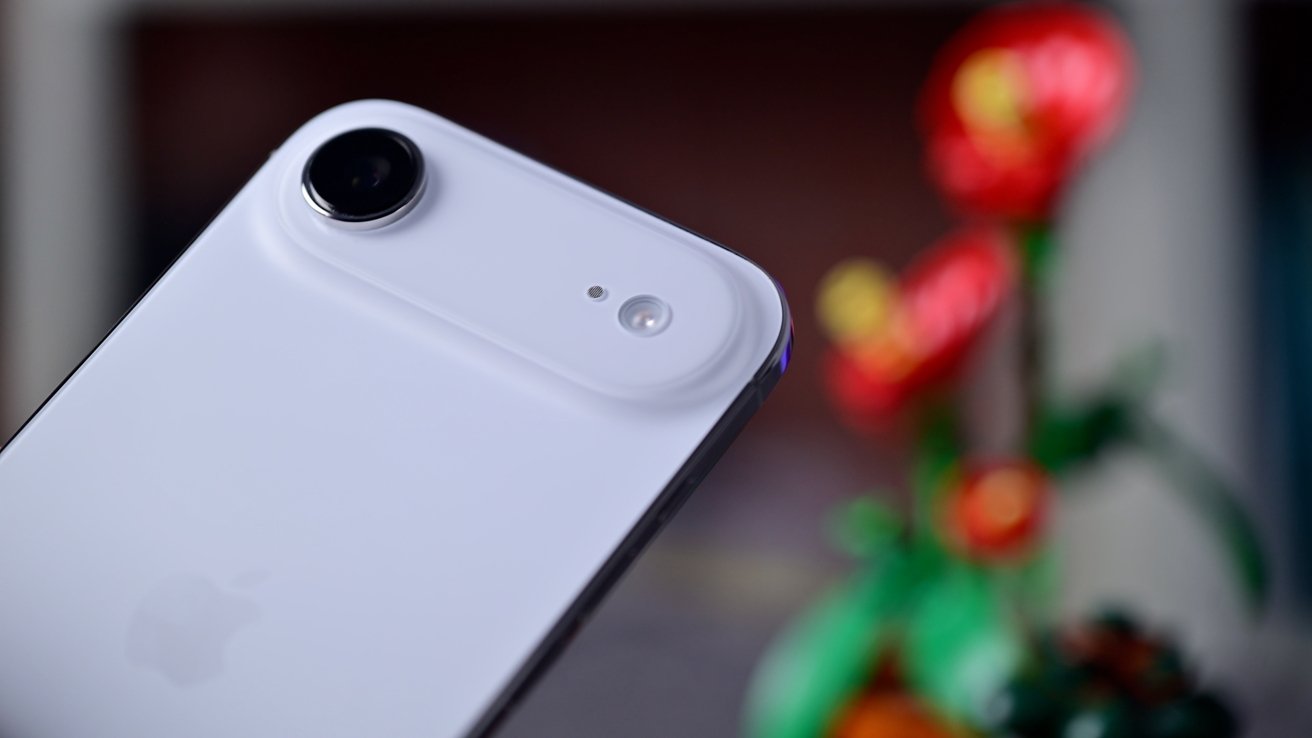
iPhone Air one-year review: The iPhone Air has a single rear-facing camera
September's iPhone Air offered the wow-factor in spades. It looked every bit the futuristic smartphone, all thin and shiny. I had to try one out.
So I did, but I didn't expect it to stick. I thought the Air would grow old, and that I'd eventually pick up an iPhone 17 Pro Max.
I'd been told that the battery was too small, and that a single camera in 2025 was enough to demand firings at Apple Park. The iPhone Air was all form over function, they said.
And they were right. The iPhone Air is flawed, but that's far from unique. A two-seater sports car can't carry a family of five, and a family SUV won't win any awards for handling.
Life is about compromises. You can have all of the battery life and cameras in an iPhone 17 Pro Max, but it'll pull your shorts down as soon as you stand up. That's a compromise.
But for all its compromises, the iPhone Air has offered something no other iPhone could over the last 12 months. It's been fun, and interesting, and cool. And I've enjoyed every minute with it.
Now, it's 2026 and a new cool iPhone is on the horizon. And you know what? I'm sure that the iPhone Ultra will be flawed, too.
And I can't wait to get my hands on one.
iPhone Air review: Pros
- A fresh new design
- Incredibly thin and light
- Storage starts at 256GB
- Excellent 48-megapixel Fusion camera
iPhone Air review: Cons
- Middling battery life
- No stereo speaker setup
- One camera isn't enough for some
Rating: 4 out of 5
The iPhone Air has been a joy to use over the last 12 months. It's fast, it has plenty of storage, and the one camera that it does have has proven to be excellent.
It isn't a perfect phone, and its flaws are well documented. But the positives outweigh the negatives, and the iPhone Air goes down as one of my favorite iPhones yet.
Where to buy the iPhone Air at a discount
The iPhone Air starts from $999 with 256GB of storage, but there are many incentives available from carriers to bring the cost down.