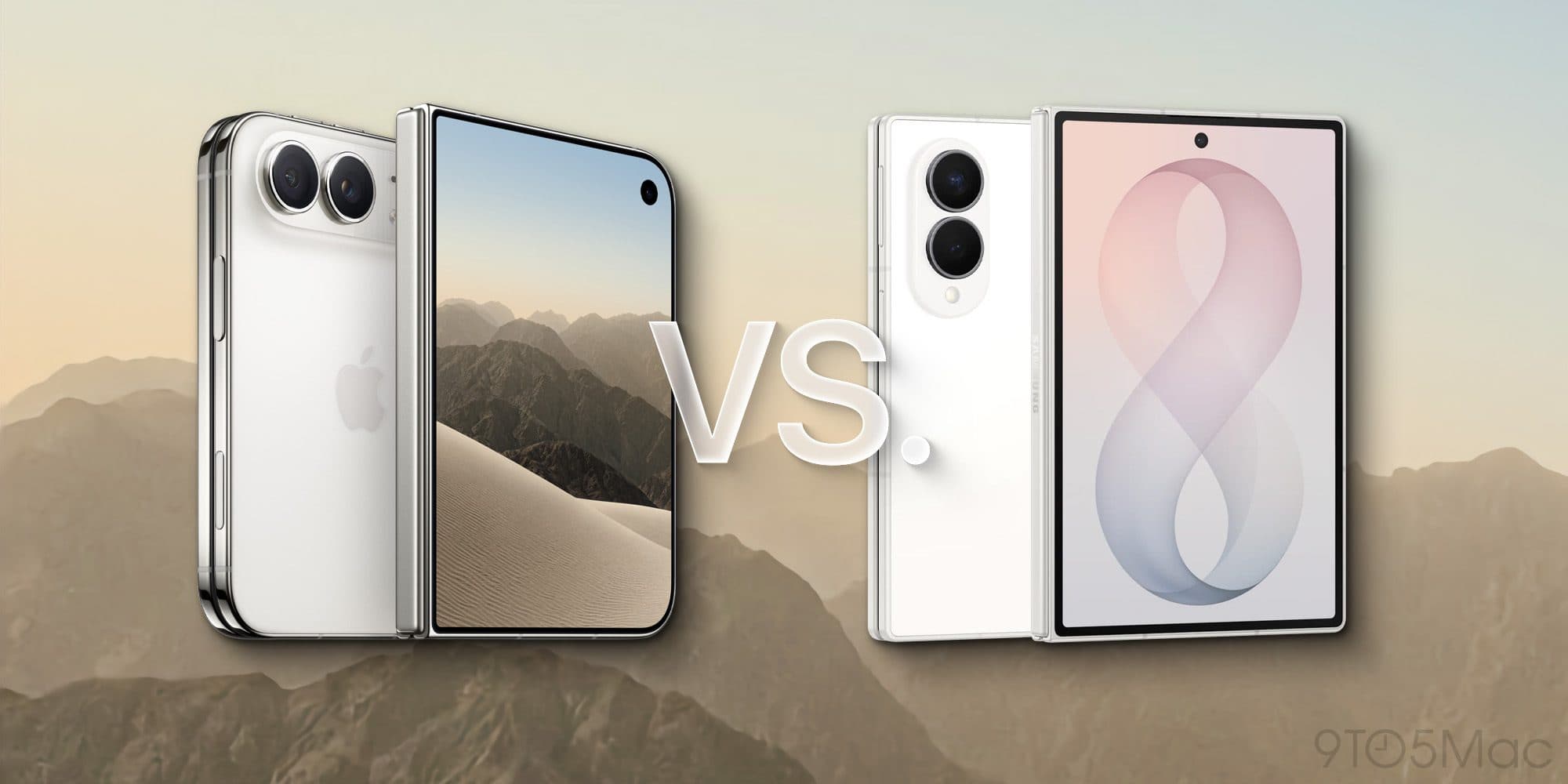
Apple has been practically mocked for how many years it has taken for it to release a foldable iPhone, but yet again it's proven it knew what it was doing all along.
Think of the iPhone. Or the iPod, the Mac, the iPad, AirPods, AirTags, the Apple Watch... Actually, try to think of anything where Apple was actually first to market.
Apple wasn't even the first company to make a laptop Mac. To even arguably find a product Apple made first, you have to go back to the Apple II. Even then, as revolutionary as it was, there had been computers before it.
So from the start, Apple's had a playbook of doing precisely the same things with absolutely every product it makes. We can't know if Steve Jobs and his successors actually planned that, or it just was never quick enough to be first.
But whatever is behind it, the company goes through the same cycle every time.
- Apple is far from first
- It enters the market late
- It charges more than anyone
- Has obviously better design
- Grows the market
- Is copied mercilessly
At various points in that cycle, Apple can also be ridiculed by competitors. Samsung copied Apple in removing the headphone jack from its phones, for instance, and pretended it hadn't mocked the company over it.
In August 2021, Google even made a pastiche of a Jony Ive ad pretending the removal of the headphone jack was good, which it then copied in May 2022 for the Pixel 6a.
Long game and design
Apple has had its fair share of poor designs, from the hockey puck mouse to the overheating edition of the Mac Pro in 2013. That last would be the one where Phil Schiller called out critics by saying "can't innovate, my ass," thereby proving you should never mock people.
But typically, Apple designs in a way that isn't just different to its rivals. It's a way that those rivals, as impossible as this sounds, still don't get.

Google mocked Apple over removing the marvel that was the headphone jack, and then removed it from its Pixel phones - image credit: Google.
The most famous example of this is how Bill Gates smirked at the original iMac, saying that Apple was clearly ahead in colors. He also said that it wouldn't take long for PCs to catch up, but it did.
It did because Gates and the surprisingly conservative technology industry reckoned that the iMac was popular because it had some colors slapped on it. So they slapped colors on PCs, and while you have to be glad it meant the end of beige, it didn't help their sales.
That's because what Apple did and always does is look at how people are going to use its products. Its use first, then technology.
In the case of the iMac, Apple made it quick to connect to the internet, and it dropped the floppy drive because it knew users didn't need it. The iMac was useful to the audience Apple wanted, it was affordable for them, and those colors made it stand out from the competition.
iPhone Duo is the same
Back in 2019, Samsung released its first folding smartphone, which means it beat Apple by a whole seven years. But if you peeled back the usual plastic wrapping on that phone, you destroyed it.
Literally. That wasn't packaging protection, it was the screen, and you just broke a smartphone that cost you thousands.
Samsung foldables got better and better, though, and still there was no sign of anything from Apple. It turns out that Apple was making its foldable better and better, it was just doing that internally instead of selling anything it could.
There is proof of this, too. As well as the recent reports recounting how it was Tim Cook who pushed for a foldable starting in 2019, there are patents that were filed for in 2011.
Surely only Apple could afford to invest in research for 15 years before producing a product. But then surely only Apple would.
It appears from first hands-on testing that Apple has superior folding screen technology that has no or barely any crease. That hardware will be copied as fast as humanly possible.
But the software won't be. John Ternus criticized previous foldables for effectively being unusable as they just let apps run in any shape or orientation.
There is still work to be done for iOS app developers to make the most of the iPhone Duo. But iOS is already handling them better than Android.
What's next
Apple makes devices and software that people use. This is why they sell well, and this is how the markets always grow once Apple has entered them.
That won't change because it has no reason to. But critics won't change either, and they've had 50 years of examples why they should.
Right now, the latest example other than the iPhone Duo is Apple Intelligence. AppleInsider, based on previous experience, has long argued that Apple is not behind on AI.
It looks like the firm may have gone public late, but then it always does. It also looks like Apple Intelligence is going to offer users useful features instead of promising to cure cancer.

Detail from one of hundreds of patents Apple won for what would become the Apple Vision Pro - image credit: Apple.
As Siri AI is officially launched alongside iOS 27, and especially as it continues to develop, Apple's design is going to yet again prove to be the one to beat.
The only question is whether that will ever prove to be true for the Apple Vision Pro, too.