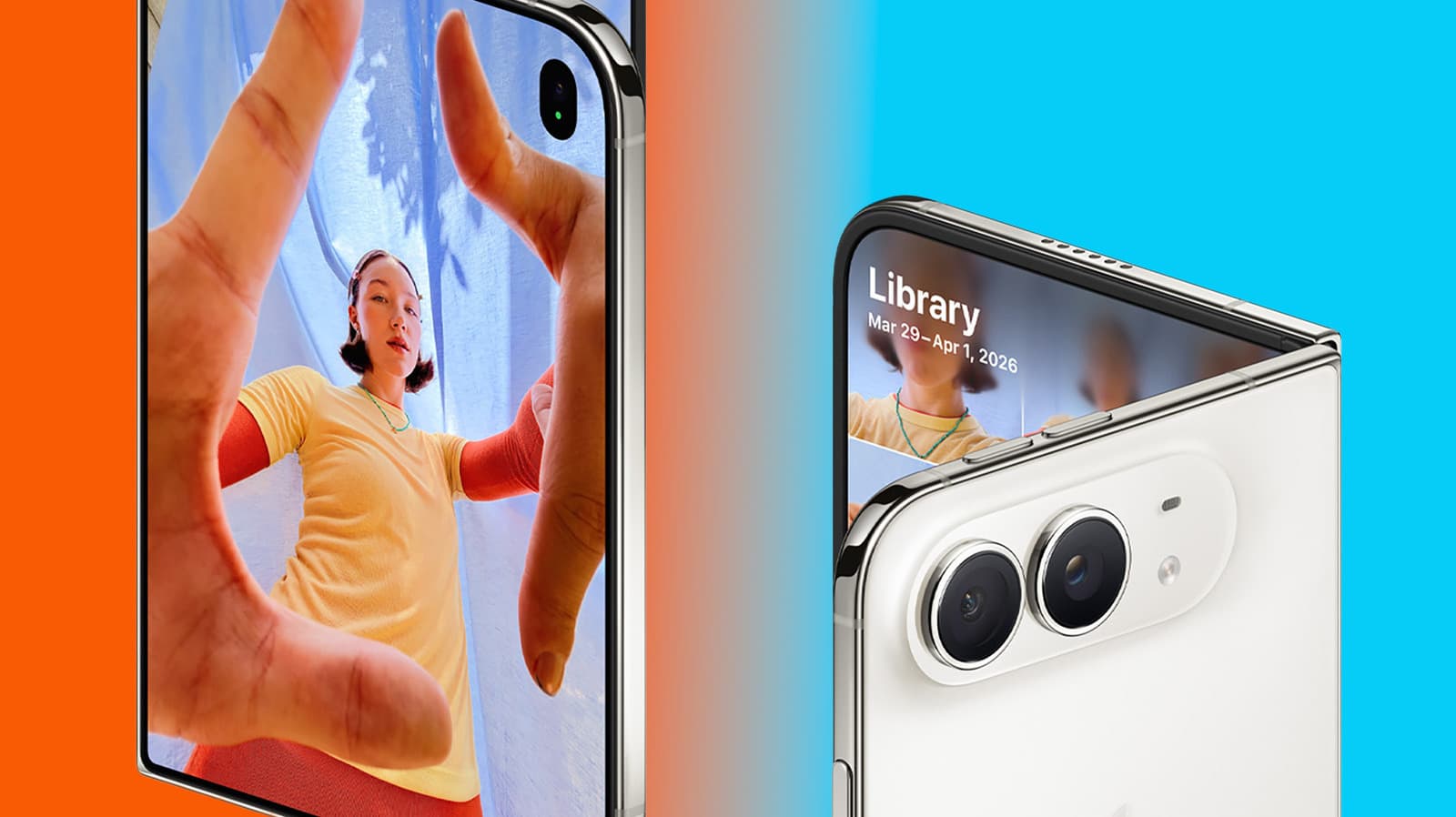
The Microsoft Surface Laptop Ultra uses Nvidia graphics in a bid to take over from the 14-inch MacBook Pro with M5 Pro as a productivity favorite. Here's how the two powerful notebooks compare.
Microsoft's Surface line has always been in direct competition with Apple's MacBook and iPad lineup. While the main Surface range goes after the iPad Pro, the Surface Laptop takes on the MacBook Pro.
In its late 2026 attempt against the MacBook Pro's crown, Microsoft is using the Nvidia RTX Spark N1X as a performance play. Microsoft has made a portable AI powerhouse that will handle the rigors of modern-day computing.
It's already a very obvious attempt to take on Apple Silicon and the MacBook Pro's styling, but Microsoft makes it much clearer in its marketing materials. It's promoting a trade-in offer of up to $1,000 if you hand in an "eligible" MacBook Pro.
With Microsoft decidedly setting its sights on the MacBook Pro, we are comparing the spec sheets of the base $2,599 Surface Laptop Ultra against a similarly-priced M5 Pro version of the 14-inch MacBook Pro.
M5 Pro 14-inch MacBook Pro vs Surface Laptop Ultra - Specifications
| Specifications | 14-inch MacBook Pro (M5 Pro) | Surface Laptop Ultra (15-inch) |
|---|---|---|
| Starting Price | $2,499 | $2,599.99 |
| Dimensions (inches) | 12.31 x 8.71 x 0.61 | 12.95 x 9.40 x 0.71 |
| Weight (pounds) | 3.5 | 4.41 |
| Display | 14.2-inch Liquid Retina XDR, Wide Color (P3), True Tone, ProMotion, Nano-texture (optional) | 15-inch PixelSense Ultra, Touch (10-point), Dolby Vision IQ, Adaptive color, Strengthened glass |
| Resolution | 3,024 x 1,964 | 3,270 x 2,180 |
| Processor | Apple M5 Pro, 15-core CPU, 18-core CPU | NVIDIA RTX Spark N1X, 18-core CPU, 20-core CPU |
| Graphics | 16-core GPU, 20-core GPU | NVIDIA Blackwell RTX 5120-core GPU, NVIDIA Blackwell RTX 6144-core GPU |
| Memory | 24GB, up to 64GB | 24GB, up to 128GB |
| Storage | 1TB, up to 4TB | 512GB, up to 2TB |
| Battery | 72.4Wh lithium-polymer | 92Wh |
| Networking | Wi-Fi 7, Bluetooth 6 Thread | Wi-Fi 7, Bluetooth 5.4 |
| Biometrics | Touch ID | Windows Hello |
| Camera | 12MP Center Stage camera with Desk View | 1080p Surface Studio Camera |
| Audio | Six-speaker sound system, Force-cancelling woofers, Three-mic array, Dolby Atmos with Spatial Audio | Quad Omnisonic speakers, Dolby Atmos, Dual Studio Mics, Bluetooth LE Audio |
| Ports | Three Thunderbolt 5 ports, SDXC Card Slot, HDMI, 3.5mm headphone, MagSafe 3 | 3 x USB4 (one Magnetic Connect), HDMI 2.1b, USB-A 3.1, SD card reader, 3.5mm headphone |
M5 Pro 14-inch MacBook Pro vs Surface Laptop Ultra - Design, weight, size
When it comes to the overall design, both models use the same sort of aesthetic, tweaked to each brand. Both are large rectangular slates of computing, made from aluminum.
However, considering we are looking at a 14-inch notebook against a 15-inch version, that's the closest comparable element we're going to get for the physical appearances.
At 12.95 inches by 9.40 inches, the Surface Laptop Ultra has the larger footprint. The 14-inch MacBook Pro is a bit smaller all round at 12.31 inches wide and 8.71 inches deep.

14-inch MacBook Pro vs Surface Laptop Ultra: Surface closed, from the side. Image Credit: Microsoft
For thickness, the 14-inch MacBook Pro is much thinner, at 0.61 inches against the Surface's 0.71 inches. Microsoft's notebook is still a lot thicker than the 16-inch MacBook Pro, which is 0.66 inches thin.
The physical size difference between the models also leads into the weights. The Surface tips the scales at 4.41 pounds, while the MacBook sits at 3.5 pounds.
For reference, the 16-inch MacBook Pro would be the heaviest at 4.7 pounds.
Color choices are modest on both sides. The Surface comes in Platinum and Nightfall, and the Mac in Space Black and Silver.
That's a choice between close-to-black and silver in both lineups.
M5 Pro 14-inch MacBook Pro vs Surface Laptop Ultra - Display
The Surface Laptop Ultra uses a 15-inch PixelSense Ultra panel, a mini-LED display. It runs at a resolution of 3,270 by 2,180 pixels, in a tall 3:2 aspect ratio.
This is a fairly unusual aspect ratio in the notebook world, but one that Microsoft has used before.
Microsoft's display has a contrast ratio of 100,000:1, with a dynamic refresh rate of up to 120Hz. There's DCI-P3 to 100%, with each display individually color-calibrated, as well as Dolby Vision IQ support.
Apple's MacBook Pro responds with a 14.2-inch Liquid Retina XDR display, which is also mini-LED in nature. With a resolution of 3,024 by 1,964, it has a more typical 16:10 aspect ratio.
The resolution also means it has a pixel density of 254 pixels per inch. Microsoft's notebook just pips it at 262 pixels per inch.
Apple does pull ahead with things like the contrast ratio, which is at 1,000,000:1. There's also a published brightness level of up to 1,600 nits for HDR content, but Microsoft's goes up to 2,000 nits.
Wide Color (P3) support, True Tone, and ProMotion to 120Hz are also present on the MacBook Pro.
The biggest divergence is on touch support, and it benefits Microsoft. The ten-point multi-touch capability means you can directly mess with the display using your fingers.
Apple doesn't have that, but there have been many rumors about a touch-enabled MacBook arriving in the future.
While it lacks touch support, the MacBook Pro does fire back with its own model-specific benefit. You can optionally add Nano-Texture to the display.
M5 Pro 14-inch MacBook Pro vs Surface Laptop Ultra - Performance
The chip is where Microsoft is swinging for the fences, thanks to its partnership with Nvidia. And, it's all that Microsoft talked about, probably because it knew about the laptop's lack of general computing power.
The Surface Laptop Ultra debuts the NVIDIA RTX Spark N1X "Superchip." It's a SoC that combines an 18-core or 20-core CPU, though Nvidia has yet to say how those cores break down into performance and efficiency varieties.
The M5 Pro in the MacBook Pro starts with a 15-core CPU with five super cores and ten performance cores. An 18-core version is also available, with six super and 12 performance cores.
The GPU on each Nvidia chip is a Blackwell RTX, with either 5,120 cores or 6,144 cores, depending on the grade of CPU to go with it.
Apple, meanwhile, uses its own designed GPU with 16 cores or 20 cores, depending on the configuration.
This is a massive difference in core count, but it's best to bear in mind that not all cores are equal. An M5 Pro GPU is capable of performing at the same level as an RTX 5060 notebook GPU, despite having far fewer cores in comparison.
A big thing here, though, is Microsoft's insistence that the Surface Laptop Ultra is a monster for AI workflows. It's capable of handling models with up to 120 billion parameters, using a combination of Nvidia's GPU processing and the included neural processing unit (NPU).
Apple can make similar claims of AI performance, thanks to its 16-core Neural Engine. However, the GPU also includes Neural Accelerators in each core, allowing it to help with AI workflows.
A lot of this AI model usage will depend on memory, with both chips using unified memory. This means the memory will be used by both the CPU and the GPU, instead of using discrete memory pools for each.
Apple includes 24GB of memory by default, with a 48GB upgrade available for the 15-core CPU version, and a 64GB option for the 18-core CPU.
The Surface starts with 24GB of unified memory, with upgrade options available including 32GB, 48GB, 64GB, and 128GB. The lower 18-core model only uses 24GB or 32GB, however.
When it comes to benchmarks, there are no listings to work with. While the M5 Pro is pretty much a known quantity, the next best thing would be the DGX Spark.
It is an apt choice for this comparison, as the DGX Spark is practically an identicial chip to the RTX Spark in terms of specification. It just happens to be a Linux-based device, but it will still give us an idea of what's on the table.

M5 Pro 14-inch MacBook Pro vs Surface Laptop Ultra: DGX Spark vs M5 Pro single-core benchmarks in Geekbench
The DGX Spark gets hits around 2,600 for single-core performance, in searches of Geekbench listings. The M5 Pro in the 14-inch MacBook Pro with the 18-core CPU does much better, at 3,676.
The multi-core side is not much better for Nvidia, either, at around 23,800. The 18-core M5 Pro gets to 33,490.

M5 Pro 14-inch MacBook Pro vs Surface Laptop Ultra: DGX Spark vs M5 Pro multi-core benchmarks in Geekbench
We will revisit this once firmer figures emerge for the N1X. Given that it is exactly the same chip as the DGX Spark, just branded differently, the only direction these numbers will move is down because of the constrained thermal environment.
M5 Pro 14-inch MacBook Pro vs Surface Laptop Ultra - Camera and Audio
Video calling is well covered on both notebooks. The Surface uses a 1080p Surface Studio Camera up front, with support for Windows Studio effects like automatic framing.
Apple fits a higher-resolution 12MP Center Stage camera. The Center Stage bit of that name keeps the subject framed properly during video calls.
It also has a Desk View feature, which can be used to give a view of your workspace without necessarily needing a second camera position. Of course, if you have an iPhone there's Continuity Camera support too.

14-inch MacBook Pro vs Surface Laptop Ultra: Surface from above. Image Credit: Microsoft
There's biometric support in both models, in different ways. Microsoft uses Windows Hello with the webcam, while the MacBook Pro uses Touch ID.
For audio, the Surface runs quad Omnisonic speakers with Dolby Atmos support.
The MacBook Pro counters with a six-speaker system. Force-cancelling woofers and Spatial Audio round out its setup.
Microphones are capable on both sides. The Surface has dual Studio Mics with Voice Focus, and the Mac a three-mic array with a high signal-to-noise ratio and directional beamforming.
M5 Pro 14-inch MacBook Pro vs Surface Laptop Ultra - Storage, connectivity, power
When it comes to storage, the Surface Laptop Ultra is a little more flexible in the long term.
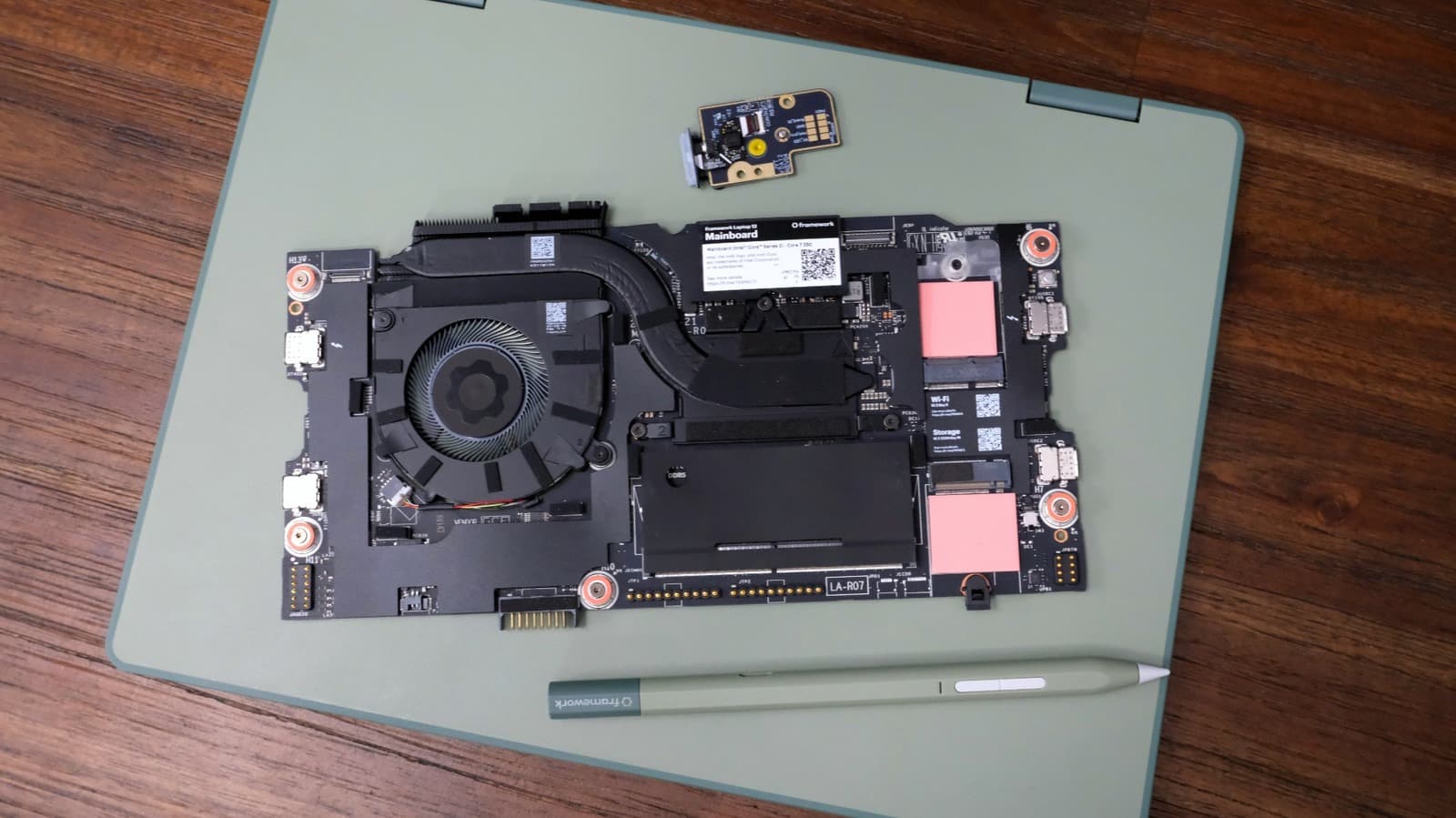
In terms of supplied storage, Microsoft includes a 512GB Gen 4 NVMe drive, with 1TB and 2TB Gen 5 SSDs available. However, they're removable storage, which you can replace with higher capacities if you wish.
Apple includes 1TB of storage, with options for 2TB and 4TB. However, you do not have the ability to switch it out with another drive yourself.
When it comes to connectivity, Microsoft includes three USB 4 Type-C ports, including one with Magnetic Connect. It also has one USB-A 3.1 port, HDMI 2.1, an SD card reader, and a 3.5mm headphone jack.
Apple includes three Thunderbolt 5 USB-C ports, which also support USB 4. An SDXC card reader, HDMI, MagSafe 3, and a 3.5mm headphone jack round out the list.
Both have wireless networking using Wi-Fi 7, but the MacBook does lean into the lead when it comes to other cordless connections.
Microsoft includes Bluetooth Core 5.4. Apple instead uses Bluetooth 6 and adds in Thread support, too.
Battery capacity is usually not a straightforward comparison, and that's the case here.
The Surface has a 92-watt-hour battery pack, which is claimed to last for up to 15 hours of local video playback, or 12 hours of active web usage.
The 14-inch MacBook Pro has a much smaller 72.4-watt-hour battery, which isn't great to hear. However, Apple says it can handle up to 22 hours of video streaming and 14 hours of wireless web access.
In either case, users should be able to get an entire day's usage out of each model.
M5 Pro 14-inch MacBook Pro vs Surface Laptop Ultra - Pricing
The entry Surface Laptop Ultra lists at $2,599.99. That buys the 18-core chip, 24GB of memory, 5,120-core GPU, and 512GB of storage.
Curiously, the base option the Microsoft website has for it has 1TB of storage, which is a $2,999 configuration. Going for 32GB of memory raises the price to $3,299.
The upper-tier Nvidia chip model with 32GB of memory and 1TB of storage is $3,699. Maxing out that configuration to 128GB brings the cost up to $5,899.
The 14-inch M5 Pro MacBook Pro starts at $2,499. That base pairs the 15-core chip with 24GB and 1TB of storage, but the 18-core version is there for $200 more.
Further Mac upgrades stack up quickly after that. Memory to 48GB is $400, and another $600 to 64GB for the upper-tier chip.
Storage too is a bit painful, as going from 1TB to 2TB is a $500 jump in cost. You're shelling out another $1,000 to go from 2TB to 4TB.
M5 Pro 14-inch MacBook Pro vs Surface Laptop Ultra - Which to buy?
Based on what Microsoft announced, it's safe to say that it has come up with a really good notebook. Microsoft is clearly pitching it as a MacBook Pro replacement.
Without putting it directly next to a MacBook Pro at the same price level, you'd think it's a close race. Looking closer brings up problems.
Yes, Microsoft does pull out ahead with the display because you can touch it. Though if rumors are true, that may not be for long.
Windows for ARM is in a rough state right now. Apple clearly wins on volume of software that does not have to be translated from x86 to ARM.
Microsoft's insistence that Nvidia's chip will do well at processing anything you throw at it is probably true. The DGX benchmarks demonstrate that it is a very capable chip, if looked at independently instead of in comparison to the same MacBook Pro that Microsoft wanted you to compare it to.

14-inch MacBook Pro vs Surface Laptop Ultra: Surface, angled from the rear. Image Credit: Microsoft
There's still the performance problem. If the DGX benchmarks are a true reflection of the RTX Spark N1X, and they are given that they are literally the same chip, with different branding, then the M5 Pro is still well in the lead.
Overall, for productivity and work, the safer money is still on the MacBook Pro, unless you have a need to bring your AI work over to the Windows side.
The real thing to consider here is more what could come out in the future.
Nvidia's AI prowess is well known. It's not hard to imagine future iterations of the RTX Spark getting major improvements, much like we saw with successive M-series chips.
In a few generations, Nvidia could well be on the same level as Apple for its notebook-centric chip performance across the board. It isn't right now.
This is just the introductory phase for Nvidia. The true battle will be fought by generational improvements.
Microsoft may be urging people to "break up" with the MacBook Pro, but Apple doesn't have anything to worry about right now.
However, it may within a few years.
Where to buy the 14-inch M5 Pro MacBook Pro vs Surface Laptop Ultra
The Surface Laptop Ultra is available to preorder at Amazon for sale from October 16, with prices starting at $2,599.99.
Although Apple's 14-inch MacBook Pro with an M5 Pro chip has a retail starting price of $2,499, aggressive deals are in effect at the time of this comparison, bringing the cost down to as low as $2,069.10.
Discounts of up to $600 off are available across the line, with a detailed breakdown of the offers in our 14-inch MacBook Pro Price Guide.