Meta's 'Super Sensing' Prototype Glasses Quietly Record Everything
Meta has prototyped "super sensing" smart glasses that use cameras and audio recordings to capture the wearer's every moment, reports the Financial Times ($). The smart glasses continuously collect audio while taking photos every few seconds, allowing the user to leverage AI to help query what they saw or heard, or recall their day, according to the report's sources. Meta's current AI smart glasses have an LED in the corner of the frame that lights up to signal to others when a wearer is tak
Meta has prototyped "super sensing" smart glasses that use cameras and audio recordings to capture the wearer's every moment, reports the Financial Times ($).
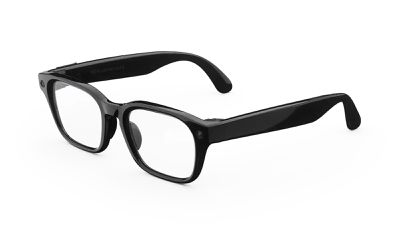
The smart glasses continuously collect audio while taking photos every few seconds, allowing the user to leverage AI to help query what they saw or heard, or recall their day, according to the report's sources.
Meta's current AI smart glasses have an LED in the corner of the frame that lights up to signal to others when a wearer is taking photographs or filming. But Meta executives don't want to activate the LED when the super-sensing features are turned on.
In one proposed system, raw footage and audio would not be stored by Meta or made available to the user, several people said. Instead, the metadata from that audio and images would be extracted and uploaded to the server for Meta's AI to query, which proponents argue would have fewer privacy implications.
The company is also discussing whether data collected through the glasses and their features could be used to train its own AI models, as it pours billions into rivalling competition such as OpenAI, Google and Anthropic in the AI race.
The report suggests the features could be activated on Meta's existing glasses via a software update.
Meta's plan, which could still change, highlights the obvious civil liberty and privacy risks of smart glasses. Privacy experts argue that always-on devices could violate data privacy or biometric data laws. It is also unclear whether the company or the wearer would be liable for potential violations of wiretapping laws, given that several U.S. states prohibit recording third-party conversations without consent.
Meta's existing Ray-Ban smart glasses already lack a visual indicator when AI is being used to analyze the wearer's surroundings. The company says it safeguards privacy by stripping out key identifying information.
In February, it was reported that the social media giant had an inactive facial recognition feature embedded in its Ray-Ban smart glasses platform. The company later removed the system.
Apple is widely expected to release its first smart glasses in 2027, designed in-house rather than through a partner brand.
Apple's smart glasses are expected to include cameras, microphones, and AI capabilities, and will have the ability to take photos, record video, provide translations, give turn-by-turn directions, and more. However, they won't have augmented reality capabilities, and it's not clear how Apple will manage privacy concerns.
Originally published on MacRumors