Microsoft's cloud brings rain of revenue but modest M365 AI revenue harvest
Capex spending? What? Me worry?
SOFTWARE
Microsoft's cloud brings rain of revenue but modest M365 AI revenue harvest
Capex spending? What? Me worry?
Microsoft on Wednesday reported $90 billion in revenue for the quarter ended June 30, an increase of 18 percent, lifting its stock more than 7 percent in after hours trading.
The cash intake was more than Wall Street analysts anticipated, and showed up where it counted – the company's cloud business and AI services. Microsoft Cloud revenue reached $59.3 billion, up 27 percent year-over-year, and its Azure business revenue grew 43 percent.
Meanwhile, Microsoft 365 Copilot's paid user base increased 50 percent from the previous quarter.
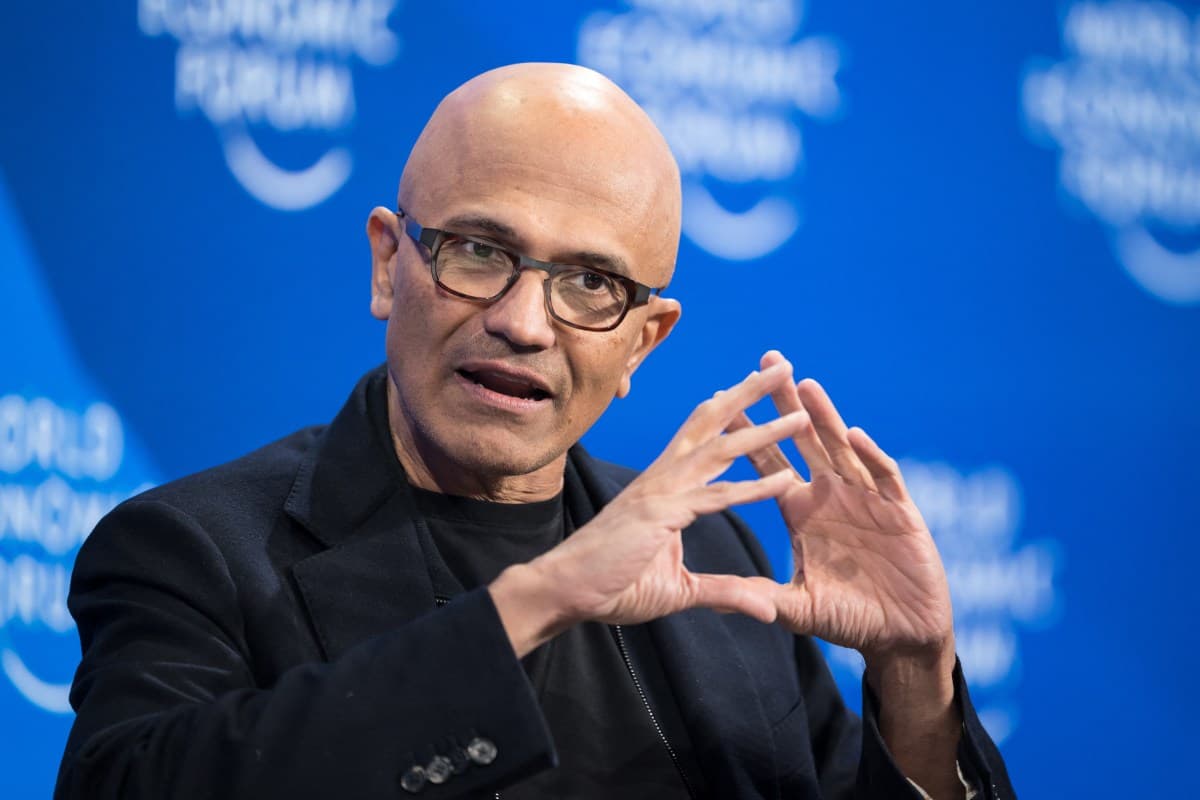
"We are advancing the frontier on the cost-to-outcome curve, ensuring every customer can turn tokens into business results," said Satya Nadella, chairman and chief executive officer of Microsoft, in a statement celebrating the results for the final quarter of Microsoft's 2026 fiscal year.
"This year, Azure revenue surpassed $100 billion for the first time, and Microsoft 365 Copilot reached over 30 million paid seats, reflecting the confidence customers are placing in us to power their AI transformation."
Thirty million out of an estimated 450 million Microsoft 365 commercial customers isn't an overwhelming vote of confidence in Copilot AI, but it's something, particularly given Microsoft's imposition of usage-based billing on top of seat-based charges.
Operating income for the quarter came to $40.6 billion (+18 percent). And net income was $35.8 billion (+31 percent), for diluted earnings per share of $4.81 (+32 percent).
Microsoft's investment in Anthropic accounted for a gain of about $3.2 billion this quarter.
For the full fiscal year that ended June 30, 2026, revenue reached $331.8 billion, up 18 percent, with operating income at $155.2 billion (+21 percent), net income at $133.7 billion (+31 percent), and $17.95 EPS (+32 percent).
The results were enough to assuage concerns about Microsoft's enthusiastic capital spending, which reached $41 billion, up 70 percent from a year earlier and about 28 percent more than $31.9 billion reported last quarter.
Some of the shareholder optimism may be attributable to Microsoft's use of finance leases, which allow the company to invest in datacenters without paying immediately.
During Microsoft's investor conference call, CFO Amy Hood said that about two-thirds of the company's capex took the form of short-lived assets like CPUs and GPUs. Finance leases accounted for about $5.6 billion of capex, she said.
Microsoft claims to have a lot of potential customers waiting in the wings to use datacenters it is currently building. "Commercial remaining performance obligation grew 84 percent to $678 billion," said Hood, noting that customer demand for cloud services exceeds available capacity.
"Microsoft’s capex number is arguably the most closely watched line in this report, and it arrived with a case for optimism rather than alarm," said Emarketer analyst Gadjo Sevilla in a statement provided to The Register.
"Microsoft spent $35.80 billion on property and equipment during fiscal Q4, more than double the $17.08 billion in the year-ago quarter, bringing full-year capital expenditures to $115.95 billion – up nearly 80 percent from $64.55 billion in fiscal 2025. Despite that spending pace, the company still generated $55.44 billion in quarterly operating cash flow, up 30 percent YoY, a positive sign the AI buildout isn't cannibalizing the core business."
While Microsoft enjoys strong revenue, concern about potentially unrequited AI spending – exemplified by Meta's disappointing financial results – continues to linger. Fitch Ratings on Monday warned that the possibility of an AI market correction has emerged as a major credit risk.
"The combination of revenue uncertainty and the extent to which capital markets and economies have become intertwined with AI have created a vulnerability for credit in the event of a re-evaluation of long-run returns potential," the financial biz said. "Very short-term spikes in market volatility for individual equities and tech-heavy stock indices have already occurred, but a larger, more protracted correction could have wider market, macro and credit effects depending on its scale, duration and contagion." ®
Originally published on The Register