Motorola Razr Ultra review: Too much for too little
The Moto Razr Ultra is a top-notch flagship flip phone that's marred by a $200 price hike that isn't fully justified.
Motorola Razr Ultra review: Too much for too little
A $200 premium over its predecessor for a slightly bigger battery and one new camera sensor just doesn't sit right.
RATING : 8.5 / 10
- Compact chassis
- Great battery life
- Upgraded main camera
- Improved exterior screen features
- Good performance
- $200 more expensive than the previous model
- Design is essentially unchanged
- Needs special power adapters to get peak charging speeds
The development cycle for gadgets can be vicious. Manufacturers need to balance production costs while implementing new features and trying to mitigate unforeseen circumstances like AI investment sucking up the global RAM supply. Unfortunately for the 2026 Motorola Razr Ultra, carrying a $200 price bump over its predecessor puts a major damper on its overall appeal — even with an upgraded main camera and cover screen improvements. That's a shame because when you factor in other features like excellent battery life, a solid chassis and a gorgeous flexible screen, you get a top tier flip phone, even if it doesn't quite live up to its cost.
Design and displays
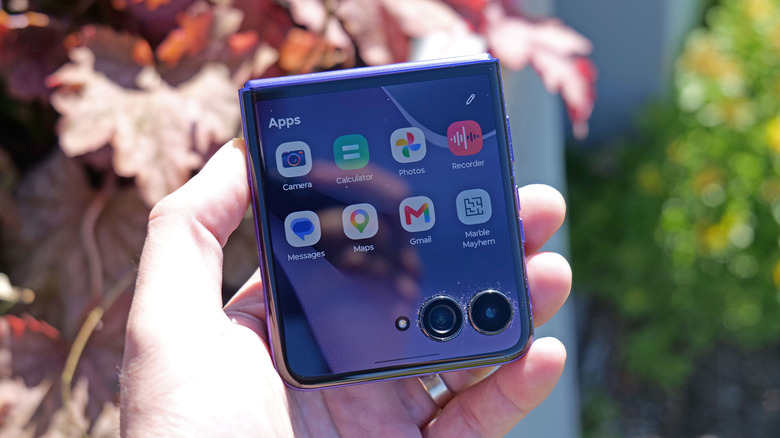
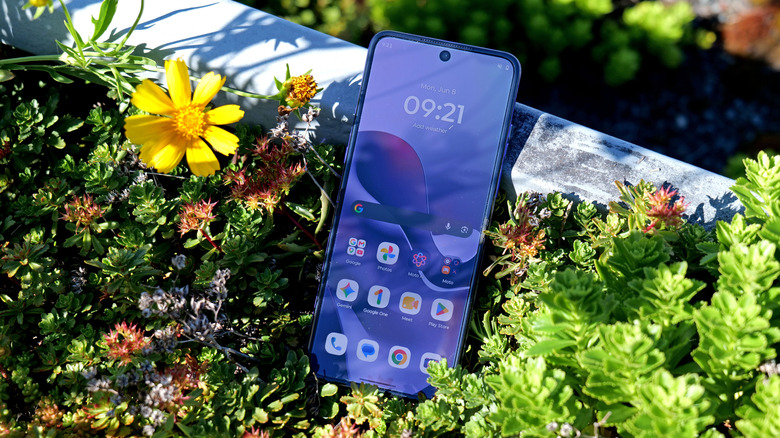
Like a lot of smartphones, the Razr Ultra is part of a multi-year cadence that only sees a full redesign every 24 or 36 months. Instead of featuring a fresh look for 2026, Motorola kept the exact same chassis as the previous model. You still get a 4-inch exterior display that opens up to reveal a 7-inch main screen though. Brightness is strong across the board with the smaller panel capable of reaching up to 3,000 nits while its interior display is even more luminant with a peak of up to 5,000 nits. And as you'd expect, color richness and contrast are excellent, resulting in vivid saturated hues. However, Motorola hasn't quite eliminated the faint crease where the Razr's hinge lives.
The one big change is a handful of new color options, including the Orient Blue model I reviewed here. It features lovely paint-matched buttons with a fuzzy Alcantara back and a sophisticated diamond pattern. And I'd be remiss not to mention how wonderfully compact the Razr Ultra feels. When closed it's 3.4 x 2.9 inches and just 15.7mm thick, which is thicker than the Samsung Z Flip 7. It just fits so nicely in your palm while still unfolding to reveal a full-size display when you need it. It also features an IP48 rating for dust and water resistance, so there's no need to fear a bit of moisture.
Performance
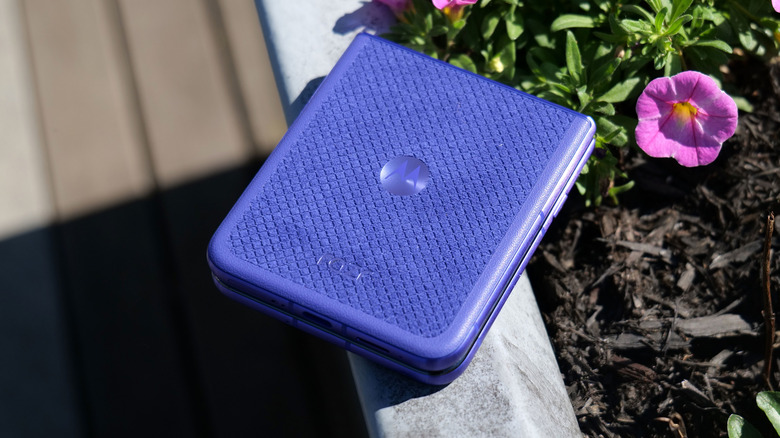
Packing a Snapdragon 8 Elite processor with 16GB of RAM and up to 512GB of storage, there's virtually no change when it comes to the Razr Ultra's performance compared to its predecessor. But that doesn't mean this thing is slow, because even a year-old flagship chip makes quick work of all sorts of apps and games. In many ways, you're more limited by the Ultra's smaller displays compared to its bigger sibling — the Razr Fold — and its lack of advanced multitasking features and stylus support.
That said, Motorola has added some new capabilities to the Razr's cover screen, including support for Live Updates, so you can more easily keep track of things like incoming food deliveries. You also get an updated Quick Settings menu with resizable tiles and support for video wallpapers. And as before, you can open up practically any app on the smaller exterior display (aside from games or programs that are hard coded to use a specific resolution/aspect ratio), which is great for quickly gleaning info without needing to fully open the phone.
Cameras
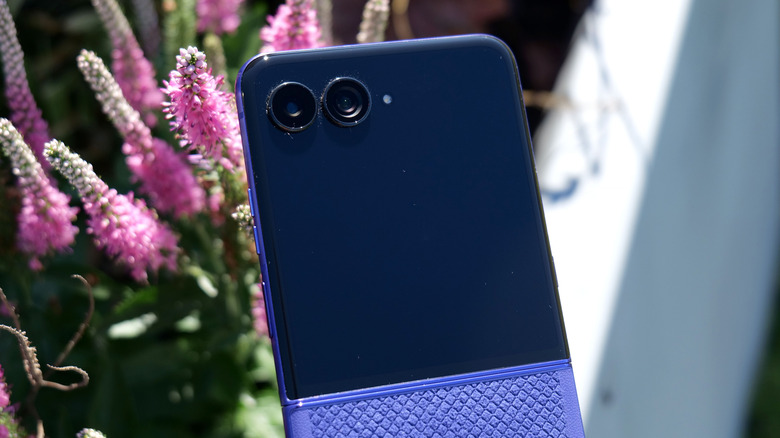
While the Razr Ultra's 50-megapixel ultra-wide cam and 50MP selfie shooter haven't changed, Motorola has equipped the phone with a new 50MP LOFIC sensor for its main camera. This allows the phone to capture photos with higher dynamic range and improved signal-to-noise ratio, resulting in images with improved contrast and less grain. In general, this new sensor delivers, producing pics with bright colors and crisp details.
However, upon closer inspection, I noticed some small flaws like halos around some objects, especially in bright light. And when I zoomed into 100 percent, the textures captured by the Razr looked noisier than what I got from a Pixel 10 Pro. I'm not sure if this is caused by the sensor or Moto's image processing. Finally, even though Motorola has improved its low-light capabilities over the years, the Razr Ultra still falls short of what Google's Night Sight mode can do in the dark. Photos from the Pixel 10 Pro were consistently brighter and sharper than what I could take with the Razr. There's always been a small downgrade in photo quality on foldable phones compared to traditional glass bricks, so none of this may come as a big surprise.
Battery life
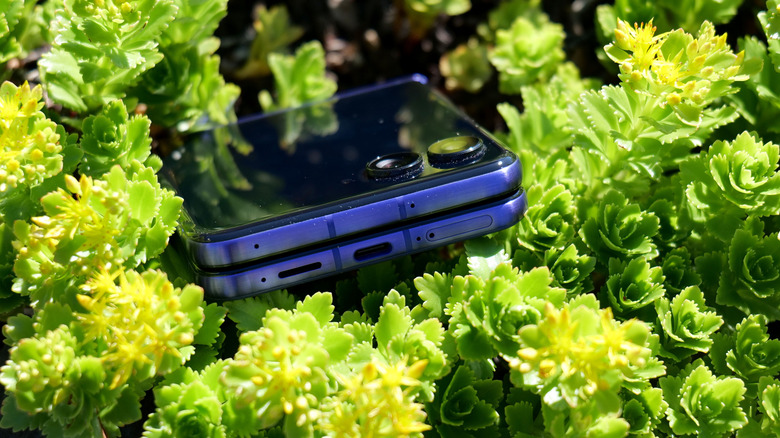
Despite no change in the size of the device, Motorola managed to fit a slightly higher capacity 5,000mAh cell (up from 4,700mAh) that delivers excellent battery life. On our local video rundown test, the Razr Ultra lasted 31 hours flat. That's significantly better than already long-lasting handsets like the Pixel 10a (28:04) and the Samsung Galaxy S26 Ultra (30:03). In fact, the only phones we've ever tested with better battery life are the One Plus 15 and 15R, which have much higher capacity silicon-carbon power packs.
Meanwhile, when it comes to charging, the Razr Ultra also fares quite well. Wired speeds top out at 68 watts and there's a 30-watt max on wireless charging. The one caveat to this is that Motorola uses a proprietary TurboPower protocol to reach those peak speeds. Since you don't get a power adapter in the box, that means you'll need to buy separate accessories if you want to recharge the phone at its full potential.
Wrap-up
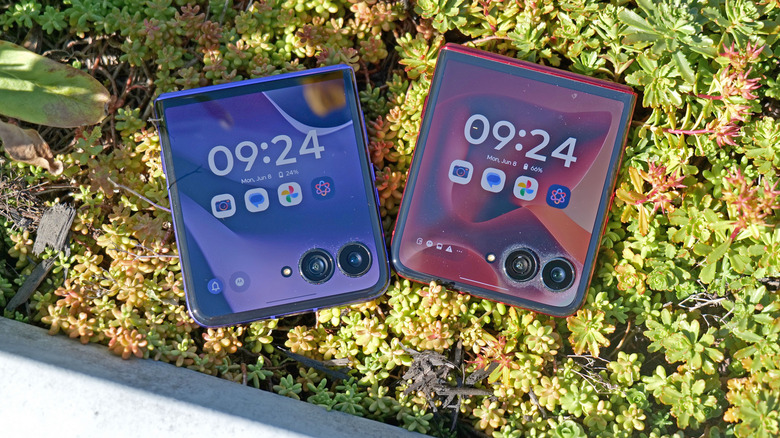
The 2026 Razr Ultra ends up in an awkward position of not quite delivering enough for the money. It's a good phone and one of the top contenders for anyone considering a compact flip-style device. It looks great, has responsive performance and excellent battery life, plus a very cute and compact design.
But last year's model had all of that too, and it's currently going for as little as $800 (direct from Motorola) instead of $1,500 like this year's release. Samsung's Galaxy Z Flip 7 also offers significant savings with pricing starting at around $1,100. So even if you ignore the discounts for those older phones after they've been on the market for nearly a year, a $200 premium for the new Ultra demands feels too steep. The main upgrades are a better sensor for its main camera and a slightly bigger battery, after all. And with Samsung expected to announce a new Z Flip before the end of the summer, buying a Razr Ultra right now at full price feels like a bit of a trap. It's a good phone, I just wish it cost less.
Originally published on Engadget