OpenAI held its second livestream this week today at 10 am PT. The video teased that the company was “introducing the next chapter for ChatGPT” today. OpenAI has openly discussed bringing Codex workflows into the main ChatGPT app for some time now.
Today’s release includes a new ChatGPT Work agent, an upgraded ChatGPT desktop app with Codex included, and a new hosted sites service for OpenAI customers.
GPT-5.6 Sol, Terra, and Luna are available today
Additionally, OpenAI says it will release GPT-5.6 today after first announcing the three new models, Sol, Terra, and Luna at the end of June. Here’s a recap of the new models:
- Sol, OpenAI’s flagship model
- Terra, their balanced model for everyday work
- Luna, their fast and affordable model
The Sol, Terra, and Luna naming scheme is also new with GPT-5.6.
“In this new naming system introduced with GPT‑5.6, the number identifies a model’s generation, while Sol, Terra, and Luna identify durable capability tiers that can advance on their own cadence,” OpenAI said in June. “Together, the family gives people and developers clearer choices across intelligence, speed, and cost.”
The new models are rolling out over the next 24 hours.
GPT-5.6 includes a new ‘ultra’ acceleration mode
Here’s more from OpenAI on today’s GPT-5.6 model release:
GPT‑5.6 Sol sets a new standard for both intelligence and efficiency, achieving state-of-the-art results across coding, knowledge work, cybersecurity, and science while outperforming previous and competing frontier models with fewer tokens and at lower estimated cost. The result is stronger performance per dollar: more successful work for the same spend, or comparable results at a lower total cost. We also introduce a new way to accelerate the most demanding work:
ultrais our highest-capability setting, coordinating multiple agents across parallel workstreams to finish complex tasks faster. Stronger computer use and design judgment make GPT‑5.6 Sol our most polished collaborator yet, helping it inspect, refine, and deliver ready-to-use results.
OpenAI highlights GPT-5.6 improvements around design sensibilities.
“GPT‑5.6 delivers a step change in design judgment,” according to the company.
“With only high-level direction, GPT‑5.6 creates tasteful, ergonomic, and functional interfaces. Its stronger computer-use capabilities let it inspect and refine the rendered result—not just generate the underlying code or content—so it can catch visual and functional issues and apply finishing touches before handing the work back.”
Here are availability details for the new models:
- Chat: Plus, Pro, Business, and Enterprise users access GPT‑5.6 Sol through medium and higher effort settings. Pro and Enterprise users can also select GPT‑5.6 Sol Pro for the highest-quality results on complex tasks.
- ChatGPT Work and Codex: Free and Go users access GPT‑5.6 Terra. Plus, Pro, Business, and Enterprise users can choose among GPT‑5.6 Sol, Terra, and Luna and set an effort level for each.
maxis available to all users with access to GPT‑5.6 in ChatGPT Work and Codex and can be toggled on in settings. In ChatGPT Work,ultrais available to Pro and Enterprise users. In Codex, it is available to Plus and higher plans.- API: Developers can access Sol, Terra, and Luna through the OpenAI API. In the Responses API, Programmatic Tool Calling lets GPT‑5.6 write and run programs in-memory that coordinate tools and process intermediate results, making it Zero Data Retention (ZDR) compatible. Multi-agent, initially available in beta, lets GPT‑5.6 run concurrent subagents and synthesize their work in a single request.
OpenAI also explains how GPT-5.6 is priced through the API.
“GPT‑5.6 is priced per 1M tokens across three model sizes,” OpenAI says. “Sol is $5 input / $30 output; Terra is $2.50 input / $15 output; and Luna is $1 input / $6 output.”
Future of ChatGPT announcement video
The video description explains what to expect from OpenAI’s announcement today:
Andrew Ambrosino, Jessica Liang, Ed Bayes, Lauren Gordon, Tejal Patwardhan, and Katy Shi join host Thibault Sottiaux to introduce and demo the new ChatGPT and GPT-5.6.
You can watch today’s livestream announcement video below:
ChatGPT Work, an upgraded ChatGPT desktop app, and hosted sites
OpenAI is releasing ChatGPT Work, an all-new ChatGPT app, and a hosted sites feature.
- ChatGPT Work is a new agent that’s available on the web, mobile, and desktop.
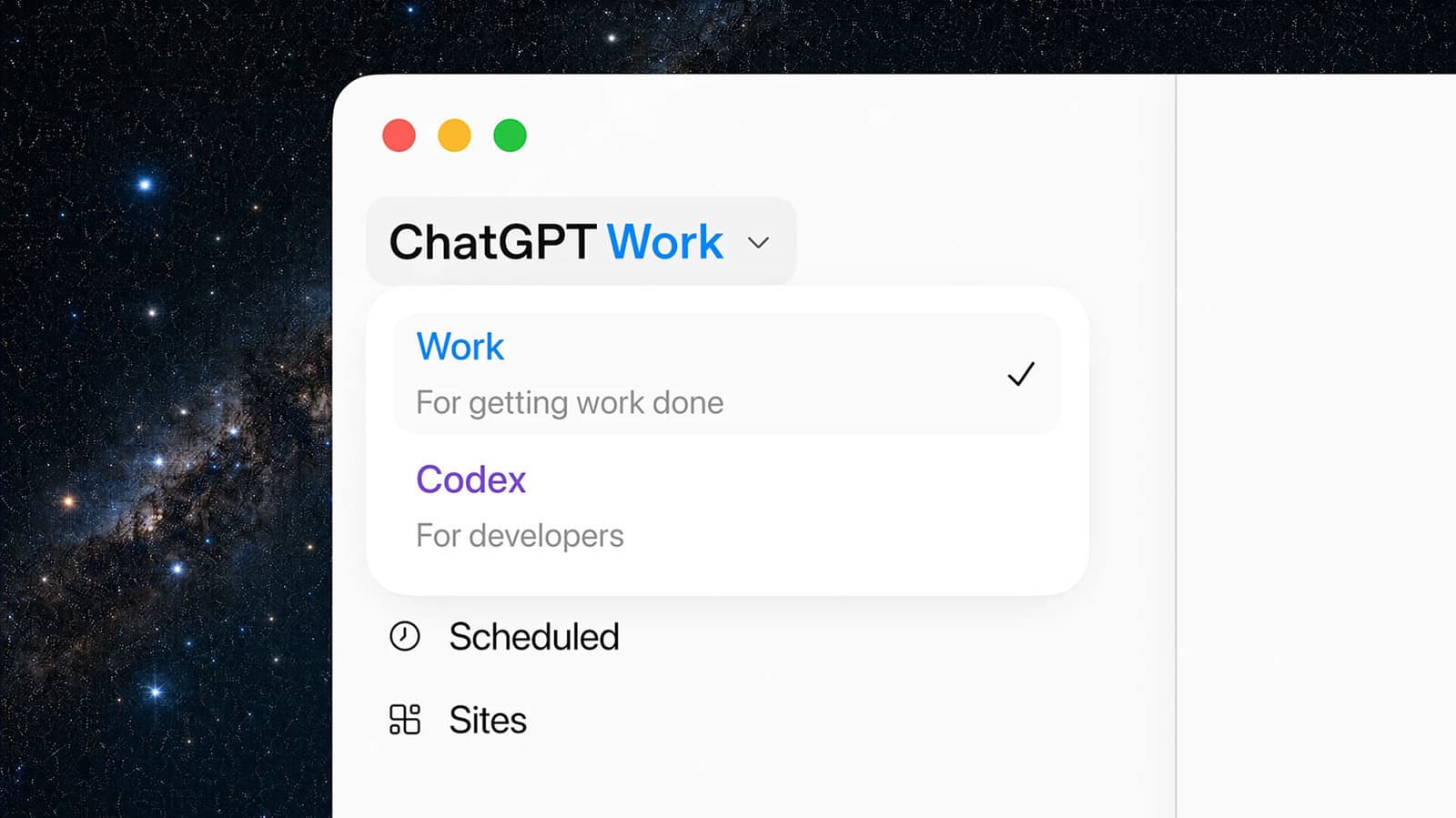
- ChatGPT’s desktop app is getting a Codex-powered upgrade. ChatGPT for Mac now includes Chat, Work, and Codex.
- And OpenAI is releasing a hosted sites feature for all paid users.
Meanwhile, OpenAI just released a new version of Codex with these release notes. This is the promised merging of Codex into ChatGPT. It looks like users will be able to use a single ChatGPT desktop app, but set preferences to favor Codex functionality, including the app icon.
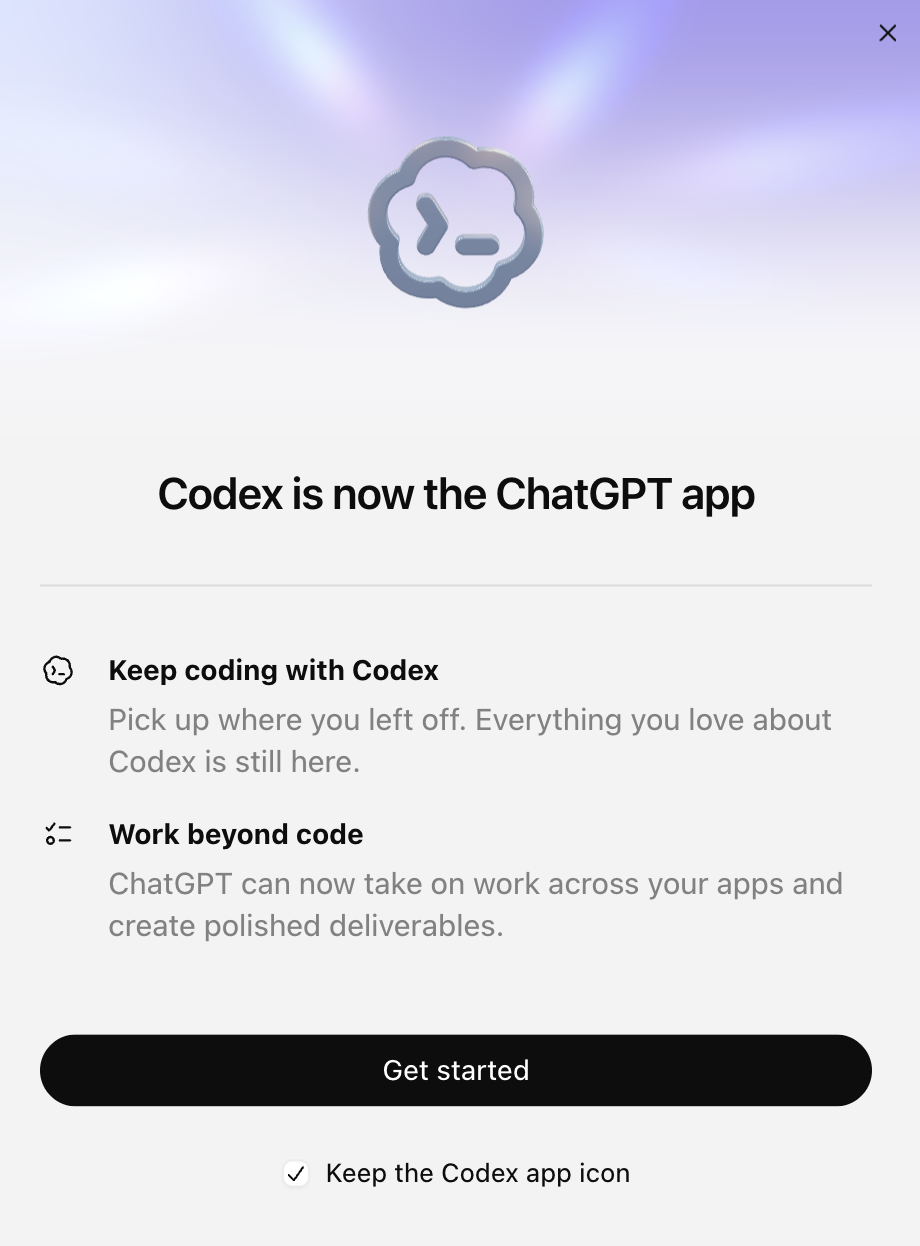
Codex is now part of the ChatGPT desktop app on macOS and Windows. Existing Codex app users can update as usual and keep their projects, settings, and workflows. You can make Codex the default view and, on macOS, keep the Codex app icon.
### New features
– Edit Markdown and code directly in the app, use inline annotations, and ask Codex to revise selected content.
– Review GitHub pull requests in the sidebar, with reviewer feedback alongside the diff, without leaving the app.
– Work across repositories in one project.
### Performance improvements and bug fixes
– Made Computer Use faster with GPT-5.6.
– Made task activity and progress easier to follow while Codex works.
– Simplified plugin management by moving it into Settings.
– Improved mobile connection reliability and fixed video rendering for SSH projects.
– Additional performance improvements and bug fixes.
Additionally, OpenAI says GPT-5.4 will be retired on July 23 following the introduction of GPT-5.6. The existing GPT-5.5 models will remain available.
To summarize today’s desktop app changes:
- The existing ChatGPT app is now ChatGPT Classic.
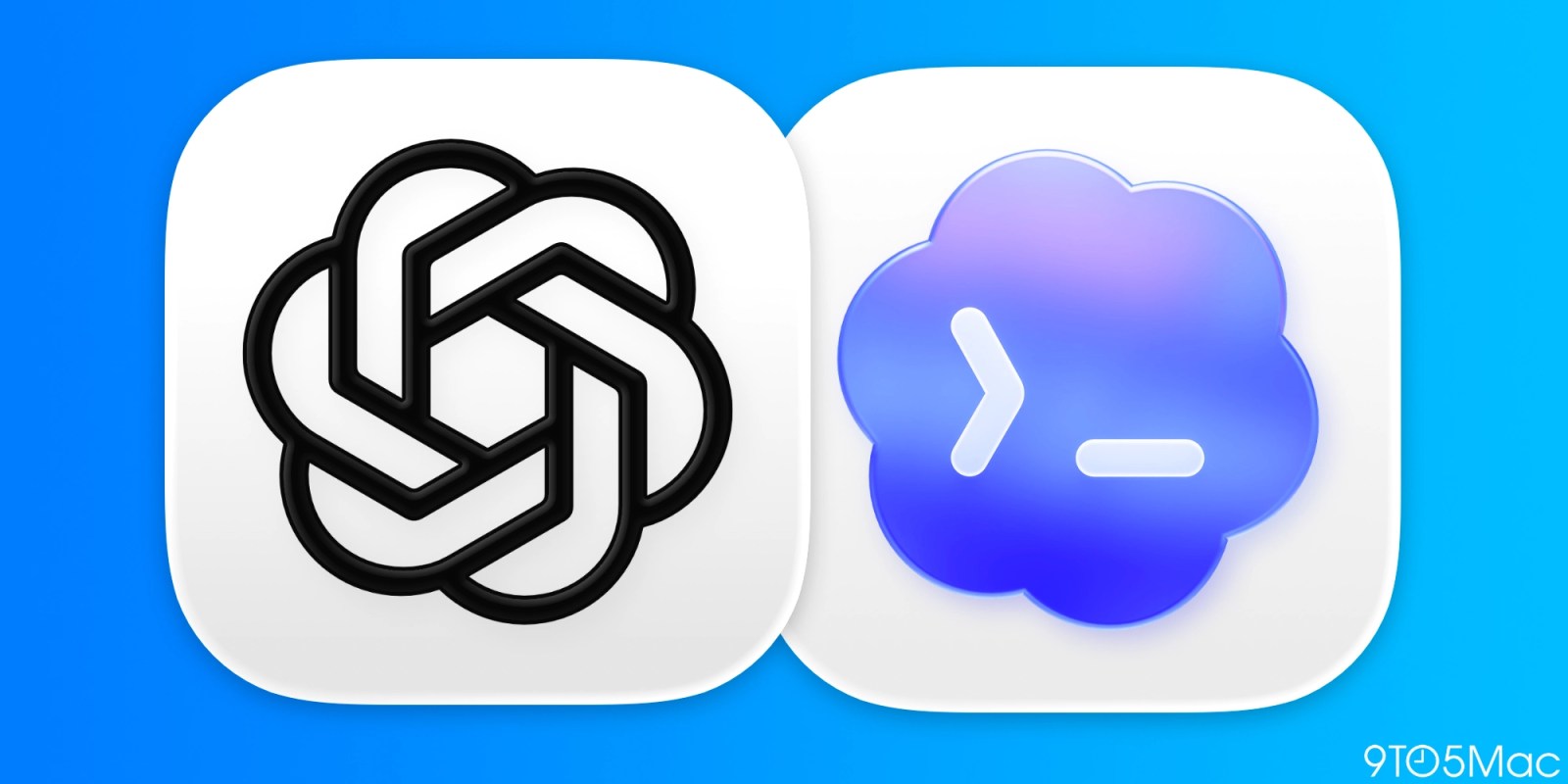
- Codex is now the new ChatGPT desktop app. It still looks like Codex and includes the Codex icon as an option, but it’s now called ChatGPT.
- ChatGPT for desktop includes ChatGPT Work and ChatGPT Codex, which share plug-ins. ChatGPT Codex mode shows more technical details that ChatGPT Work abstracts away from the user.
- It’s possible to have ChatGPT Classic, ChatGPT, and Codex installed, but the way forward seems to be just running the new ChatGPT desktop app. Codex users can still use the Codex app icon, but the app will be called ChatGPT.
The ChatGPT Classic app looks more native Mac-like, so that might be an issue for users.
There are also some issues around the Codex upgrade path to the new ChatGPT desktop app. Just switching to the new ChatGPT desktop app seems to be the way forward.
You can learn more about ChatGPT Work and the other announcements here.
Related OpenAI stories:
FTC: We use income earning auto affiliate links. More.