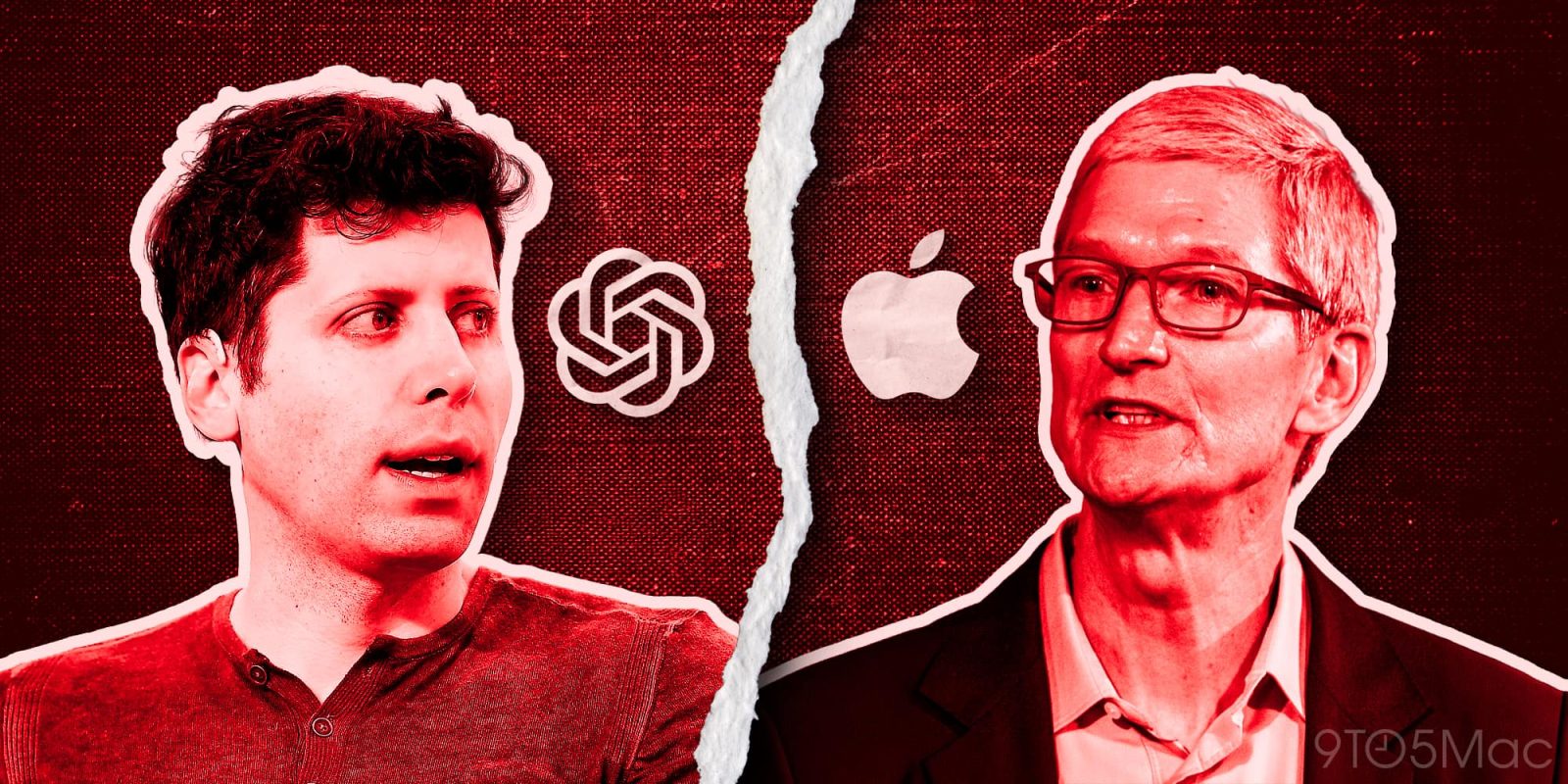
Chang Liu, Tang Tan, OpenAI, and io Products filed a new petition asking the court to dismiss Apple’s trade secret misappropriation complaint with prejudice. Here’s what that means.
A bit of context
A few weeks ago, Apple filed a lawsuit accusing two former employees of trade secret misappropriation.
The lawsuit, which also includes OpenAI and Jony Ive’s io Products, claims that Chang Liu and Tang Tan took or accessed confidential Apple information after leaving the company, and that they coached prospective hires on how to avoid triggering Apple’s security systems while taking company information with them.
Apple has also been seeking a preliminary injunction to stop OpenAI and the other defendants from accessing, using, or disclosing Apple’s alleged proprietary information while the case proceeds, as well as expedited discovery to more quickly determine the scope of the alleged misappropriation (which would in turn also inform the scope of the injunction).
Following Apple’s filing, OpenAI and the other defendants responded by asking the court to dismiss the lawsuit, claiming that Apple had failed to clear the legal bars required to support its trade secret misappropriation claims.
They claim that Apple failed to identify protectable trade secrets with enough specificity, failed to plausibly allege that any of the defendants misappropriated them, and failed to show any resulting injury or ongoing harm.
Apple, in turn, responded by arguing that its complaint identifies specific trade secrets and specific acts of alleged misappropriation, while accusing the defendants of relying on unrelated events to offer innocent explanations for conduct Apple says it never alleged.
One example is OpenAI’s claim that Tang Tan retained Apple’s offboarding document only to help ensure that future hires complied with Apple’s security requirements, while another is its argument that Chang Liu accessed Apple information after leaving Apple because former colleagues had asked him for help.
Now, OpenAI has filed a new brief reaffirming its earlier arguments and asking the court to dismiss the lawsuit with prejudice, which would prevent Apple from bringing the same claims again in the future.
OpenAI renews push to dismiss lawsuit
In its new filing, OpenAI says Apple’s rebuttal to its motion to dismiss the lawsuit “confirms, rather than cures, the Complaint’s central defect,” arguing the following:
To state a DTSA claim, Apple must connect three propositions concerning the same information and the same Defendant: what the particular asserted trade secret is; why that information qualifies for protection; and how a defendant improperly acquired, disclosed, or used it. Neither Apple’s Complaint nor its opposition ever completes that chain. Apple’s supposed “trade secrets” are and remain vague categories and catch-alls, and Apple cannot substitute attorney characterization for missing facts.
OpenAI also accuses Apple of asking the court to “infer essential facts that are not alleged,” adding that while “Rule 12 permits reasonable inferences from alleged facts,” it “does not permit speculation to substitute for the missing act of misappropriation.”
A request that a candidate bring “parts” becomes assumed receipt of confidential information. Pre-interview downloading becomes assumed disclosure during the interview. A question about an Apple project becomes assumed receipt of trade-secret information. And allegations concerning one person somehow become acquisition or use by another.
Throughout its rebuttal, OpenAI essentially doubles down on the following arguments:
- Apple fails to identify the alleged trade secrets
- The complaint fails to identify any trade secrets
- Apple fails to plead reasonable measures to protect its trade secrets
- Apple fails to plead misappropriation by Chang Liu
- Apple fails to plead misappropriation by Tang Tan
- Apple fails to plead misappropriation by OpenAI or io Products
- Apple fails to plead harm
- The court should also dismiss Apple’s state law claims
With OpenAI’s motion to dismiss, Apple’s opposition, and OpenAI’s response now filed, briefing on the motion is effectively complete ahead of a hearing scheduled for October 1.
You can read OpenAI’s full motion below:
Should the court dismiss the lawsuit? Let us know in the comments.
Worth checking out on Amazon
FTC: We use income earning auto affiliate links. More.