RayNeo is going both minimalist and maximalist with its latest AR smart glasses
RayNeo's latest AR smart glasses are going for very different audiences: The very discrete, and the very nerdy.
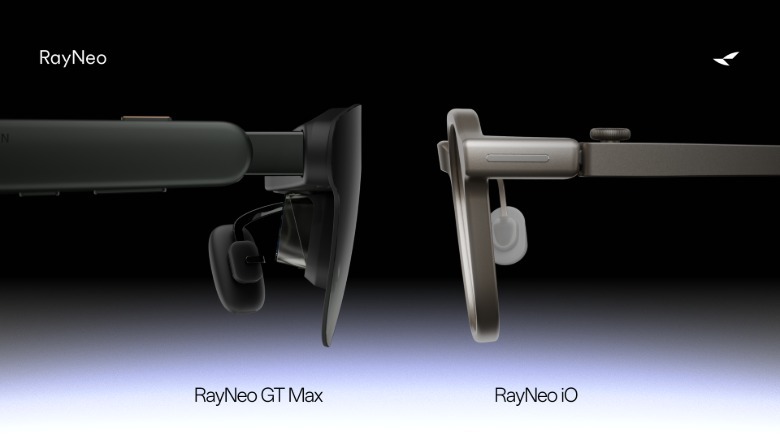
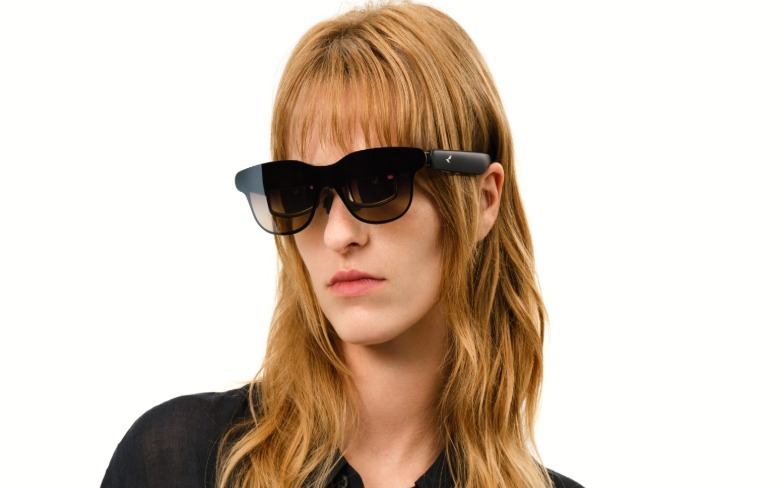
RayNeo's new AR specs range from the incredibly subtle, to the gloriously nerdy. The RayNeo iO Smart Glasses look like an everyday pair of frames, but they hide a small display, intelligent voice capture and a slew of AI features to help you throughout the day. On the other end of the design spectrum, there's the new GT-series glasses, which offer "cinema-grade spatial viewing," according to the company. You'll definitely make a statement while wearing them, since they look like a pair of oversized sunglasses and sport noticeably thick arms.
If it's not abundantly clear from the start, both families of frames are meant for very different purposes. The 33-gram iO Smart Glasses are meant to wear all day, replacing your standard "dumb" specs. It has a small monochrome green display with a 23.5-degree field of view that can display a simplified interface and bits of text, like real-time translations or a teleprompter view of a speech. The GT-series, on the other hand, are display glasses meant for focused time watching movies, playing games or getting work done on a large virtual display. Perhaps eventually, a single pair of smart glasses could serve both purposes, but that's not possible with today's technology.
Based on early product images and RayNeo's technical details, the iO Smart Glasses could be an intriguing option for someone who wants to add a bit of smarts to their eyewear. But to achieve their minimalist style, which looks far more "normal" than Meta's chunky Ray-Ban Display, RayNeo also had to make compromises. That monochrome display is certainly one. And surprisingly enough, they also don't have speakers, something I'd probably consider a requirement on everyday smart glasses.
Instead, RayNeo focused on giving the iO Smart Glasses better technology for recording voices. It sports a quad-microphone array, as well as a bone conduction sensor that "isolates vocal vibrations for flawless transcription in noisy environments," according to the company. That'll all certainly be useful for live translations and listening to voice commands, but it will also help to power RayNeo's Ambient AI Productivity Suite, which can listen to your conversations to "extract action items" and suggest calendar updates.
 RayNeo
RayNeo claims the iO Smart Glasses can translate 55 languages and 109 accents in real-time with around a second of latency, thanks to the Timekettle BabelOS 3.0 AI translation software. The company also says its battery will last for two days of usage, or around 18 hours of continuous recording and 6.2 hours of translation.
Much like Xgimi's MemoMind One, there is an inherent creepiness around AI features that are constantly recording you. RayNeo says the iO Smart Glasses have an indicator light that will turn on during recording and translations, but as we've seen with Meta's Ray-Ban hardware, those things are easy to hide. RayNeo's specs don't have cameras, so they also can't easily be derided as "pervert glasses."
 RayNeo
As for RayNeo's new GT and GT Max, they're directly competing with high-end cinema displays like Xreal's One Pro. Clocking in at twice the weight of the iO Smart Glasses, 68 grams and 78 grams, they have room for far larger displays. The RayNeo GT can project up to a 231-inch virtual screen with a 46-degree field of view, while the GT Max can scale up to a 307-inch screen with an impressive 59-degree FOV. The larger the FOV, the more of the virtual display you can actually see without moving your head around.
According to the company, the RayNeo GT is more focused on AR gaming and media viewing, while the RayNeo GT Max offers a "cinema grade AR display." I haven't seen any of these glasses in person yet, so I can't confirm if RayNeo's lofty description is accurate. Both of the GT glasses feature a quad-speaker setup co-tuned by Bang and Olufsen, and they have a 3DoF AR chip that lets you anchor screens in 3D space. They can also display Dolby Vision HDR content when connected to the RayNeo Pocket TV Pro, a separate Google TV-powered streaming device.
Unfortunately, RayNeo doesn't have pricing for any of its new glasses yet, but we'll likely get that information ahead of their September 4th retail launch. RayNeo will also be showing off all of its new glasses at IFA in early September.
Originally published on Engadget