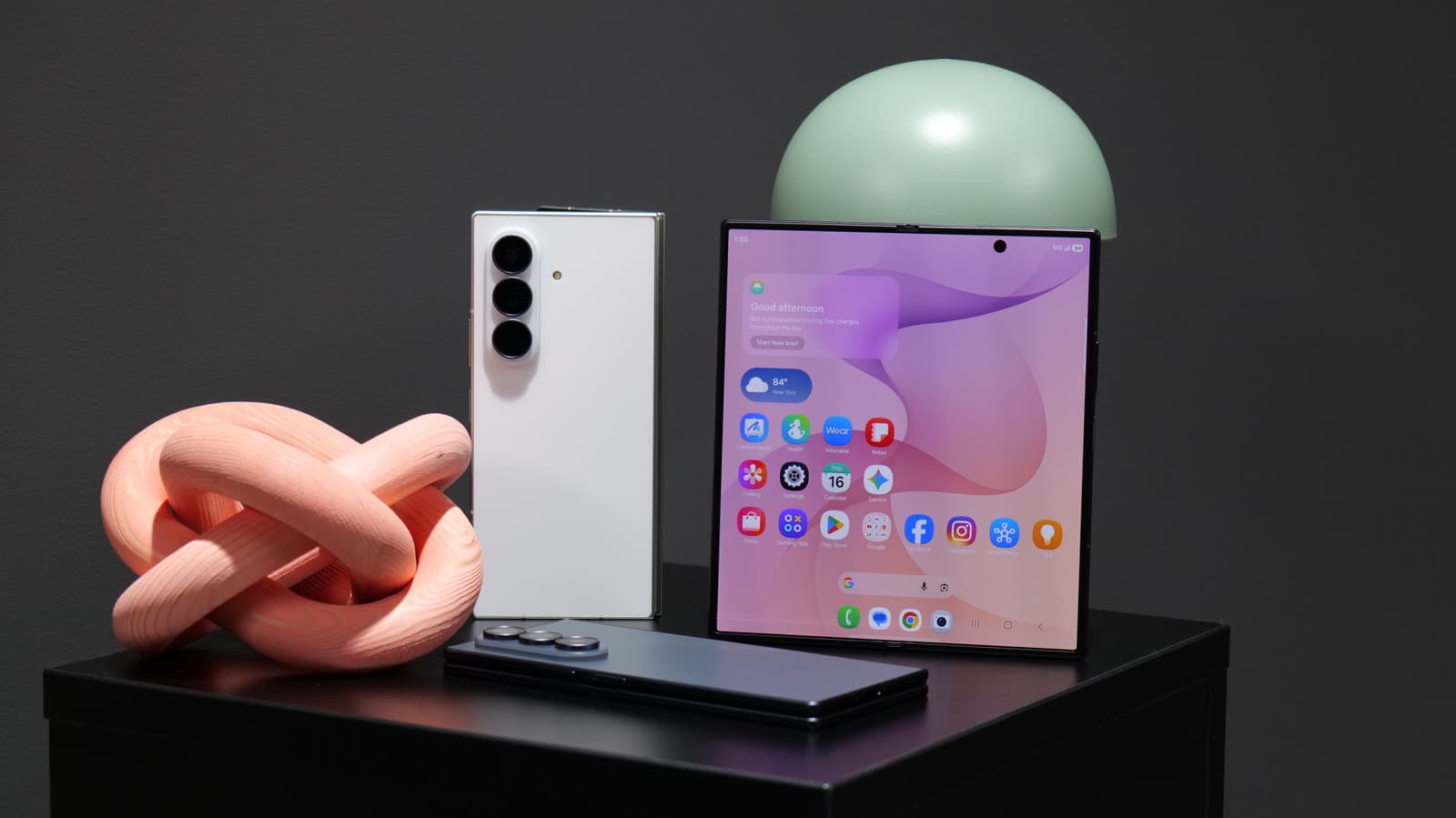
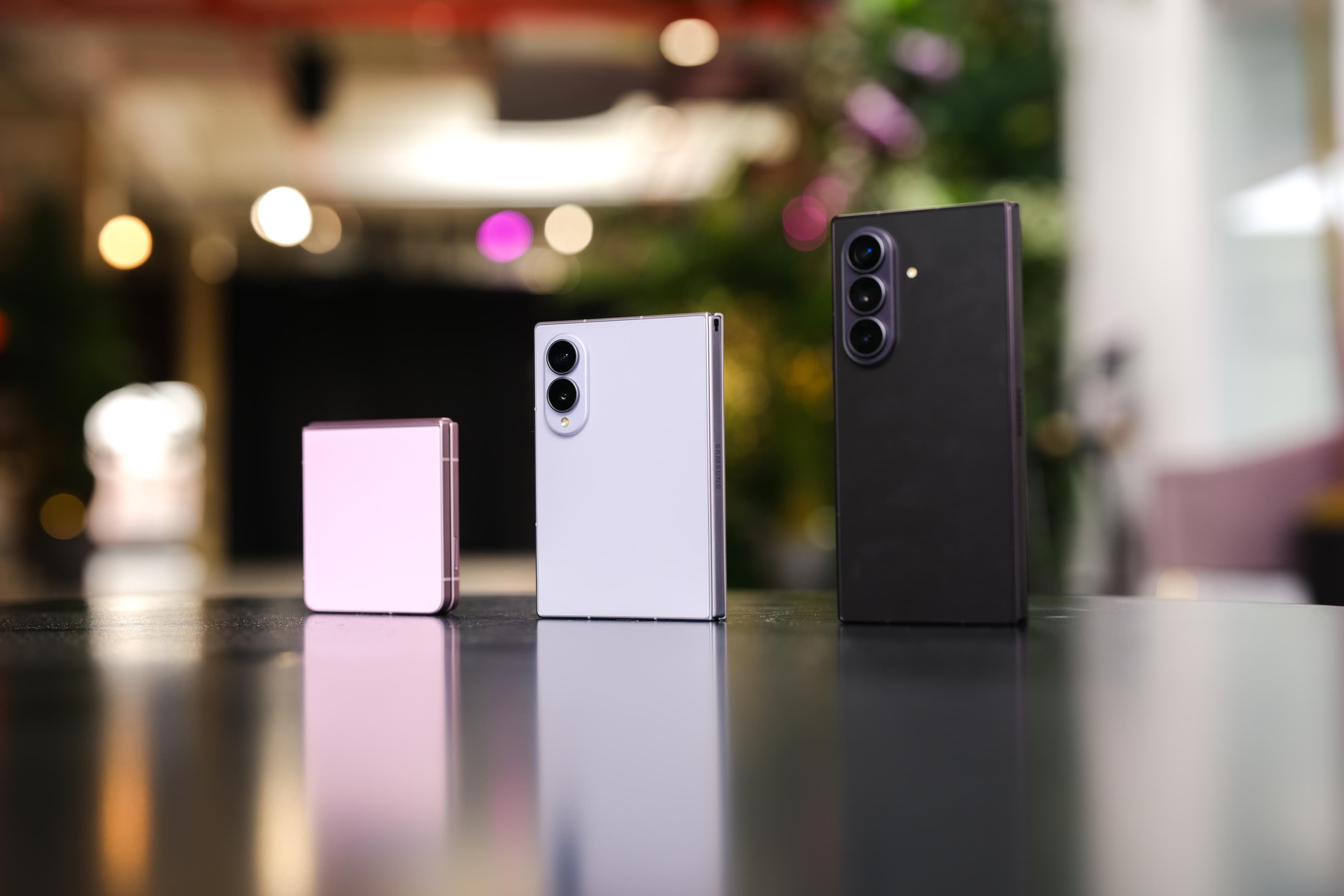
A year after overhauling its Z Fold phone with a radically thinner design, Samsung has changed things up again, this time altering the shape entirely. The Z Fold 8 is wider than any of Samsung’s previous foldables, and shorter too, a size and shape somewhere between Samsung’s traditional Flip and Fold models.
Samsung’s wider Z Fold 8 feels just right
A year after overhauling its Z Fold phone with a radically thinner design, Samsung has changed things up again, this time altering the shape entirely. The Z Fold 8 is wider than any of Samsung's previous foldables, and shorter too, a size and shape somewhere between Samsung's traditional Flip and Fold models. In photos, I […]
t
tech4you AIIn photos, I wasn’t impressed by the squat shape. In person, to my surprise, it feels great, and almost immediately intuitive. If you want to get a feel for it yourself, grab your passport — the Z Fold 8 is about the same height and less than half an inch thinner.
This isn’t Samsung’s only new foldable this year, and in fact, its lineup just got more confusing. The Z Fold 8 may be the official follow-up to last year’s impressive Z Fold 7, but in truth the Z Fold 8 Ultra is the straightforward sequel. That phone has the same squarish inner screen as previous Z Fold phones and a similar triple rear camera. The name feels like a sly trick to get around this year’s inevitable price hikes: Samsung slapped “Ultra” on the box of its highest-end model to help cover for pricing the phone at $2,099.99, up $100 from the Z Fold 7.
Meanwhile, with its wider screens and stripped back cameras, the Z Fold 8 feels less like a sequel and more like a spinoff. And it almost — almost — looks like a bargain at $1,899.99, down $100 on its nominal predecessor.
Samsung isn’t the first to the Z Fold 8’s form factor. Huawei’s Pura X Max launched in April with a similar shape, though it’s only available in China. Apple is widely expected to be next, using a similar passport-esque shape for its first iPhone foldable in September. In truth, elements of this design are even older: The Fold 8 is almost exactly the same width as Google’s first-gen Pixel Fold, though a good deal shorter, bringing foldable phones full circle.
I’ve been skeptical about the return of the wider foldable, which in photos looks squat and uncomfortable, too wide to use naturally while closed and too short to feel expansive when open. The industry tried this design once and moved on, so why — other than Apple’s potential adoption — should we give it a go again?
Samsung’s answer is that its two Z Fold 8 models are designed for different users and different uses. The Z Fold 8 Ultra, tall and thin when closed and similar to a square when open, is meant to be a multitasking monster, useful for running apps in split-screen, giving you the equivalent screen space of two regular 6.5-inch phones side by side. The wider Z Fold 8 is instead about consumption: Its 4:3 aspect ratio is equally natural for watching Netflix shows in landscape as it is for reading ebooks in portrait, and at 201g, it’s light enough to hold comfortably in one hand.
Or, as Samsung’s marketing department puts it, the Fold 8 is for “joy-maxxing,” and the Ultra is for “power-maxxing.” I sit through these presentations so that you don’t have to, folks.
1/5
The 4:3 display isn’t widescreen, so you’ll still get letterboxing at the top and bottom when watching most videos, whether on YouTube or a streaming service. But unlike Samsung’s previous squarish Folds, which weren’t much wider than simply turning your phone on its side, opening the Z Fold 8 up really does fit more video onto your screen, and the wider aspect ratio will be much more natural for gaming too. It feels less like a foldable and more like a tablet and is all the better for it.
I’m still a little uncertain whether I like how the Z Fold 8 feels closed — the way I use foldables the majority of the time. The width of the 10:16 cover display is less noticeable than I expected, and I got used to using the phone this way remarkably quickly, but I’m worried it might feel less comfortable if you stick the phone in a case. The reduced height proves an unexpected blessing here, making it easier and more comfortable to stretch across the screen one-handed than on larger slab phones like the S26 Ultra. A lot will depend on how well apps adapt to the shorter screen, though Samsung has already announced that Instagram is on board with optimizations.
There are other considerations to the Fold 8 than its new shape. The Qualcomm Snapdragon 8 Elite Gen 5 chipset, optimized together with Samsung, makes this about as powerful as any other flagship out there. The 120Hz OLED main display is the same in specs as the Fold 8 Ultra’s, including an impressive peak brightness of 3,000 nits and a new anti-reflective coating to reduce glare. It supports the same new software features as the Z Fold 8 Ultra, including the official launch of Gemini Intelligence task automation and a proactive AI feature called Now Nudge that pops up with cross-app suggestions to add an event to your calendar or send someone an email.
For the first time, Samsung has caught up with its Chinese competition and adopted silicon-carbon batteries, a new type of lithium ion cell that incorporates a small amount of silicon alongside the graphite in the anode. Silicon-carbon batteries can squeeze higher capacities into smaller spaces, but they come with a downside: The highly reactive silicon is less stable, and there are fears that silicon-carbon batteries will lose capacity more quickly over time.
The 4,800mAh battery capacity of the Fold 8 isn’t an enormous jump from the 4,400mAh in the Fold 7 and pales in comparison to the biggest foldable battery around, Honor’s 6,660mAh Magic V6. A cautious approach to silicon-carbon is understandable from Samsung, which still bears the scars of the disastrous Galaxy Note 7 battery, which prompted a full recall of that phone in 2016 over safety concerns.
“Silicon-carbon cells must be carefully managed,” BD Yang, executive vice president of Samsung’s core component technology team, told The Verge, emphasizing Samsung’s work to manage silicon reactivity, swelling, and long-term cell stability, rather than prioritizing energy density alone. He called the Fold 8’s battery an “end-to-end improvement” over previous generations, combining higher capacity with “dependable performance.”
Less encouraging are the cameras. Unlike Samsung’s previous Fold models, the Fold 8 is limited to two rear cameras, with no telephoto to be found. Both the main and ultrawide lenses use 50-megapixel sensors, which looks like an upgrade for the ultrawide, but means the main lens might be worse than the Z Fold 7’s 200-megapixel shooter — though we won’t know for sure until Samsung shares detailed specs like the sensor size and aperture and I get the chance to put the cameras to a more thorough test in my review. Still, Samsung’s foldable cameras already lagged behind its best slab phones, and the Fold 8 only appears to make matters worse.
It’s also fallen behind the foldable competition in a few key ways. All three of Samsung’s new foldables remain limited to IP48, meaning they lack the comprehensive dust protection of Google’s Pixel 10 Pro Fold. And while Samsung says it’s overhauled the hinge and display stack with a new titanium-alloy film and a titanium plate below it, the changes aren’t enough to make the display crease anywhere near as subtle as on Oppo’s Find N6. Better are new magnets, which make the phone easier to open one-handed, and help it close with a satisfying click — though Samsung is still stubbornly refusing to integrate the internal magnets required for full Qi2 charging support.
I won’t really know whether the Fold 8’s form factor is for me until I’ve spent more time with the phone, but after an hour or so, I’m surprisingly sold. I’ve never figured out a way to replace my work laptop with a foldable phone, but I could easily see one supplanting my tablet, which has been mostly relegated to a portable screen for in-flight entertainment. And with a bigger battery to boot, the Z Fold 8 might just last ’til I land.
Still: $1,900 is an awful lot for any phone, and especially one that’s suffered such an obvious camera downgrade. It feels like even more considering this is an almost untested design, a new format that could be the future of foldables (especially if Apple has anything to say about it), but might arrive to the muted response that greeted last year’s Galaxy S25 Edge. An hour isn’t enough to know for certain either way, but after trying the Z Fold 8 in person, I’m already a fan.
Follow topics and authors from this story to see more like this in your personalized homepage feed and to receive email updates.
Originally published on The Verge