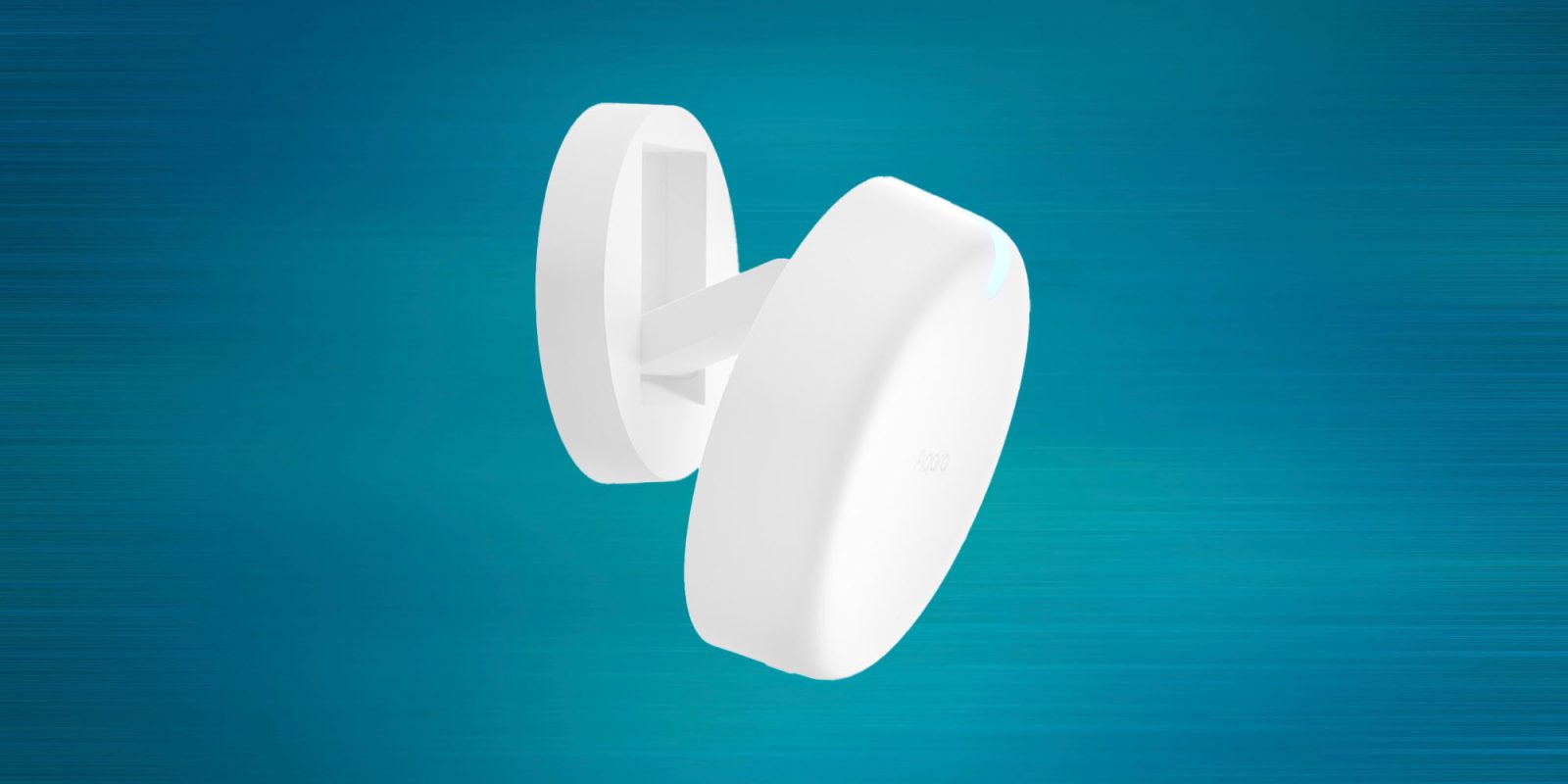
I think if we are honest with ourselves, most of us would admit that smart home tech falls into one of two categories. First, there is the genuinely useful. Second, there’s the stuff we do just because we can, and it is to some degree cool.
I think I’ve now discovered a third category: things that really aren’t worth all of the time and effort they take …
‘Upgrading’ to a presence sensor
In my previous home, I used several different Philips Hue motion sensors. The main one was in the kitchen, switching on the under-cabinet light strips whenever anyone walked into the kitchen, and switching them off again when no movement was detected for two minutes. I’ve replicated that in my new home.
A motion sensor proved less effective in my previous bathroom. As the name suggests, a motion sensor only detects someone when they are actually moving. If you were having a leisurely bath, then there was no movement to detect, and the timeout would then switch off the bathroom lights while the room was still occupied.
To circumvent that issue, I decided this time to opt for a presence sensor. These use mmWave radar signals instead of infrared heat, and detect any interference with those signals. This is massively more sensitive and can detect micro-movements such as breathing. Even if you are completely stationary, so long as you are still alive the sensor should continue to detect your presence.
A lengthy and unsuccessful battle
A presence sensor is a more expensive option, especially as I had to also invest in a Matter-Zigbee hub, but would have been worth it had it worked reliably. That has not, however, proven to be the case.
I ideally wanted a battery-powered one, so first tried the Aqara FP300. Unfortunately, this proved very unreliable at detecting presence, actually proving less sensitive than a motion sensor. You basically had to do star jumps in front of it before it would admit you were present. Googling suggested that this was a common experience, and that the FP2 was a better bet.
The FP2 requires USB power, which is obviously less convenient in a bathroom, but it passed the initial test of remaining aware on my presence while relaxing in the bath. However, it turned out to have the opposite problem to the FP300: continuing to detect a non-existent presence.
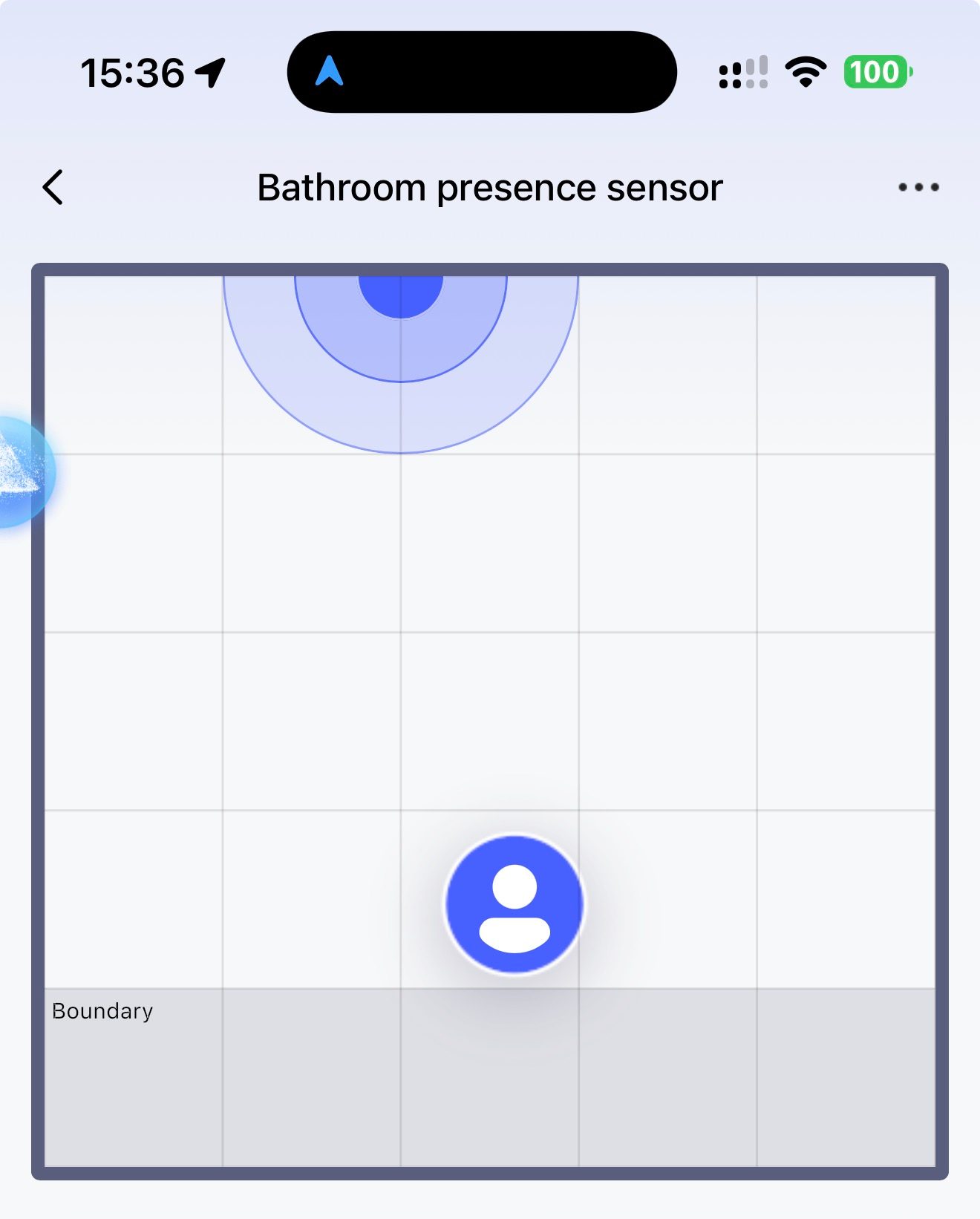
Troubleshooting steps one and two didn’t help: power-cycling the sensor and resetting it in the app.
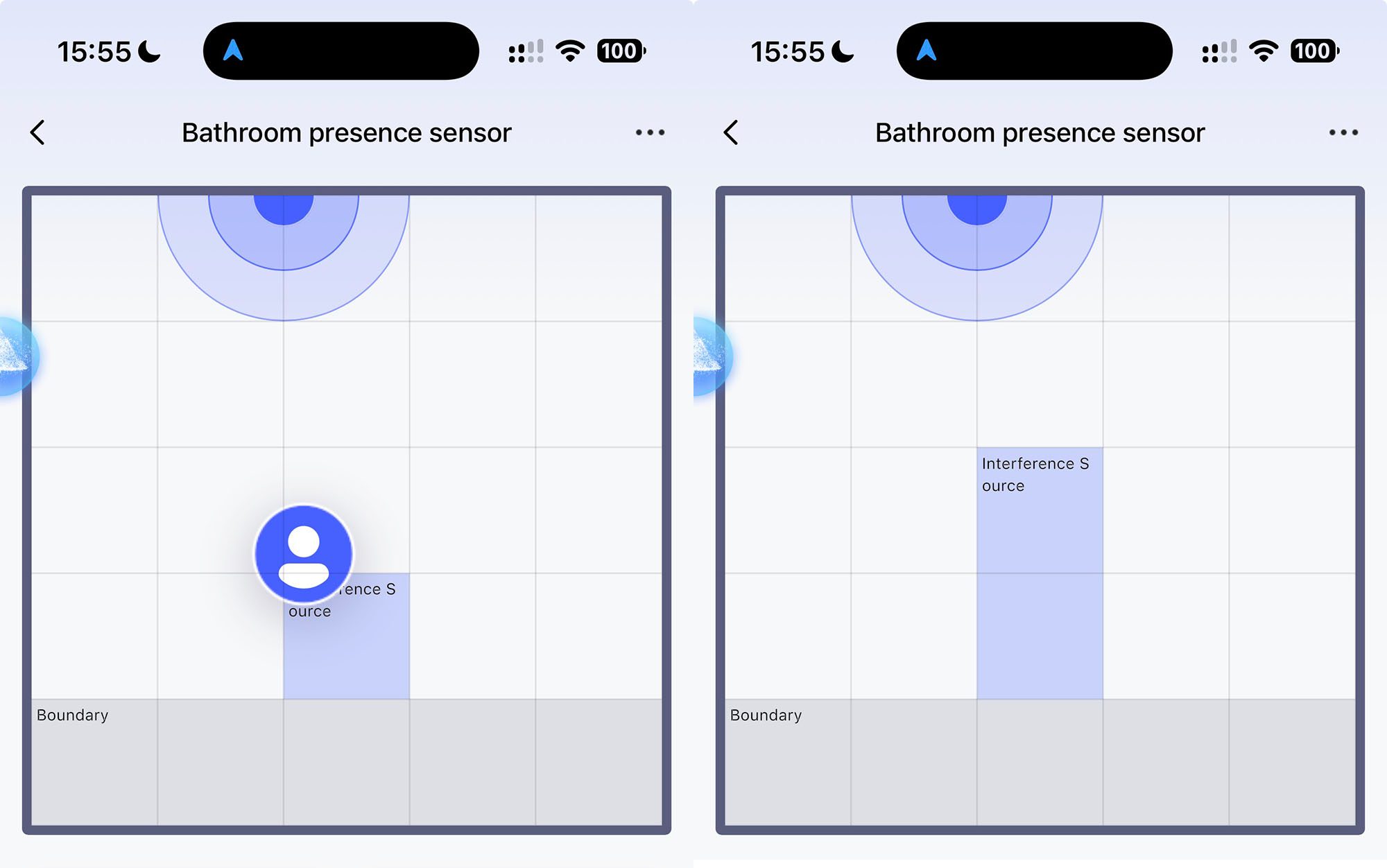
I was able to use the app to delete the false target, which also deactivated part of the detection zone, marking it as an interference source. Unfortunately, as this was the point at which someone would walk into the bathroom, this made it less responsive.
Worse, it then detected a fake person in another square, deactivating another part of the zone.
I also tried relocating the sensor to a couple of different positions in the bathroom, neither of which helped.
The Aqara app says it uses AI to learn over time, so I thought that perhaps if I left it for a while and walked in and out a lot, it would figure things out. But almost a week later, nothing had improved.
Light dawned
I was about to delve even deeper into the issue when I paused to ask myself why I was doing all of this. The “problem” I was solving was having to manually operate a light switch when entering and leaving the bathroom. The amount of time and effort I was investing in this life-changing task just kept increasing.
It was at this point that I decided sanity should prevail. It’s still useful having the smart bulbs in order to be able to have dimmer light while having a relaxing bath, but I’ve decided my fingers will cope with the wear and tear of flicking light switches on and off. I’ve sent back the motion sensor, while the Matter/Zigbee hub remains useful to relay temperature and humidity readings from simple sensors in each room to the home app.
Have you ever had any similar experiences, or decided that a potential smart home project would be more trouble than it was worth? Please share in the comments.
Image: 9to5Mac/Aqara/Mudassir Ali
FTC: We use income earning auto affiliate links. More.