SpaceX claims it will put a Vera Rubin NVL72 rack-scale system into orbit next year
And fly ‘significant scale’ in 2028 – a claim that isn’t entirely bonkers, but needs a solid grain of salt
off-prem
SpaceX claims it will put a Vera Rubin NVL72 rack-scale system into orbit next year
And fly ‘significant scale’ in 2028 – a claim that isn’t entirely bonkers, but needs a solid grain of salt
SpaceX will send at least one datacenter rack into space next year, according to Elon Musk, with more to follow in 2028.
The occasional trillionaire made that claim on Monday on the user-generated content platform – a.k.a. the social network X – that he runs in part to feed the Grok models SpaceX develops with up-to-date contextual data.
“SpaceX, in partnership with Nvidia, has designed a space-optimized Vera Rubin NVL72 system for launch to orbit in Q4 next year, with significant scale in 2028,” he Xeeted.
Nvidia offered a slightly different version of events in a press release that states SpaceX’s datacenter satellites “will be based on the optimized NVIDIA Vera Rubin NVL72 rack-scale system.”
The full NVL72 comprises 72 Rubin GPUs, 36 Vera CPUs, ConnectX-9 SuperNICs, and BlueField-4 DPUs – all housed in 18 compute trays, plus a further nine NVLink switch trays. Nvidia says each unit, plus rack, weighs “roughly 4,000 lbs, or about the weight of a pickup truck” – or 1,800kg.
SpaceX hasn’t said which rockets it will use for the launches Musk mentioned. The company’s workhorse is the Falcon 9, which can launch 22,800 kg to low Earth orbit. The fairing that contains payloads on the Falcon 9 measures 13.1 meters high with a diameter of 5.2 meters. The MGX racks Nvidia uses to house each NVL72 are around 600mm x 2,293mm x 1,068mm deep, so the Falcon 9 can fit a few inside its fairing. SpaceX has proven it can launch over 100 Falcon 9 missions each year, so can clearly get a lot Nvidia racks into space.
Nvidia says each rack draws 120 kW and uses novel liquid cooling.
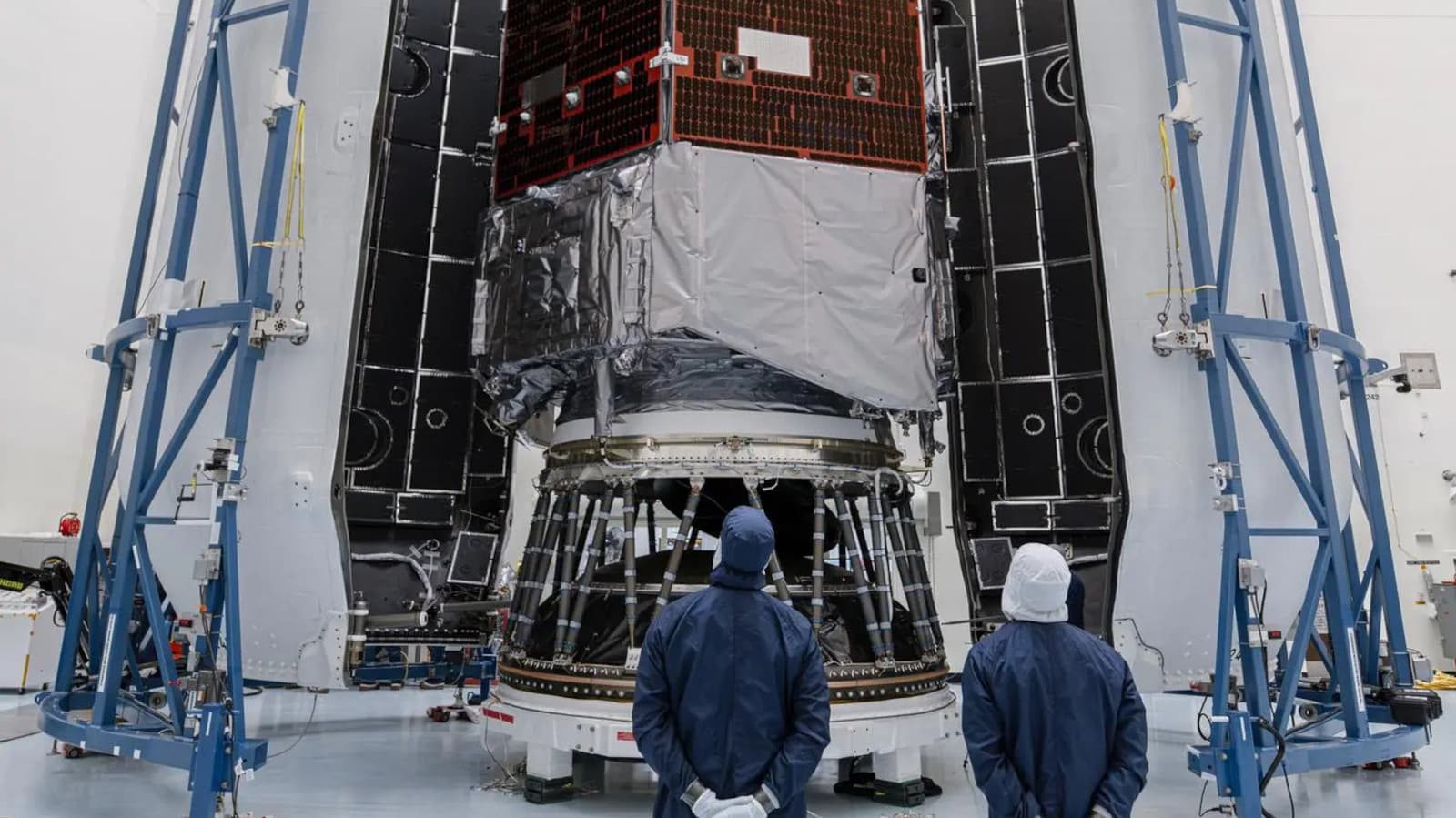
SpaceX has published details of its datacenter satellite design that says it will possess a 210 kW solar array, and use liquid radiators that “reject heat into the vacuum of space, built upon SpaceX's extensive experience operating vehicles on-orbit.”
The company is, however, yet to build such a satellite. It therefore looks conceivable that SpaceX and Nvidia could make this work – but because space is hard many obstacles also exist that could derail the promise of launches at scale in 2028.
Note, also, that neither Nvidia nor SpaceX has said what “space-optimized” means. The Register presumes the term covers radiation-hardening and work to ensure the delicate machines can handle the stress of launch. We’ve asked if it also means changes to the number of servers or other kit SpaceX will launch.
Elon Musk’s companies have an impressive track record of out-innovating rivals, but Musk also has a history of making grand predictions that either don’t arrive or eventuate years after his promises – such as his forecast to deliver self-driving Teslas and millions of robo-taxis. The New York Times recently found Musk delivered on 19 percent of 602 promises made in public and was either years late or did not deliver on 35 percent of promises. ®
Originally published on The Register