With production capped at 80 units in total, final assembly of each 21C is performed largely by hand at Czinger’s Area 21 facility in Torrance, California. But Czinger Vehicles’ brand communications head Max Morice noted during a tour of the site that the company intends to move into higher-volume segments further down the road. And thanks to the lack of traditional tooling requirements, that transition should be fairly seamless.
“The goal is for this manufacturing process to be the way everything is built,” Morice said. “It’s vehicle-agnostic, so you can build a Czinger, you can build parts for an Aston Martin, a Bugatti, and so on, all in the same space with zero turnover time. It’s really the golden goose of manufacturing.”
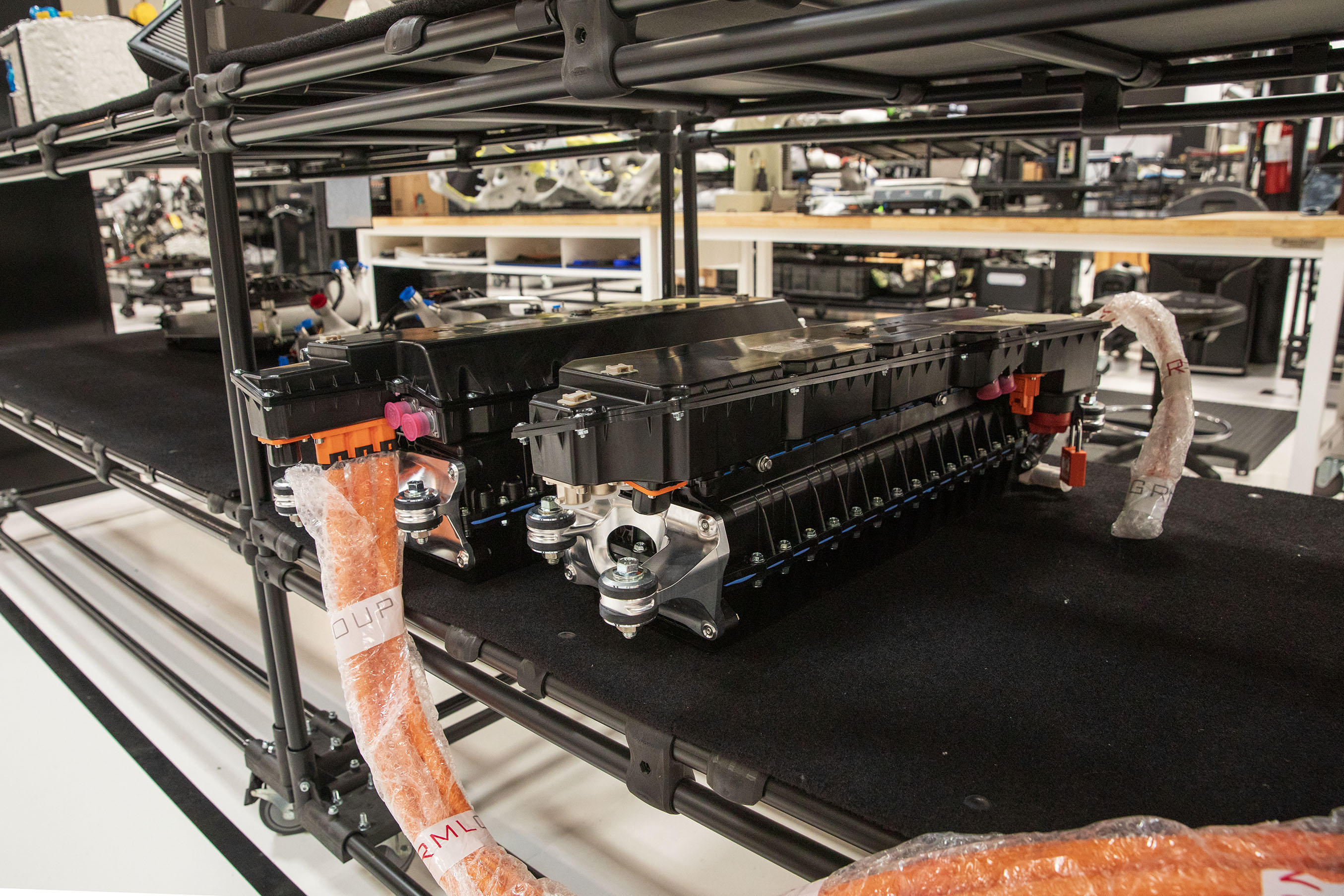
Battery packs waiting to be installed.
Bradley Iger
Battery packs waiting to be installed. Bradley Iger
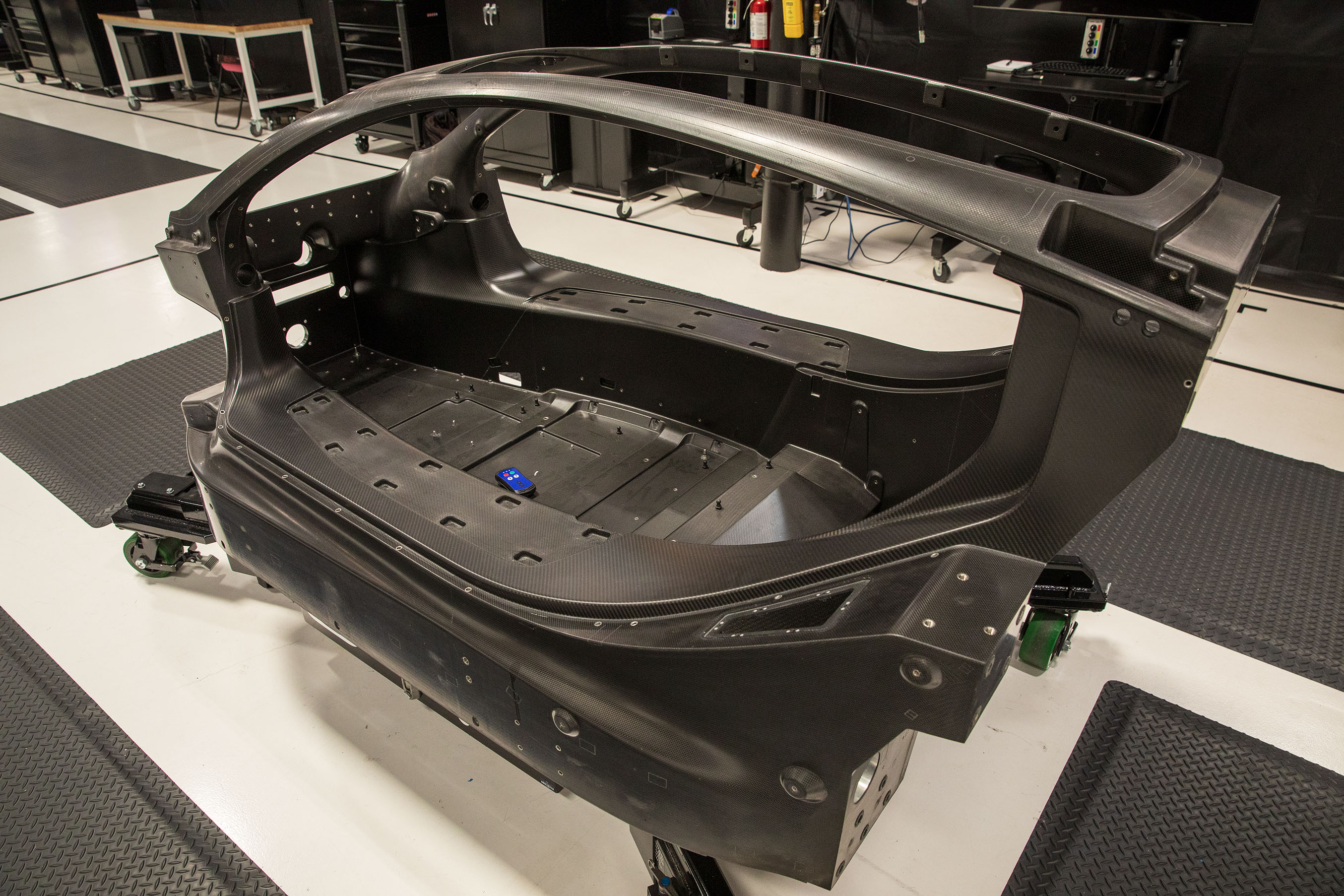
This is what the bare tub looks like.
Bradley Iger
This is what the bare tub looks like. Bradley Iger
Battery packs waiting to be installed. Bradley Iger
This is what the bare tub looks like. Bradley Iger
Unbound by the constraints of conventional production, the 21C’s design reflects the benefits of this process, as well as Czinger’s mission to produce a record-setting, road-legal hypercar. The vehicle’s main structure is a single-piece, in-house-developed carbon-fiber safety cell that places the driver in a central position.
The passenger seat is located directly behind the driver in a tandem configuration that owes more to fighter jets than road-going performance cars; the Light Car Company Rocket and Yamaha OX99-11 are the only others we can think of. The suspension setup consists of a pushrod-actuated double wishbone layout with inboard springs and electronically adjustable dampers.
Braking is provided by six-piston calipers and 16.1-inch carbon ceramic discs up front, while four-piston units clamp down on 15.4-inch carbon rotors at the rear. For now, the brake system’s design is fairly conventional by Czinger’s standards, but the company expects to incorporate its new BrakeNode setup into its builds later this year. Also developed using Divergent’s generative design software and additive manufacturing methods, the new component incorporates the mounting point for the brake caliper, the suspension connection, and the brake fluid conduit into one part that’s lighter and more rigid than a typical multi-part assembly.