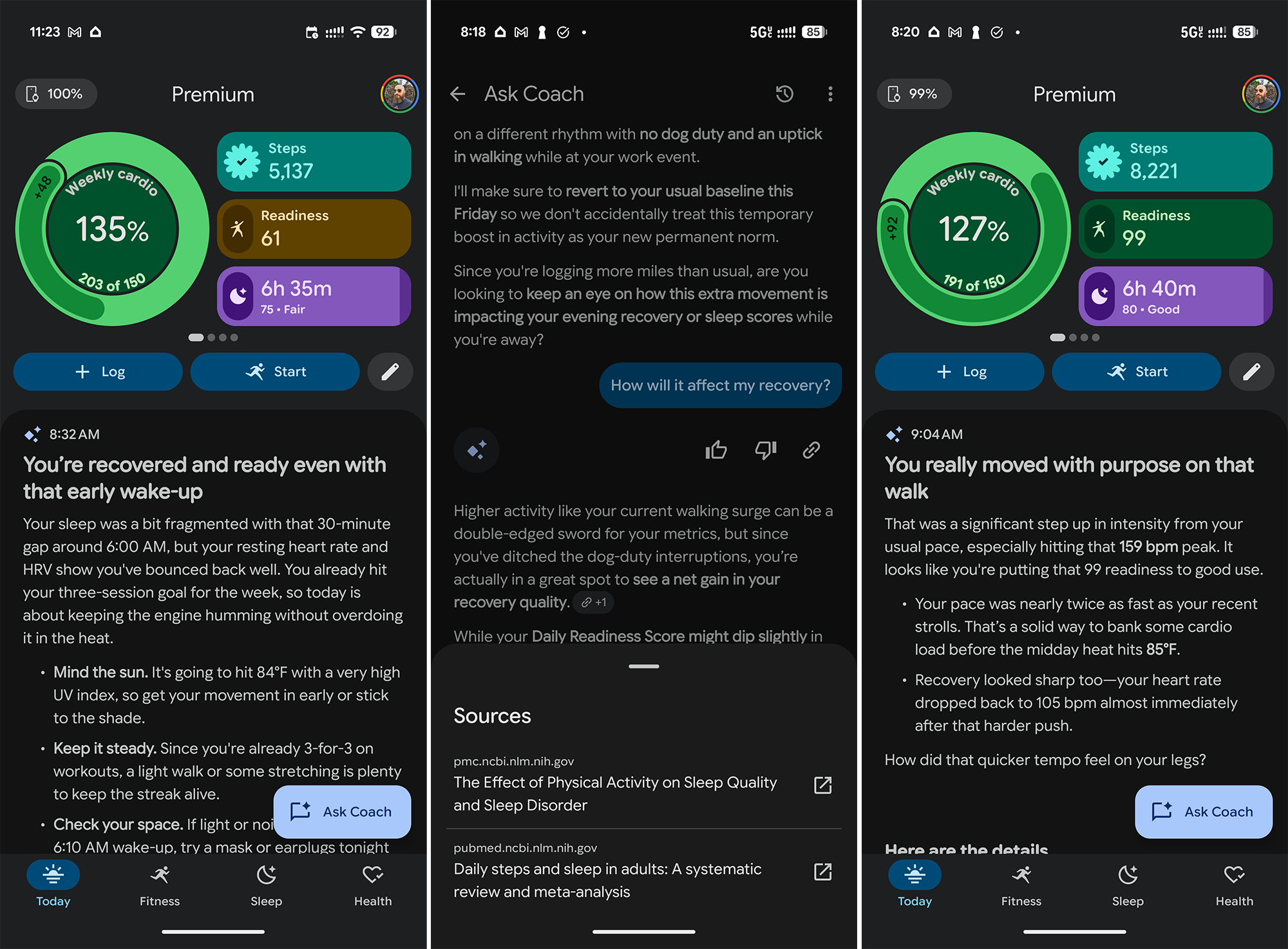
Health Coach goes on at length about anything and everything, but at least it cites its sources.
Credit: Ryan Whitwam
Health Coach goes on at length about anything and everything, but at least it cites its sources. Credit: Ryan Whitwam
Like all of Google’s chatbots, you can tell the coach you want it to behave differently or provide it with background information. For example, the coach might suggest ways to eliminate awakenings after a night of spotty sleep, but maybe you’ve got a young child to feed or a dog that insists on going out at 5 am every day. Adding this information to the token shuffle produces more accurate summaries.
At one point, I told Coach I would be traveling, and it factored that in when generating “Proactive insights,” as Google likes to call them. It knew when to take my schedule changes into account for its analysis of my data and when to stop. It follows instructions very well, in AI prompting parlance.
But do you need an AI summarizing your health data? If you’re not doing a lot of focused training with specific goals and tedious manual food tracking, the insights amount to: “Make sure to rest after a big workout. Maybe go for a light walk or something.”
Thanks, robot.
Part of the problem may be that Health Coach is primed to be your pal, and it always has something to say. Gemini is tuned, to some degree, to produce outputs that users “like,” sometimes called vibemarking. You get a lot of grandiose, somewhat cringey praise when you hit a goal and a spirited pep talk when you don’t. It’s always there, always talking.
You don’t necessarily want a virtual health coach that yells at you, but Health Coach could be a bit more straightforward and less wordy—the summaries of workouts, sleep, and simply existing take up a ton of space in the app. And for what? “Maybe go for a light walk or something, I don’t know,” it says again, but in far too many words.