The Magic Mouse will be 17 years old on October 20, 2026. It's beyond time Apple turned it from a curiosity into something that Mac owners actually want to use.
Apple officially unveiled the original Magic Mouse on October 20, 2009. It would ship with all iMacs, but existing Mac owners could buy one for $69.
At the time, Apple made a big thing about it being "the world's first multi-touch mouse," and it was right to. Remember, this was just two years after the iPhone introduced multi-touch to the world.
Ditching the buttons that were familiar to all computer users, the Magic Mouse had a single surface for users to tap. Tapping the left side initiated a left-click, with the right side becoming a right-click.
But the lack of buttons is what made the multi-touch possible. Gestures across the surface allowed Magic Mouse users to scroll content, swipe through timelines, and pan and zoom images.
This all sounds great, as it did 17 years ago. But there were problems and, with a refreshed model six years later, Apple's use of a belly-up charging setup made matters worse. Years later, Apple still hasn't addressed most of the issues putting people off buying a Magic Mouse.
Now, as the Magic Mouse hurtles towards yet another birthday, it's time that changed.
The original issues at hand
It's fair to say that for as futuristic and distinctly Apple as the Magic Mouse was, it was never universally liked. There was no native middle-click support, and gestures for some staple Mac OS X features were missing.
Other issues actually made the mouse unusable for some. Reports of Bluetooth instability affected some Macs more than others. Even if the mouse stayed connected, its low-profile design was uncomfortable for a lot of people.
This was perhaps the biggest drawback, and one that made the Magic Mouse an ergonomic nightmare. And this all happened a year before Apple design chief Jony Ive's form-over-function approach at least partially caused the iPhone 4's antennagate issue.
The Magic Mouse also used standard AA batteries. Apple even began selling its own rechargeable batteries and a charger to go with them.
It took Apple six years to add a built-in rechargeable battery.
Take two: More strange design decisions
Six years later, on October 13, 2015, the Magic Mouse 2 was announced alongside the Magic Trackpad 2. For the first time, a Space Gray option joined the standard White model, although it was initially only bundled with the iMac Pro. Yet more colors came with the M1 iMac refresh in 2021.
Apple made two main changes to the Magic Mouse 2, neither of which were well received.
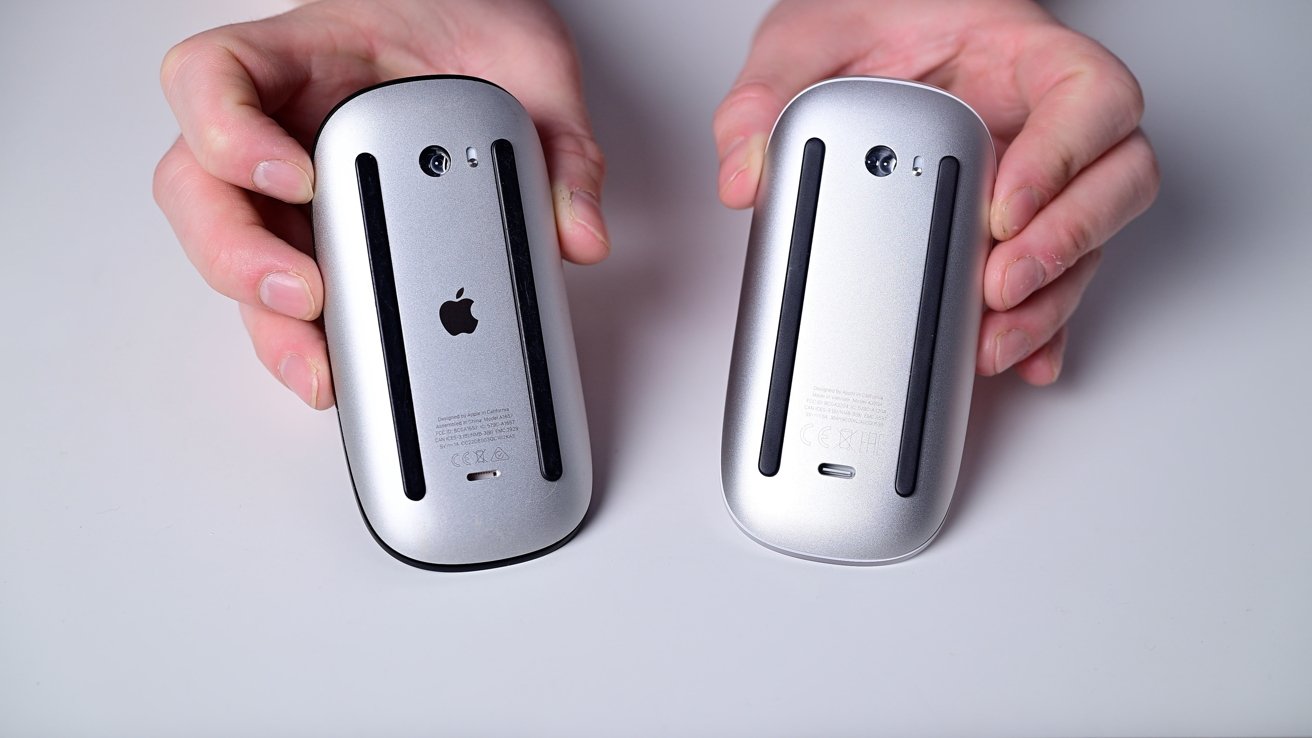
Apple still hasn't moved its port
The addition of a rechargeable battery was initially welcomed. But Apple's decision to place the Lightning port on the bottom of the mouse is still mocked online to this day.
Apart from looking ridiculous, the port placement had a very real impact on usability. Being unable to use the mouse while charging it was a huge drawback, and one no other wireless mouse suffered from.
Apple also chose not to bring Force Touch from the Magic Trackpad 2 to the mouse. This was a problem for some who found that, because the whole surface of the mouse moved when clicking, it trapped their palm when it did.
The Magic Mouse 2 went unchanged until 2024, when Apple removed the Lightning port. Adding a USB-C port could have given Apple the chance to move it to a more traditional position, but it didn't.
A chance to rectify everything
So, here we are. We're uncomfortably close to the Magic Mouse's 17th birthday. It's basically the same mouse that went on sale in 2009, warts and all.
Apple could refresh the Magic Mouse at any moment, and I have to imagine that it will at some point. When it does, there are a few easy wins that I'd love to see Apple jump at.
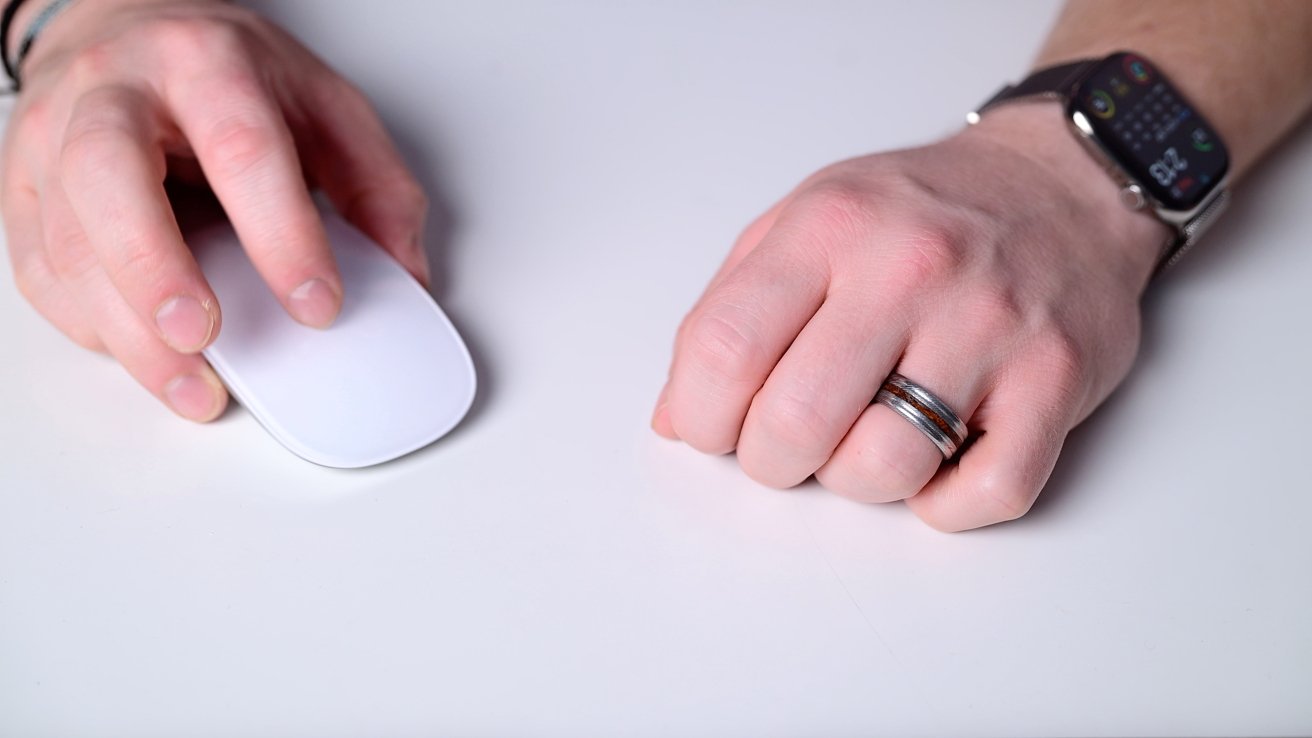
The Magic Mouse is just uncomfortable to use
The most obvious fix would be to move the USB-C port to the edge of the mouse that cables normally protrude from. This is a solved problem, and every other mouse maker in the land knows it. It's time Apple got on board.
Apple may argue that a five-minute charge gives users enough juice to get through a full day of use. But that's an excuse for poor design, not a reason for it to remain that way.
I'd also like to see physical left and right buttons make a return to Apple's mouse. They're more ergonomic and add a tactility that the current whole-mouse-click situation doesn't afford.
That might mean Apple ditching the gestures that have made the Magic Mouse so magic to date, but not necessarily. The Logitech MX Master 4, for example, lets you press a button, then perform a gesture by moving the mouse itself.
Another quick win would be to remember that people use these things for more than five minutes at a time. The low-slung, smooth-like-a-dolphin approach looks great, but it makes for terrible ergonomics.
I'm genuinely curious whether anyone at Apple uses the Magic Mouse for any length of time each day. I doubt it. There's a reason every other mouse is shaped higher where it's gripped and lower at the buttons.
Unfortunately, all of these changes require the Magic Mouse to be completely redesigned. And that's probably why they won't happen.
But they absolutely should. And until they do, the Magic Mouse will always be a novelty that most iMac buyers throw in a drawer, never to see the light of day again.


