I’m a well-known grump when it comes to subscription apps, so when you find me endorsing a relatively expensive piece of hardware that requires an annual subscription for full functionality, then you know it has to be good.
2024 was a bit of an eventful year for me on the wearables front: after nine years of use, I ditched my Apple Watch in favor of dumb watches, and reinstated smart health and activity tracking by using the third-generation Oura Ring. I’ve recently upgraded to the latest 5th-gen model …
The real secret sauce is the Oura app
I’ll come on to talk about the hardware, but the thing that most sold me on the Oura Ring was the Oura app – despite the fact that it requires a subscription.
I’ve long tried to avoid subscription apps. While I can understand developers seeking a sustainable recurring income, and I can see arguments that this allows them to better develop and support their apps, I definitely found myself suffering from subscription fatigue. I carried out an audit of all my subscriptions and ditched a number of them.
I would always rather pay a higher one-off fee for an app, with fresh costs for major updates if desired, than a recurring subscription. However, the Oura app sold itself to me for several reasons.
Simple but astonishing metrics
The Oura ring collects a lot of health data and makes it possible for you to dig into this in as much detail as you like. However, it condenses a lot of this information into four numerical scores:
- Readiness
- Sleep
- Resiliance
- Stress
The readiness score is the most useful of these, aiming to factor in nine different data sources in order to give a simple summary of how well placed you are to tackle whatever life throws at you. The contributing factors are:
- Resting heart rate
- Heart rate variability
- Body temperature
- Recovery index
- Sleep quality
- Sleep balance
- Sleep regularity
- Yesterday’s activity level
- Activity balance (balancing exercise with rest & recovery)
I’ve been genuinely astonished by just how accurately the readiness score – this single percentage – reflects my subjective experience.
Even more astonishing has been the app’s ability to spot signs of illness before I’m aware of any symptoms. Literally every time I’ve had a cold, the app has told me that it’s seeing signs of strain, including an elevated body temperature, at a time when I feel absolutely fine. It’s then been one to two days later before I experience any symptoms.
There have been zero false positives and also zero false negatives. Indeed, when I had surgery leading to an infection, it was the ring that first identified that infection some 12 hours ahead of the doctors and before I experienced any symptoms.
Additionally, when I experienced a period of prolonged stress, the resilience score displayed in the app was similarly an incredibly good match for my subjective experience during that period.
It also gives me proactive advice. For example, after monitoring my sleep patterns for a while, it made recommendations about the best time for me to start winding down in the evening as well as my ideal one-hour bedtime window. I tried following its advice and sure enough, my sleep quality did improve.
I think you may now understand why the app so impresses me.
Good hardware is now great
Having switched from an Apple Watch to a smart ring, I found a number of advantages to the much smaller form factor.
The first of these was battery life. When the ring was new, it only needed to be charged once a week. By two years in, it was roughly every four to five days. That compared to my Apple Watch needing to be charged every single day. To me, that was a big step up in convenience.
The second was how unobtrusive the Oura Ring was compared to the Apple Watch. The 3rd-gen ring looked pretty indistinguishable from a conventional ring unless you looked at it very closely, when you could see it was rather thicker. I was rarely conscious of wearing it.
But the Oura Ring 5 is in a whole other league. First, the width has been dramatically reduced.
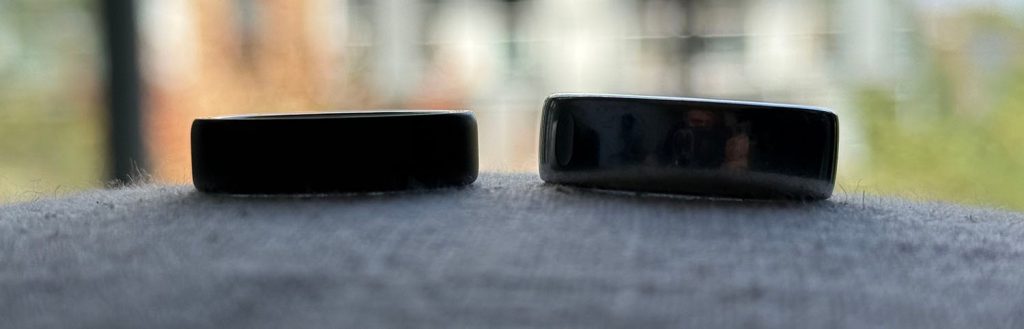
Second, it’s very much thinner. Looking at this photo, it’s hard to even believe that this is the same ring size. That’s because not only has the thickness of the ring material itself been significantly reduced, but the protruding sensors are now barely visible.
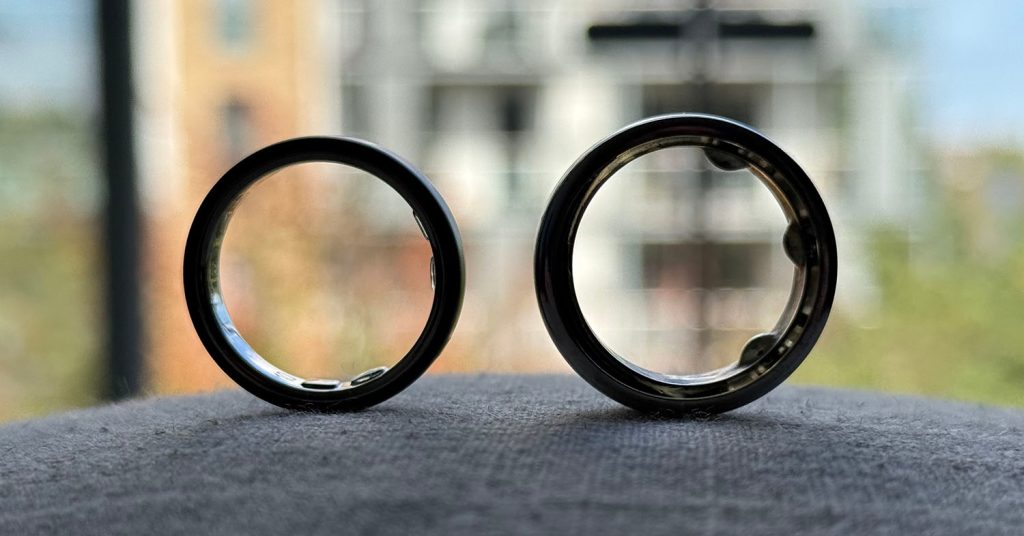
I was hardly conscious of wearing the 3rd-gen ring, but the 5th-gen is almost impossible to feel.
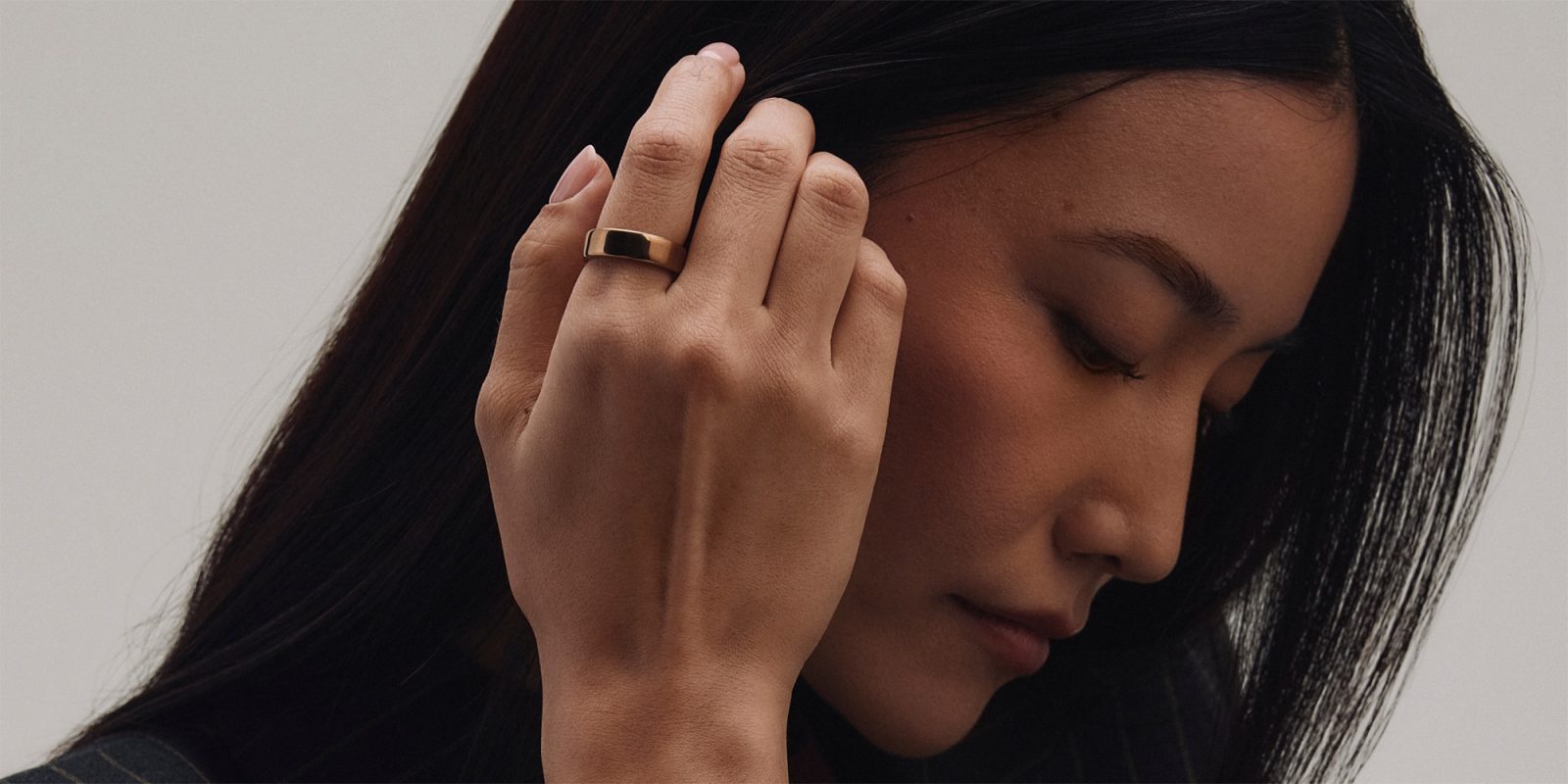
Oura says the fifth-gen model is the world’s smallest smart ring at just 6.09mm wide and 2.28mm thick. It’s made from lightweight, non-allergenic titanium, weighing between 2g and 2.7g depending on ring size.

It’s available in six finishes. I previously opted for the gloss silver as it seemed the most natural ring look for a man, but this time I’ve opted for the matte black model known as Stealth. I really like the very low-key look of this.
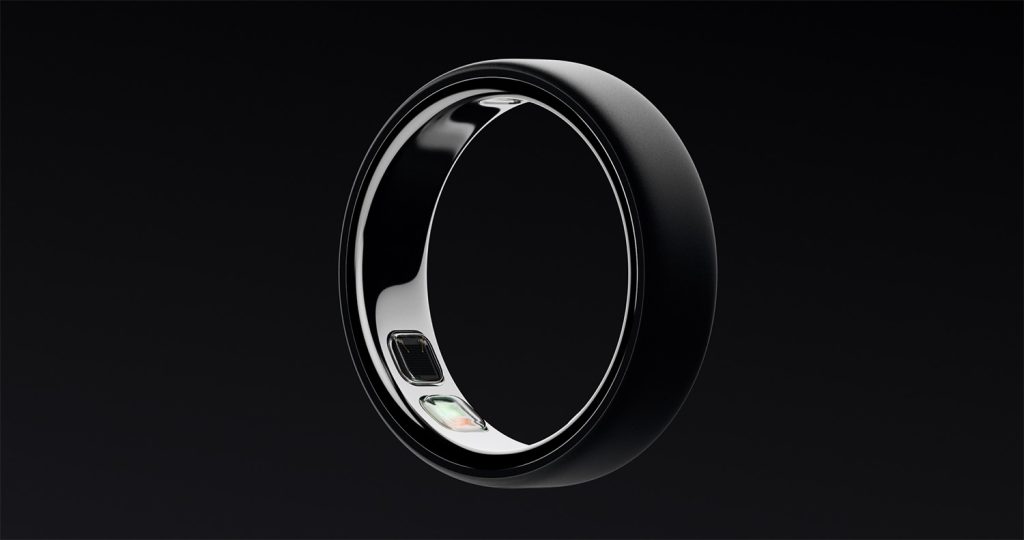
There honestly isn’t much more to say about the hardware. You won’t know you’re wearing it, and you only have to remove it once a week to charge it. For me, this is the best type of technology: essentially invisible, but providing exactly the right data at exactly the right time.
Obviously if you have other reasons for wanting to wear an Apple Watch, like notifications and Apple Pay, then a smart ring can’t compete. But if you want health and fitness data from the most compact hardware coupled to the smartest software, I highly recommend giving an Oura Ring a try.
The Oura Ring 5 is available on Amazon. Pricing ranges from $399 to $499 depending on finish. I’ve found that standard ring sizes apply, but the company recommends buying the $10 sizing kit first and wearing the dummy ring for 24 hours. The cost is refundable against any ring purchase.
FTC: We use income earning auto affiliate links. More.