BERLIN – Ugreen is best known for chargers, cables and other accessories. But at its IFA 2026 launch event, the company showed something far more ambitious: a smart home hub that uses local AI as its brain.
The HomeAgent series is expensive and unproven. But it rethinks what a smart-home hub can be. It also raises the question: by the time Apple enters the smart home market, will local AI already be the norm?
The smart home is finally gaining a brain
AI is making the smart home feel smarter. Security cameras can already differentiate between people, pets, vehicles and packages, reducing unnecessary alerts. With a premium cloud subscription, Google Home-compatible security cameras can even describe what happened, track activity across multiple cameras and let you find a specific event using natural-language searches.
AI is also making home automation far easier. You no longer need to configure multiple devices and conditions manually; a single AI prompt can handle it all for you.
The problem is that many of these features depend heavily on the cloud. Cameras may upload recordings for analysis, while servers process more complicated voice commands and automations outside the home.
While this may not seem like a big deal, it means entrusting companies with extraordinarily sensitive information about who enters your home, when your family is present and what happens inside it.
Ugreen wants to keep the AI inside your home
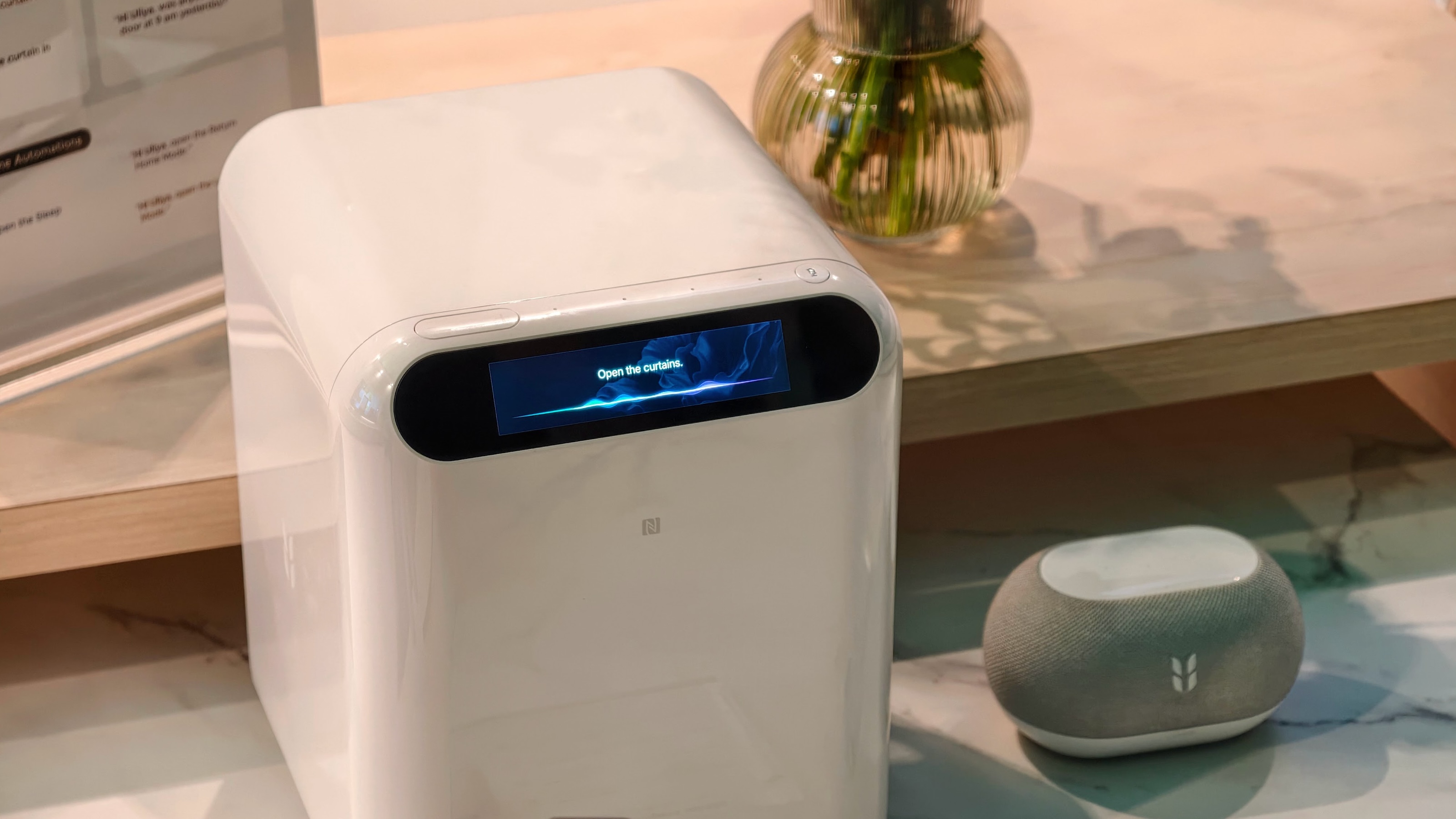
Photo: Rajesh Pandey/Cult of Mac
This is where Ugreen’s HomeAgent takes a different approach. Instead of sending footage and household information to remote servers, it stores the data and runs its AI models locally. Ugreen says key features will work without an internet connection, with no monthly subscription fees.
HomeAgent acts as the central brain connecting security cameras, storage and other compatible smart home devices. You can ask it what happened while you were away, search for a particular event or create an alert using Ugreen’s AI assistant, Uliya. It can also summarize recorded activity and follow the same person across multiple cameras.
All this processing happens on hardware sitting inside your home. Your camera recordings, family photographs and security camera footage never leave your premises for HomeAgent’s core features to work.
It is closer to a home server than a smart speaker
The HomeAgent machines look more like a NAS than a conventional smart home hub. There are three models, and they all offer upgradeable storage. More importantly, there’s a dedicated hard disk bay for storing security camera footage.
Another important feature is PoE connectivity, so you can hook up your security cameras and power them through a single Ethernet cable.
Even the AI accelerator card is upgradeable to improve the HomeAgent’s AI processing capabilities. This is especially important as local models become more demanding and ensures the machine does not become obsolete after a couple of years.
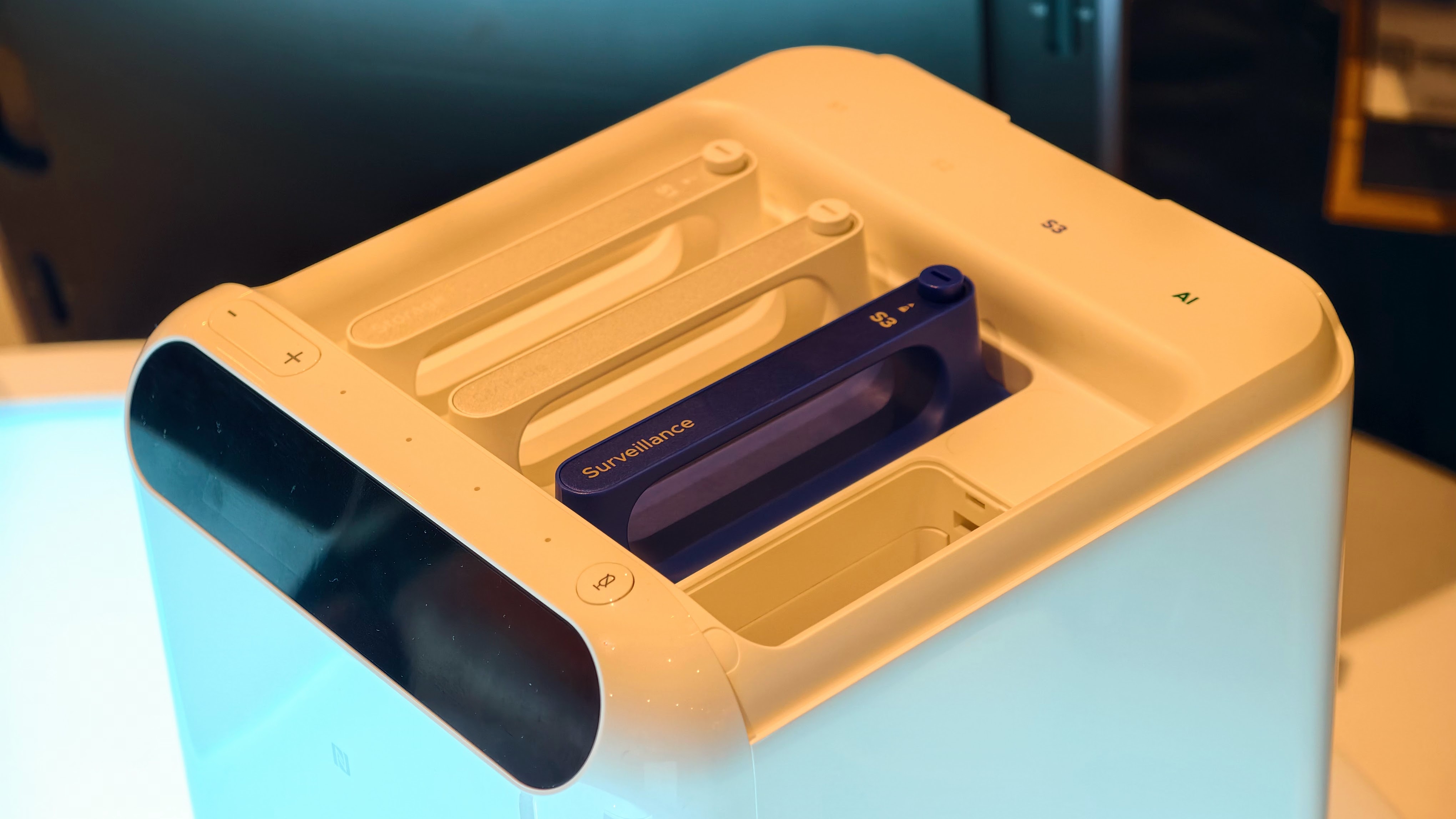
Photo: Rajesh Pandey/Cult of Mac
This modular design makes HomeAgent more complicated than a HomePod or Google Nest Hub. But it also gives owners far more control. They can decide how much storage they need, keep recordings for longer and increase the system’s capabilities over time.
Ugreen’s HomeAgent lineup will work with more than just their SynCare security cameras. The machines will support Matter, opening support for hundreds of third-party lights, switches, cameras and other accessories.
That makes HomeAgent more than an expensive security camera hub. Ugreen is pitching it as a private server for your household that stores your data, understands what is happening in it and acts on that information.
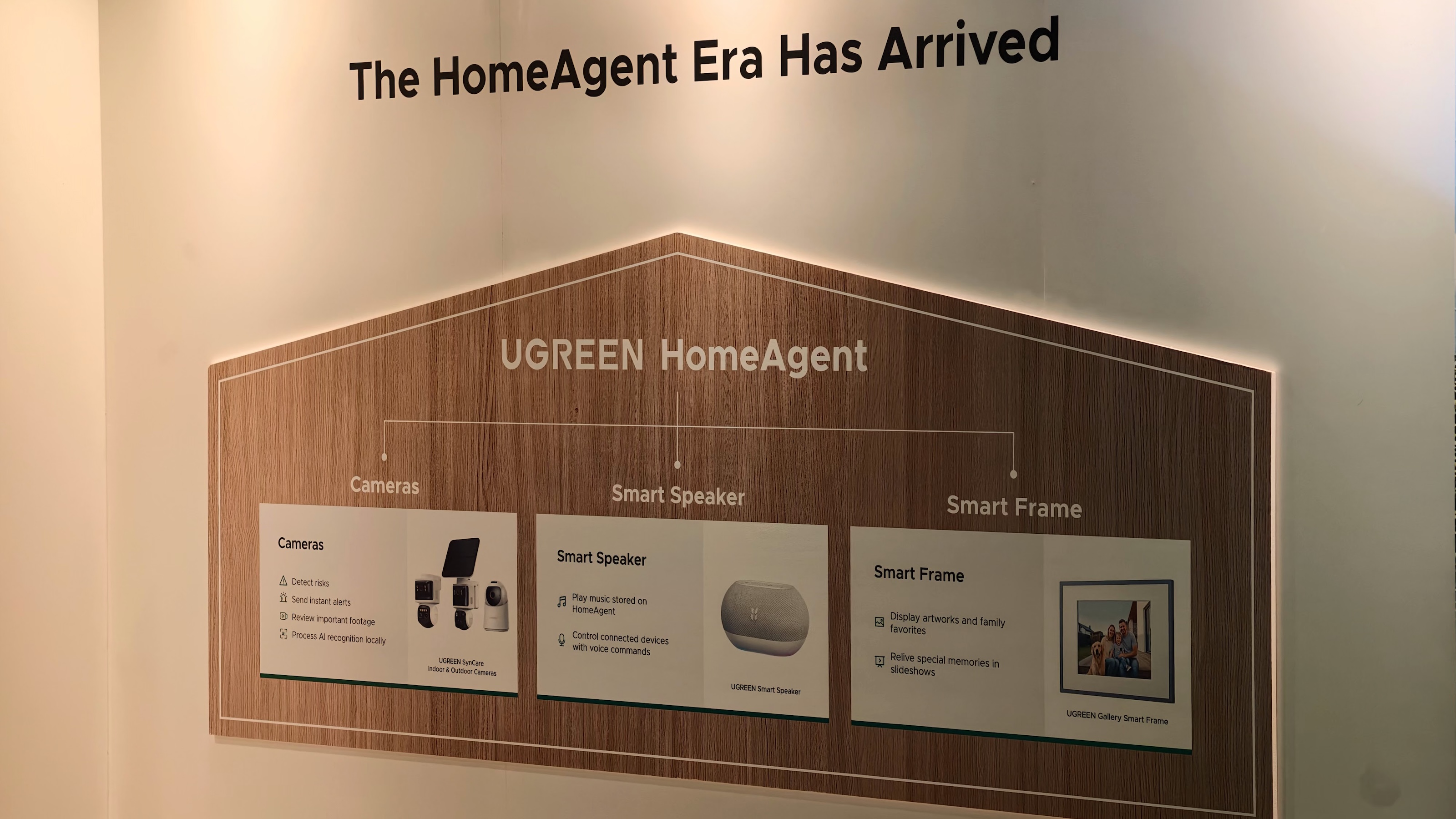
Photo: Rajesh Pandey/Cult of Mac
Ugreen is not alone in betting on this idea. Anker also unveiled MindBase at IFA 2026, which promises similar functionality as HomeAgent using local AI and an on-device AI processor.
Apple already processes camera footage locally
Apple is not ignoring this shift. In iOS 27, Apple Intelligence will bring several major improvements to the Home app and HomeKit Secure Video.
The Home app will combine related activity notifications, describe what happened in a recorded clip and let users search camera footage using natural language. Compatible HomeKit Secure Video cameras will also be able to stream and record in 4K.
Apple’s existing security architecture already performs important work locally. When a HomeKit camera detects motion, it sends the resulting clip over the local network to a HomePod or Apple TV acting as the home hub. The hub decrypts and analyzes the clip locally to determine whether it contains a person, animal or vehicle.
If HomeKit detects a relevant event, the home hub encrypts the clip before uploading it to iCloud. Apple says these recordings remain end-to-end encrypted, meaning even Apple cannot view them.
So, Apple is not uploading encrypted camera footage to its servers. Its approach already offers substantially more privacy than many cloud-dependent security-camera platforms.
However, Ugreen is not taking a similar approach. HomeKit Secure Video requires a 2TB iCloud+ subscription, and recordings are stored in iCloud rather than inside the home.
Apple also limits the number of supported cameras according to the subscriber’s iCloud+ plan. Plus, there will be a usage limit based on your iCloud plan.
Ugreen is making a different promise: Keep AI processing, recordings and other household data on hardware that you own.
Local AI will not come cheap
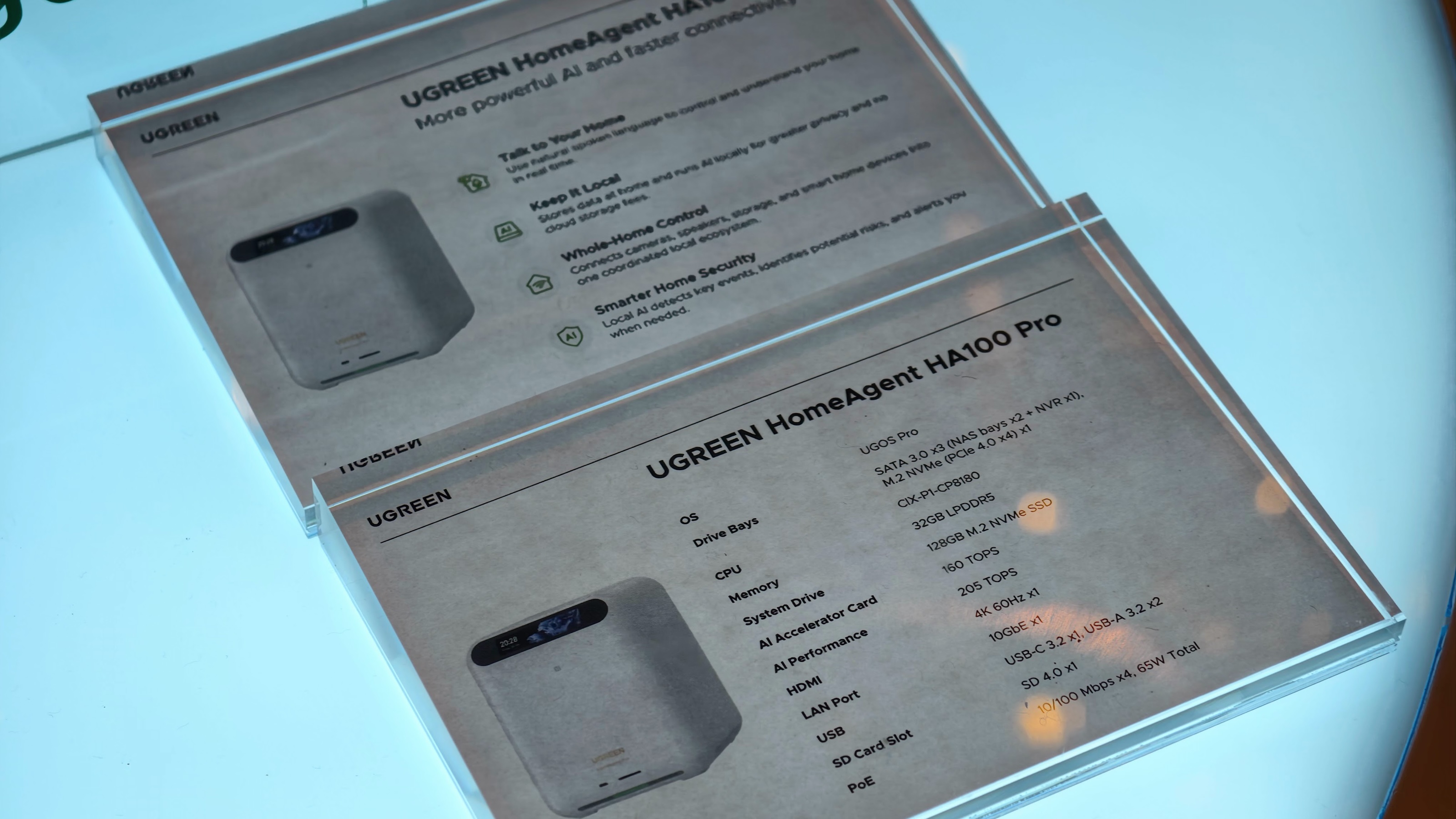
Photo: Rajesh Pandey/Cult of Mac
This idea remains expensive. Even with Ugreen’s 50% Super Early Bird pricing, the HA100 starts at $899, while the significantly more powerful HA100 Pro costs $2,999. Add in the HDDs and security cameras, and you are looking at a few thousand dollars of upfront costs.
The products are launching through crowdfunding. So their reliability, software quality and long-term support remain unproven.
It is also important to note that keeping data out of the cloud does not automatically make it secure. Ugreen will still need to provide strong encryption and timely security updates, though the company is doing a decent job of this already with its NAS devices.