August 11, 1987: The MultiFinder app brings the biggest software update to the Mac since the computer’s launch. Baked into Macintosh System Software 5, MultiFinder allows multitasking with two apps on screen for the first time.
While MultiFinder brings an undeniable boost to the Macintosh’s technical capabilities, it is built on a shaky foundation that soon begins to show its age.
MultiFinder launch brings multitasking to the Mac
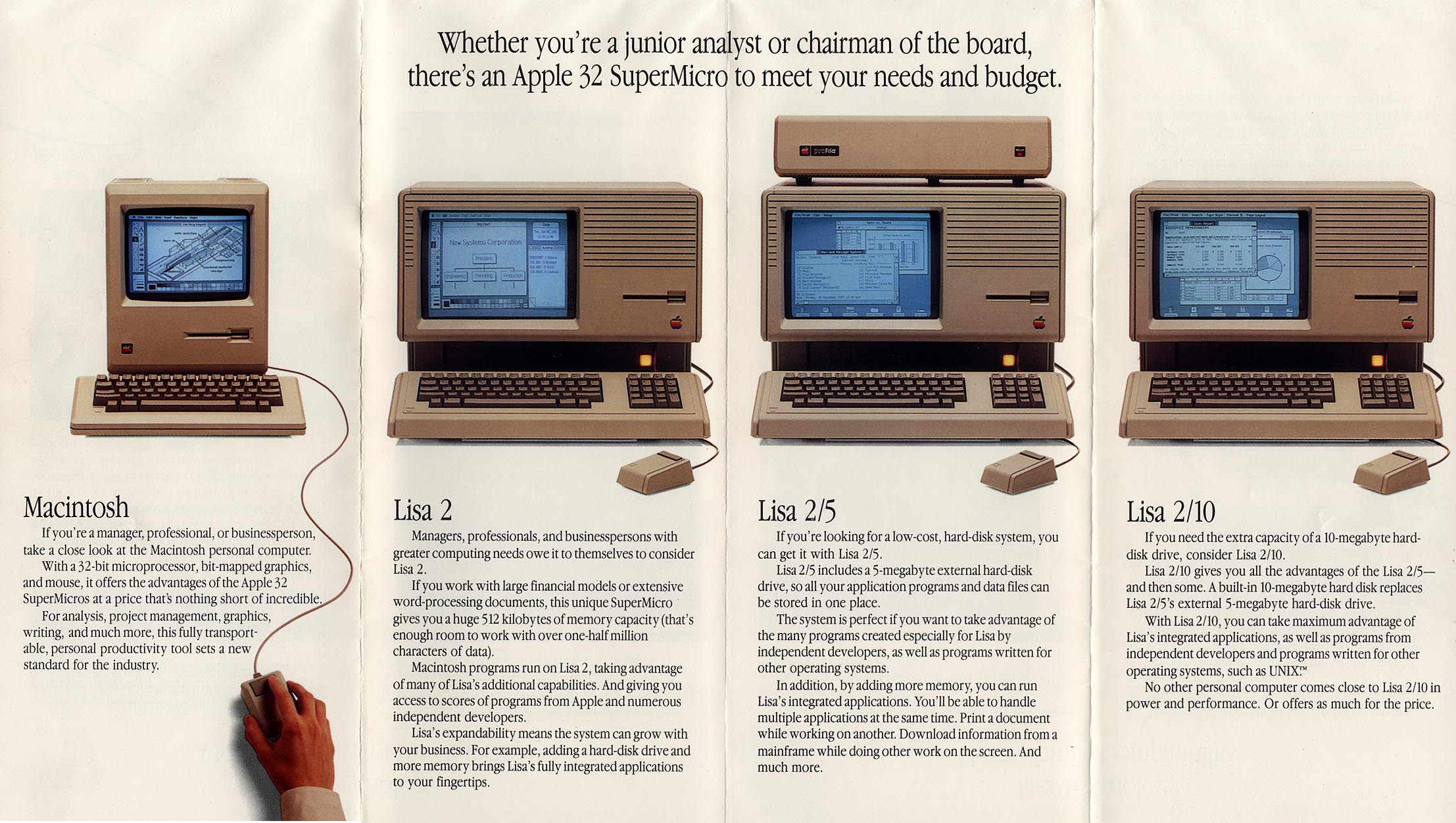
Photo: Apple/Web8bits
In 1987, the Mac finally learned how to multitask — sort of. Apple had not truly solved the multitasking problem. Instead, MultiFinder was a clever hack that let users keep multiple applications open and switch between them, even though the operating system still lacked true multitasking.
That compromise would define the Mac experience for years: remarkably approachable on the surface, surprisingly fragile underneath.
Still, it was better than nothing. Apple released the first Mac — the Macintosh 128K — in 1984 without multitasking of any kind. Cupertino positioned the Mac as a low-cost alternative to its Lisa computer, the company’s pricier workstation, which remained in the lineup through late 1985. Prior to MultiFinder’s launch, if you wanted multitasking, you simply bought a Lisa.
This arrangement wasn’t destined to last long, though, as Apple rapidly developed Mac models with increased memory. For instance, Apple shipped the Macintosh 512K, aka the “Fat Mac,” with four times the RAM of the original, in September 1984.
First comes Switcher, then comes MultiFinder
Screenshot: Macintosh Garden
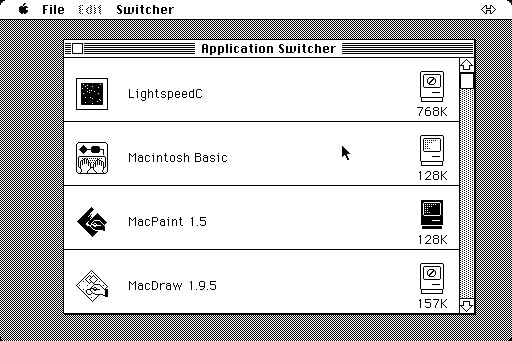
MultiFinder wasn’t Apple’s first stab at making it easier to use multiple programs on the Mac, though. While on a leave of absence from Apple, Andy Hertzfeld, a programmer on the original Macintosh team who would go on to create MultiFinder, started to wonder if you could run several programs simultaneously. Mac apps were still being written to fit within 128k of memory, yet some Macs now came with four times as much.
To tackle the problem, Hertzfeld created the Switcher app. From an icon in the Mac’s menu bar, the Switcher let you switch instantly between two apps in memory, like Microsoft Excel and MacWrite.
This capability proved transformative, given the immense amount of time it previously took to quit one app and launch another. (Even worse, if the two programs lived on separate floppy disks, you had to swap those out several times while switching between the apps.)
Even though Hertzfeld got Switcher working smoothly after a few months of work, it was still a patch — the Macintosh system software wasn’t designed to juggle multiple applications at once. Whichever app was currently on screen had near-complete control of the entire computer; everything else was frozen. If any single piece of software crashed, everything disappeared.
Switcher becomes MultiFinder
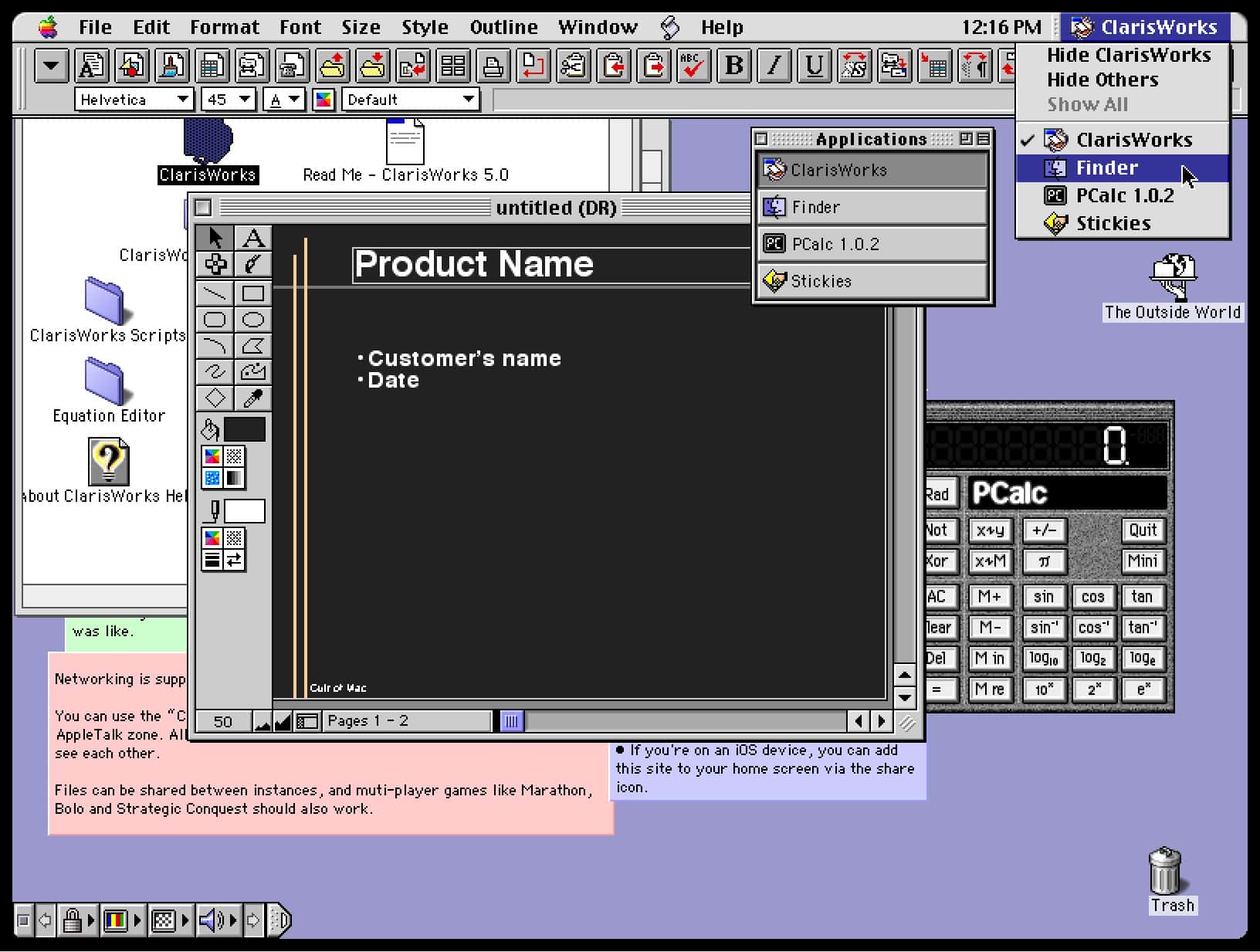
Later, Apple adapted Switcher into MultiFinder, which Apple co-founder Steve Jobs purchased from Hertzfeld for $100,000 and 10% royalties. Whereas Switcher could only display your apps on separate desktops, MultiFinder let you see two apps side by side. The feature shipped as an extension in Macintosh System Software 5 on this day in 1987.
Apple kept trying to improve the Mac’s multitasking over the years. However, the company couldn’t overcome MultiFinder’s technical limitations. The lack of true multitasking, where background apps could keep doing their thing, plagued Mac OS all the way through the 1990s and into the early 2000s.
Screenshot: D. Griffin Jones/Cult of Mac
Thankfully, that’s no longer a problem. With the more powerful computers of the last 25 years, the Mac operating system and kernel manage multitasking on a lower level, so apps remain separate and siloed from one another. We sacrifice a little bit of management overhead in exchange for stability.
Open the Activity Monitor app now, and you’ll see your Mac handling hundreds or even thousands of processes without breaking a sweat.
Also on this day in Apple history
Aug. 11, 1950: Steve Wozniak is born
Apple co-founder Steve Wozniak is born. While Steve Jobs might be the most admired figure in Apple history, Woz might be the most well-loved by fans.
In addition to his most famous creation, the Apple II computer, Wozniak is also responsible for imbuing Apple’s products with his fun-loving personality.
Happy birthday, Woz!
Read more: Today in Apple history: Happy birthday, Steve Wozniak!
Aug. 11, 1987: Apple introduces HyperCard
On the actual same day in the very same year as the MultiFinder release, Apple introduced HyperCard as well. Created by the late, great Bill Atkinson, HyperCard was “among the first successful hypermedia systems,” according to Wikipedia.
With HyperCard, you could point and click to make complex interactive widgets, games and applets. Many view HyperCard as a precursor to the rich multimedia interactivity we see today on the web.