June 10, 1977: Apple Computer Inc. ships its first Apple II computer.
A hulking beige behemoth with 4KB of RAM (upgradeable to a whopping 48KB), the Apple II is the computer that will define Apple for a generation of fans. Retailing at $1,298, it cost the equivalent of a handful of MacBook Pros today — even though it seemed a total bargain at the time.
First Apple II ships
With the Apple II launch, Apple transformed from a scrappy hobbyist outfit into a serious technology company with mainstream ambitions. By wrapping Apple co-founder Steve Wozniak’s engineering wizardry in a consumer-friendly package, the Apple II helped transform personal computers from garage-built curiosities into household appliances.
Its long-lived success fueled Apple’s first explosive revenue growth. And the Apple II also established many of the design, marketing and ecosystem strategies that would later power the Macintosh, iPod and iPhone.
Unlike its predecessor, the Apple-1, the Apple II arrived polished and ready for the mass market. It featured a keyboard, BASIC compatibility and, most notable of all, color graphics — and achieved many firsts at Apple.
It was also the machine that turned Apple into a million-dollar company (yes, million — not billion). The year the first Apple II shipped, Apple turned over $770,000 in revenue. The year after that, the computer’s success brought in $7.9 million, and the year after that, $49 million.
That’s not all.
VisiCalc, a ‘killer app’ for the Apple II
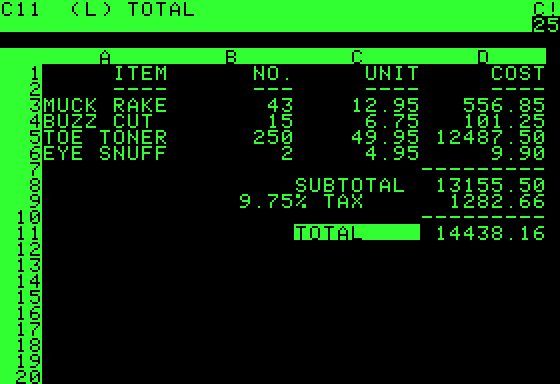
Screenshot: Steven Weyhrich/Apple2History
It was also the computer that created Apple’s (and arguably personal computing’s) first “killer app” in the form of VisiCalc. The world’s inaugural spreadsheet, VisiCalc turned personal computers from cool-to-have toys into must-have business accessories. (And they say it’s only now that Apple’s really getting into the enterprise market.)
The Apple II became the first computer of many influential people in tech. Among them was Mitch Kapor, founder of Lotus Development Corporation, co-founder of the Electronic Frontier Foundation, and the first chair of the Mozilla Foundation. In an interview for my book The Apple Revolution, Kapor spoke about the Apple II in the kind of reverential tones a person uses to describe their first love. He recalled selling his stereo for cash and driving to New Hampshire, where there was no sales tax, to buy one of Apple’s hot new computers.
The Apple II also fueled Apple’s focus on industrial design. Apple designer Jerry Manock told me he was hired to create “a nice balance between manufacturability and human factors.” Manock later designed the first Macintosh computer. But the Apple II is in many ways an equally iconic machine. It paved the way for the look and feel of later Apple creations.
Apple marketing comes of age
!["Within just a few weeks, Steve [Jobs] received a letter from a woman in Oregon, complaining that the ad was sexist -- which it very clearly was," says original copywriter Bill Kelley.](https://www.cultofmac.com/wp-content/uploads/2014/06/a2original.jpg "A2original")
“It was interesting to watch, but it wasn’t really clear to us what we were seeing,” said Bill Kelley, the copywriter behind the first Apple II adverts, recalling his first demo of the machine.
After the initial ads showed a sexist scenario in which a woman slaved in the kitchen while her husband typed on the Apple II, Jobs received a furious letter from a woman in Oregon. Future commercials for the machine reversed the equation, starting a trend for Apple ads that subvert viewer expectations.
First Apple II ships … and subsequent models keep shipping!
Ultimately, the Apple II was a superb machine. It stands as a triumph of collaboration between Apple co-founders Jobs and Wozniak. They would never again work so well together.
The computer also benefited from great peripherals like the Disk II 5 1/4-inch floppy drive and superb software, ranging from games to productivity tools. The Apple II changed the face of computing years before the Mac, iPhone, iPad or Apple Watch were gleams in the eye of anyone in Cupertino.
Happy birthday, Apple II!
Do you have fond (or not so fond) memories of the Apple II? Share them with us in the comments!