Want to speed up your MacBook? Do these things first
Any Mac will become slower over time, but slowdowns don't have to mean a new machine. Try these tricks to get your computer running faster again.
Want to speed up your MacBook? Do these things first
macOS can help you check whether storage, memory or background apps are behind the slowdown before you reach for a cleanup utility.

When your MacBook gets slow, that doesn't automatically mean it's time for a factory reset, third-party optimizer tool or replacement Mac. Common causes including low storage, heavy memory use and incompatible software. The proper first step is to identify what's actually under strain, then change what's contributing to the slowdown. These checks won't turn old hardware into a new machine, but they can uncover performance problems you may be able to fix.
As a basic first step, especially if the slowdown is recent, you should restart your MacBook before reaching for more invasive fixes. Choose Apple menu > Restart, then use the Mac normally for a while and see if the problem returns. If a particular app triggers a slowdown, you've narrowed down what to investigate through the steps below.
Find out what's actually slowing your MacBook down
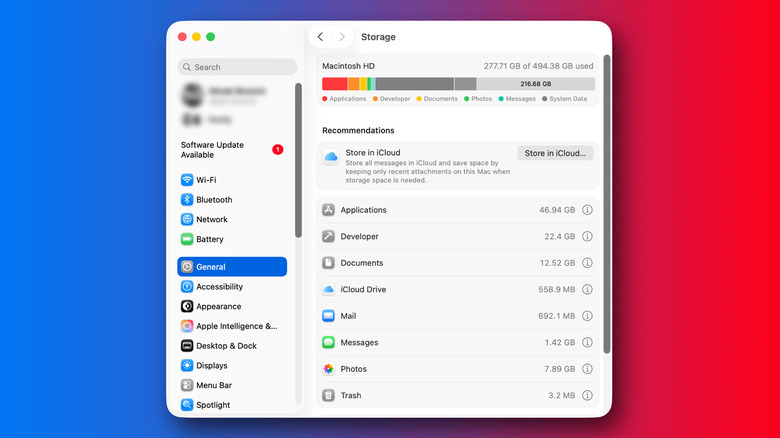
Let's start with storage. Apple lists insufficient space on the startup disk as one possible reason a Mac can run slowly. Go to System Settings > General > Storage to see what's taking up space and review the built-in recommendations. If storage is tight, delete anything you no longer need or consider moving files elsewhere. A portable SSD can make more space if you're willing to spend a bit.
Next, open Activity Monitor (the fastest way is using Spotlight search; press Command + Space and type "Activity Monitor") while your Mac feels slow. The CPU tab shows how much processor capacity apps and system processes are using. If one app repeatedly jumps to the top while the slowdown is happening, that's a useful clue about where to investigate. Try quitting and reopening that app, or reducing its usage by closing tabs or similar.
The Memory tab answers a different question. Instead of focusing on how much RAM appears unused, check the Memory Pressure graph. Apple explains that green means memory is being used efficiently, while yellow or red indicates greater pressure. If the graph turns yellow or red, check whether an app is consuming a large amount of memory and quit it if you don't need it. Try to avoid running many memory-hungry apps simultaneously.
Stop apps from doing work you don't need
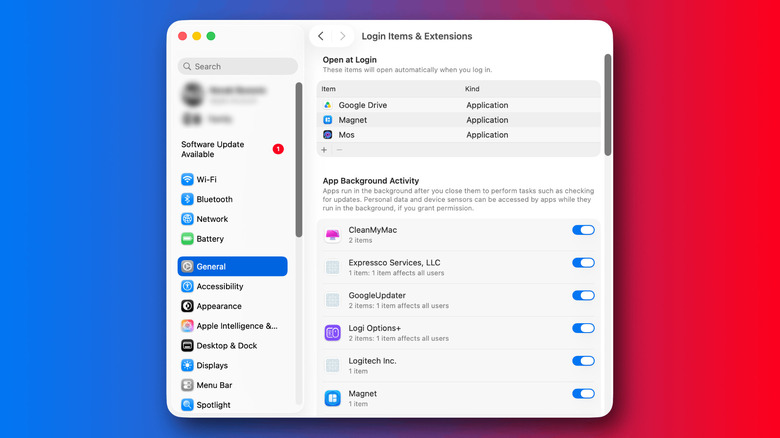
Some apps start automatically every time you sign in. Open System Settings > General > Login Items & Extensions and look under Open at Login. If an app doesn't need to launch every time you log in to your MacBook, select it and remove it from the list.
The same Settings page includes App Background Activity. Apps use this permission to perform tasks while they aren't open, including checking for updates or syncing data. Background activity isn't inherently a problem, but this is a good place to review software you rarely use or no longer need running behind the scenes. Uninstall any Mac apps you don't care about anymore.
Don't disable everything indiscriminately; apps you rely on for syncing or other background tasks should stay enabled. If Activity Monitor has already pointed you toward a particular app, though, its login and background permissions are worth checking.
Check power mode and software updates
If your MacBook supports Power Modes, open System Settings > Battery and check which one is selected. The default Automatic mode balances energy use and performance, while Low Power reduces energy use to extend battery life. If performance is your priority and Low Power mode is enabled, switching back to Automatic is worth trying.
Some MacBook Pro models also support High Power mode, but it isn't a universal "make my Mac faster" switch. Apple positions it for sustained, demanding workloads such as intensive video and 3D work, where additional cooling can help the system maintain higher performance. For everyday use, Automatic remains the best default.
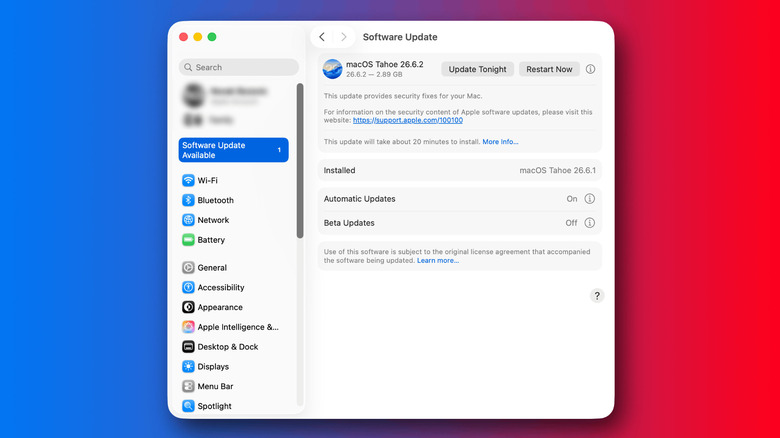
Next, check System Settings > General > Software Update. Apple recommends using the latest version of macOS that's compatible with your Mac for security, stability and compatibility. Updating isn't a guaranteed performance boost, but as Apple mentions incompatible apps among the issues to investigate when a Mac runs slowly, it's a sensible step.
Restart before moving on to deeper troubleshooting
If nothing above has helped explain the problem, move on to targeted troubleshooting. Safe mode can help you determine whether software loading during startup is involved. macOS uses different safe mode steps for Apple silicon and Intel Macs, so check Apple's safe mode instructions to know how it works on yours.
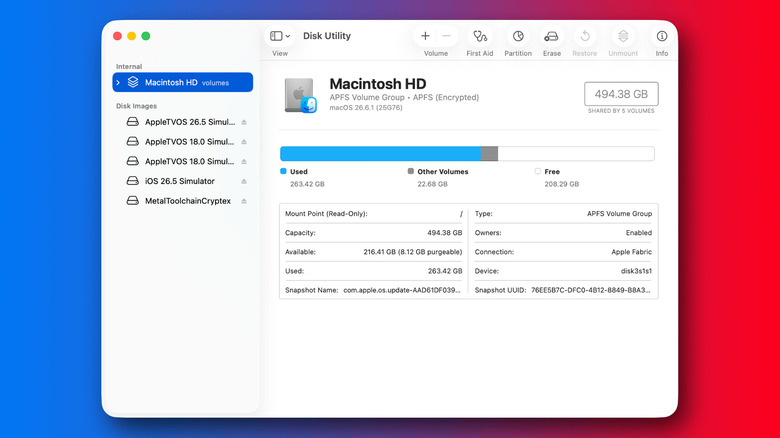
If you have reason to suspect a disk problem, Disk Utility's First Aid tool (under Applications > Utilities) can check for certain formatting and directory errors. Neither safe mode nor First Aid is a routine "speed boost." Use them to investigate a specific problem, rather than as general Mac maintenance.
Originally published on Engadget