Why do phones still use battery when powered off?
Your battery is continually losing charge.
Why do phones still use battery when powered off?
Your battery is continually losing charge.
Even though smartphone batteries are getting bigger and more efficient, there's always that inevitable event when you get a low battery notification at the worst possible time. You might think powering down the phone entirely is a way to make your smartphone last longer. But like with any battery-powered device, a phone's battery will slowly deplete when you're not actively using it, and even when it's completely powered down.
Of course, the battery drains much more slowly when turned off, so it's not a bad idea to power down the phone to conserve battery. That might be before a plane takes off, for example, and you want to ensure you have power when you arrive at your destination. If you leave an old phone in a drawer for weeks or months then decide to use it, however, you'll find that the battery isn't still at the same percentage it was when you left it.
Why the battery depletes
Why does this happen? One thing that draws battery from your phone while it's off is a clock-and-wake circuit, which uses a tiny amount of current so that the power button responds when you want to turn it on and so the phone immediately knows the right time and date once it boots back up. But the biggest battery drain is something called a self-discharge, a chemical release of the lithium-ion batteries used in phones. The battery will lose about 1-2 percent of its power every month or so when turned off. If you store it in a spot that's above room temperature, it will deplete even faster than that.
If you leave the phone on and don't use it, the battery will logically drain much more quickly. I have left Android phones I'm testing untouched for up to a week, for example, and they easily go from about half charge to completely dead in that time. That said, if you're giving a phone a break, it's still a good idea to power it down completely. While there's still that self-discharge, it will be much slower than if you leave the phone on. When the device is on, the screen lights up for notifications, the radio remains active and latched onto signals, and background apps are using power.
Keep it half charged
If you plan to keep a phone tucked away long-term, like if you upgraded and you're waiting for your pre-teen to become of age so they can use it, it's wise to keep the device charged consistently to avoid damage. Apple recommends not fully charging your phone before you put it away for an extended period, suggesting you charge an iPhone only to about 50 percent. Then recharge it every so often (Apple recommends every six months) so it's always topped up and not lying completely dormant.
This prevents something called a deep-discharge state, which can happen when a device's battery has been completely dead for a long period of time. If it gets to this point, the phone's battery's copper current collector can dissolve, redeposit, and permanently impact the phone's battery capacity, or even potentially cause a short circuit. At the very least, the loss in battery capacity means the phone wont last as long per charge going forward.
Tips for keeping the battery healthy
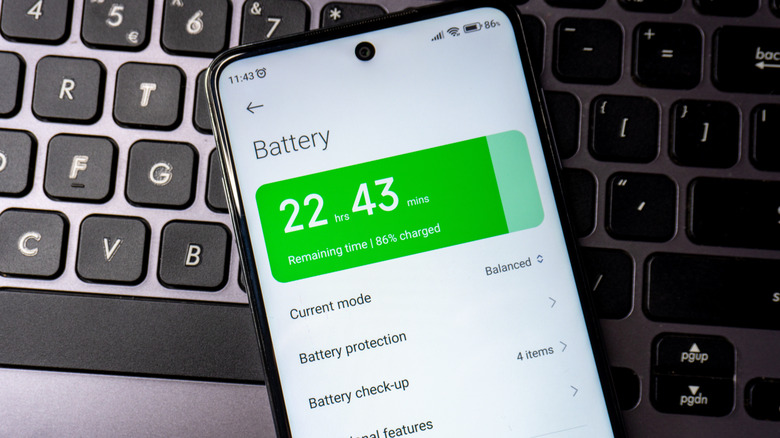
To recap, if you're storing a phone, power it down when the battery is at about 50 percent and charge it back up to this point at least every six months. Most importantly, don't throw it in a drawer completely dead nor fully charged. Don't forget to store it in a cool, dry place with temperatures below 90°F.
All that said, leaving a phone lying around for months isn't a total death sentence. I have left some of the best Android phones released over the last five years powered down for months and charged them for comparative reviews. They work fine even if the battery capacity isn't as good. I even recently found an old BlackBerry PlayBook tablet that hadn't been booted up since 2011. I plugged it in and it successfully charged and works! But it's clear the battery life has lessened as it barely lasts a day before I need to recharge it.
The bottom line is that if you power down your phone, it won't have the same charge state when you power it back up, especially if weeks or months have gone by. It might still show the same battery percentage if you've only powered it down for a 12-hour flight, but the battery is still draining through self-discharge and the clock-and-wake circuit, albeit so slowly you won't notice after such a short period of time. However long you turn off the phone, powering down doesn't mean the phone's battery is completely on pause until you use it again. But it can help conserve what battery life you have left in a pinch.
Originally published on Engadget