July 22, 1997: Apple launches Mac OS 8, its next-gen operating system for Macintosh computers. The OS introduces a new three-dimensional look and makes surfing the internet easier than ever.
The first major operating system refresh for Macs since System 7’s release in 1991, it gets great reviews and is destined to become a big hit with users. However, it arrives at a very challenging time for Apple.
Mac OS 8 launch
Mac OS 8 was ostensibly an interface upgrade, but its real importance lay in the lifeline it threw to a company running out of time. Released days after Apple co-founder Steve Jobs returned to a chaotic company, the software’s blockbuster sales proved there was still demand for the Mac. And, perhaps more importantly, its name gave Apple a legal lever to rethink the clone strategy that was draining the business.
Although everyone associates Steve Jobs’ reign at Apple with OS X, Mac OS 8 was actually the first new operating system to launch after his rejoined the company in 1997. Jobs had very little to do with Mac OS 8, though, since his predecessor, Gil Amelio, had only stepped down as Apple CEO a couple of weeks prior to the operating system’s release.
Mac OS 8 built on the work that went into Apple’s doomed Project Copland, which the company announced in March 1994. Cupertino positioned Copland as a total rewrite of Mac OS to accompany the introduction of the first PowerPC Macs.
Project Copland adds to Mac OS 8
However, the software’s developers continually missed deadlines. Eventually, Apple folded Project Copland into “System 8,” which became known as Mac OS 8. The new operating system allowed greater levels of user customization for features like system fonts, accent colors and photo desktop backgrounds.
Apple’s other improvements included new pop-up context menus, spring-loaded folders, live scrolling, a built-in web browser, and a multitasking Finder upgrade.
Sneaky name, big hit
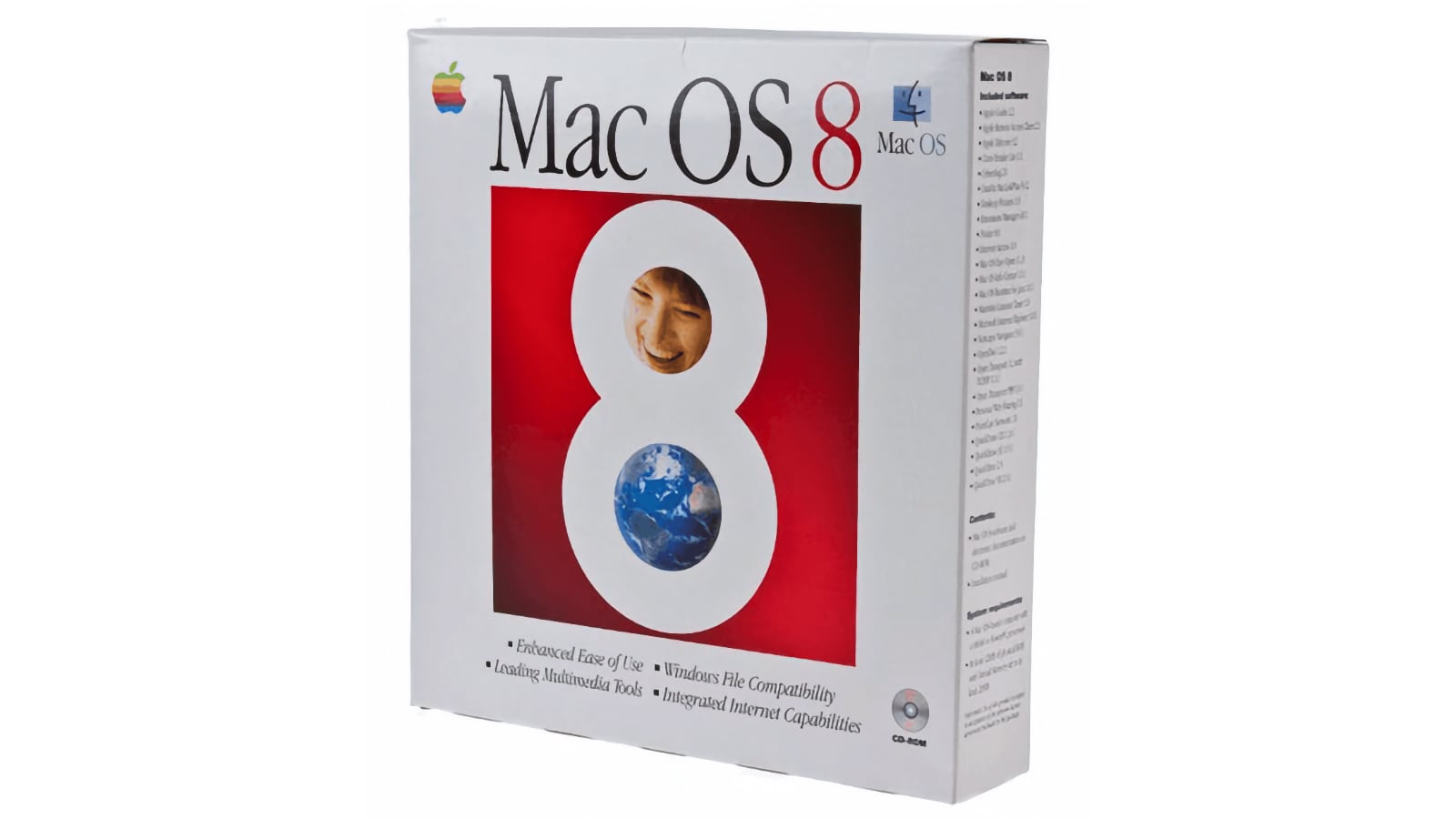
Photo: Apple
Retailing for $99, Mac OS 8 came at a very important time for the money-losing Apple. Sales exceeded expectations by a factor of four, with 1.2 million copies sold in the first two weeks of availability. This made Mac OS 8 the most successful Apple software product at the time.
Interestingly, the most fascinating aspect of Mac OS 8 had very little to do with the software itself.
As Keith Bosse, a financial analyst with Robert Cohen & Company, said at the time: “Mac OS 8 is not the real story…. This is not a technology problem. The product itself is not the issue. [Apple has] a sales and marketing problem. It’s a brand mismanagement problem. The brand is being so underutilized at this stage.”
Mac OS 8 name counters the clone Macs
One of the big problems Apple faced at the time was the presence of clone Macs after many people pushed for making Mac OS run on other computers in the early 1990s. Microsoft successfully employed such a strategy with Windows. However, it worked less well for Apple.
Apple CFO Fred Anderson worked out that the clone Mac strategy actually cost Cupertino money. The $50 fee Apple got for every clone Mac sold didn’t come close to recouping the money lost from people choosing to buy third-party computers instead of the pricier ones made by Cupertino.
Part of the reason for calling Apple’s operating system upgrade “Mac OS 8” instead of “System 7.7” was that the agreement with Mac clone-makers only extended to cover System 7 updates. By naming the update “Mac OS 8,” Apple could negotiate new terms with third parties licensing the Apple operating system.
Do you remember the Mac OS 8 launch? Leave your comments and recollections below.